

By Matthew Wilson | Tech & Gaming Correspondent
Since the inception of the role-playing game genre, the aesthetic evolution of the Final Fantasy franchise has been a barometer for technological advancement in gaming. From the humble, flickering sprites of the 8-bit NES era to the hyper-realistic, motion-captured cinematics of Final Fantasy XVI, Square Enix has consistently pushed the boundaries of visual fidelity. However, in recent years, the company has found a new, compelling path that bridges the gap between nostalgia and modern innovation: the HD-2D engine.
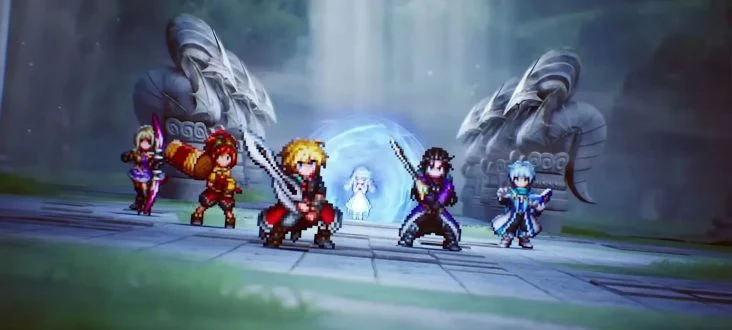
With the announcement of Final Fantasy Resonance, Square Enix is set to bring this distinct visual philosophy to one of its most storied universes, reimagining the narrative foundations of Final Fantasy Brave Exvius as a premium, standalone single-player experience.
Main Facts: A New Chapter in Classic Form
Final Fantasy Resonance represents a significant departure from the mobile-centric origins of its source material. While it draws heavily upon the narrative beats of Brave Exvius, the title is being marketed as a comprehensive, high-budget single-player RPG.
Perhaps most importantly for the modern gaming community, Square Enix has confirmed that Resonance will be entirely devoid of "gacha" mechanics, predatory loot boxes, or microtransactions. This commitment signals a shift toward prioritizing artistic integrity and player experience over the persistent monetization models that have dominated the mobile gaming sector for the past decade.
The game is slated for a worldwide release on October 22, targeting a broad spectrum of hardware, including PlayStation 5, Xbox Series X/S, Nintendo Switch, the upcoming "Switch 2," and PC. By utilizing the HD-2D engine—first popularized by the Octopath Traveler series—Square Enix is creating a visual juxtaposition where intricate, hand-drawn pixel art characters inhabit deeply atmospheric, three-dimensional environments, enhanced by modern lighting and dynamic camera work.
Chronology: From Mobile Roots to Console Prestige
To understand the significance of Final Fantasy Resonance, one must examine the trajectory of the Final Fantasy brand over the last decade.
- 2015: Final Fantasy Brave Exvius launches globally as a free-to-play mobile title. It becomes a massive commercial success, blending classic turn-based combat with deep character customization, serving as a love letter to the 16-bit era.
- 2018: Square Enix releases Octopath Traveler on the Nintendo Switch. The game introduces the "HD-2D" aesthetic, a revolutionary design choice that uses pixel art sprites in a depth-of-field-rich, 3D world. It receives critical acclaim for its unique art direction.
- 2020–2023: The success of Triangle Strategy, Live A Live, and Octopath Traveler II solidifies HD-2D as a pillar of Square Enix’s development philosophy, proving that audiences have a deep, enduring hunger for "classic-style" RPGs.
- 2025 (Current): Square Enix officially announces Final Fantasy Resonance. The title aims to take the best elements of the Brave Exvius lore—specifically the conflict surrounding the crystals of Lapis—and elevate them to a "console-grade" production standard.
Supporting Data: The Mechanics of Resonance
The core gameplay loop of Final Fantasy Resonance is built upon the foundation of classic turn-based combat, but it is far from a stagnant throwback. The combat system incorporates modern refinements that increase the kinetic energy of every encounter.
The Party and the Narrative
Players will control a core party of four iconic characters: Rain, Lasswell, Lid, and Nichol. The narrative serves as an origin story for the world of Lapis. The catalyst for the adventure is a disturbance at the Earth Shrine, which results in the shattering of the Earth Crystal. This event initiates a cascade of geopolitical and supernatural conflicts that threaten to plunge the world into total chaos.
Combat and Presentation
- Dynamic Combat: While the turn-based structure remains, the presentation is augmented by a dynamic camera system that shifts focus during powerful ability activations and limit breaks, providing a cinematic flair that was impossible in the original mobile version.
- Iconic Elements: Fans of the series will find the familiar touchstones of the franchise present and accounted for. Airships, Chocobos, and the dreaded Cactars (complete with the iconic 1000 Needles attack) are rendered with a level of detail that brings the charm of the 90s into the modern day.
- Voice Acting: Unlike its predecessor, Resonance features a fully voiced script, allowing the writers to delve deeper into the motivations and emotional arcs of Rain and his companions, transforming the characters from mobile icons into fully realized protagonists.
Official Responses and Developer Intent
In various statements regarding the development of the title, the team at Square Enix has emphasized that Final Fantasy Resonance is an attempt to "reclaim the soul of the classic RPG." By stripping away the constraints of mobile game design—such as stamina bars and daily login rewards—the developers are focused purely on pacing and world-building.

Lead designers have noted that the HD-2D engine was chosen specifically because it allows the team to focus on "environmental storytelling." By creating a sense of depth and scale within the world, the developers hope to evoke the same feeling of wonder that players felt when they first explored the world maps of Final Fantasy VI or Final Fantasy IX.
Furthermore, the decision to launch on both current and next-generation platforms suggests that Square Enix views Resonance as a long-term "evergreen" title rather than a flash-in-the-pan mobile port.
Implications: The Future of the "Classic" Genre
The announcement of Final Fantasy Resonance carries significant implications for the broader industry.
The Death of the Gacha Stigma?
For years, mobile-to-console ports have been met with skepticism by the gaming community, often viewed as "cash grabs." Resonance represents a pivotal attempt to reverse this trend. If this project proves successful, it could provide a blueprint for other publishers to take their successful mobile IPs and convert them into premium console experiences.
The HD-2D Standard
With the release of Resonance, the HD-2D aesthetic is moving from a niche style used for experimental titles into a mainstream visual language for one of the world’s most valuable gaming brands. This confirms that Square Enix is betting heavily on the idea that high-fidelity graphics are not the only way to deliver a premium experience. In an era where 4K, ray-traced visuals are the industry standard, Resonance argues that artistic direction is often more important than raw pixel count.
The "Switch 2" Factor
The inclusion of the Nintendo "Switch 2" in the launch platform list is a significant indicator of the next hardware generation’s capabilities and its relationship with established visual styles. It suggests that the upcoming console will be a primary home for high-quality, mid-budget, and stylistically distinct RPGs, positioning Nintendo as the premier destination for players who prioritize gameplay loop over photorealism.
Conclusion: Why This Matters
For those who grew up in the golden age of the Super Nintendo and the PlayStation 1, the appeal of Final Fantasy Resonance is immediate and undeniable. The industry has spent a decade chasing photorealism, and while that pursuit has produced incredible spectacles, it has often come at the cost of the whimsical, imaginative aesthetic that defined the early RPG era.
Final Fantasy Resonance isn’t just a remaster or a port; it is a total reimagining. It takes the familiar, turns it into something tactile, and presents it with the respect and polish typically reserved for mainline, tentpole releases. Whether you are a long-time fan of the Brave Exvius storyline or a newcomer who simply appreciates the beauty of the HD-2D art style, the October 22nd launch promises to be a watershed moment for turn-based RPGs.
As we look toward the future, Resonance reminds us that the best way forward is often to look back, refine the foundations of our favorite memories, and bring them into the modern age with love, care, and a renewed sense of purpose.











