

Executive Summary: The 40-Second Stand-Down
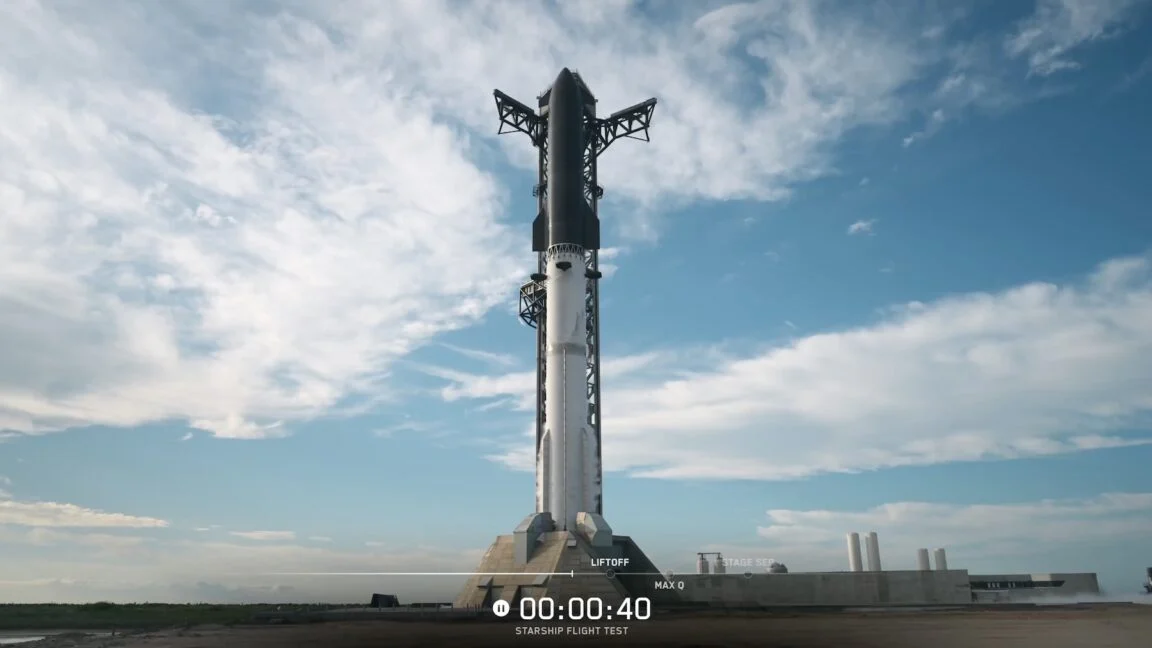
SpaceX’s quest to revolutionize orbital logistics faced a temporary setback on Thursday as the inaugural launch of its upgraded "Version 3" Starship rocket was scrubbed just 40 seconds before liftoff. Despite favorable weather conditions at the company’s Starbase facility in South Texas, an automated safety trigger halted the countdown, forcing the mission team to remain grounded.
The mission, which represents a critical leap in aerospace engineering, was thwarted by a mechanical anomaly involving the launch tower’s umbilical retraction system. While the rocket was fully fueled and the propulsion systems were primed for ignition, the flight control software detected a failure in a hydraulic pin, leading to five consecutive holds before the decision was made to stand down.
Elon Musk, the founder and CEO of SpaceX, confirmed via social media that the issue was isolated to the ground infrastructure rather than the vehicle itself. Provided the necessary repairs are completed overnight, the company intends to reset the clock for a second attempt on Friday, targeting a 90-minute window beginning at 5:30 p.m. CDT (22:30 UTC).
Chronology of the Countdown
The atmosphere at the Boca Chica site, now officially incorporated as the city of Starbase, was charged with anticipation as clear skies replaced the morning’s cloud cover and rain showers. The weather, which had previously posed a potential risk to the launch window, cleared significantly by early afternoon, providing optimal conditions for the gargantuan vehicle to clear the pad.
The Loading Phase
The propellant loading sequence commenced without incident. SpaceX’s ground crews successfully filled the Super Heavy booster and the Starship upper stage with liquid methane and liquid oxygen. This "load and go" phase is a high-stakes operation that verifies the thermal and structural integrity of the rocket under cryogenic stress. For several hours, the countdown proceeded with clinical precision, moving toward the T-minus 10-minute mark.
The Final Standoff
As the clock ticked down to the final minute, the automated flight computer—a sophisticated system designed to monitor thousands of variables—detected a discrepancy. At T-minus 40 seconds, the sequence paused.
Over the next several minutes, the SpaceX launch control team attempted to clear the hold, cycling through diagnostic protocols. However, the computer triggered subsequent pauses four more times, indicating a persistent, non-transient issue. At that stage, it became clear that the launch window would close before a resolution could be safely implemented.
"It is sounding like we are not going to be able to clear this issue in time today, so we are going to be standing down from a launch," said Dan Huot, a SpaceX official, during the company’s live broadcast. "We got the vehicle totally loaded. We hit a couple of different holds as we worked through that count."
Technical Specifications: The Starship Version 3 Evolution
This mission is not merely another test flight; it represents the debut of "Starship V3," the most heavily modified iteration of the system to date. This launch is the 12th full-scale test of the Starship and Super Heavy stack, and it incorporates a series of radical design overhauls intended to push the boundaries of payload capacity and reusability.
Engine Architecture
At the heart of the V3 configuration are 39 Raptor engines—a significant increase from previous iterations. These engines are designed for higher thrust-to-weight ratios and increased fuel efficiency. The integration of these engines requires a more complex plumbing and ignition management system, which SpaceX has spent the last year refining.
Structural Refinements
Beyond the engine bay, the V3 design features several visible and functional upgrades:
- Redesigned Grid Fins: The previous four-fin configuration has been replaced by three larger, more aerodynamically efficient grid fins. These fins are critical for the "catch" mechanism, where the booster is returned to the launch tower.
- Integrated Hot Staging Ring: The booster now features a permanently attached hot-staging ring. This component allows the upper stage to ignite its engines while still connected to the booster, a maneuver that significantly increases the effective payload capacity of the rocket by avoiding the need to shut down the engines during the staging sequence.
- Infrastructure Upgrade: This mission marks the first time a Starship has launched from the newly constructed, secondary launch pad at Starbase, designed to handle the increased vibrations and thermal loads of the V3 stack.
Official Responses and Root Cause Analysis
Following the scrub, the technical team at SpaceX shifted their focus from "flight mode" to "ground maintenance." Elon Musk provided the necessary transparency for stakeholders and the public, identifying the "hydraulic pin" issue as the culprit.
"A hydraulic pin failed to retract on an umbilical arm connecting the launch tower to the rocket," Musk stated on X. The umbilical arms are vital, serving as the conduits for power, communications, and propellant loading. If these arms fail to retract in the final seconds before liftoff, the vehicle is effectively tethered to the ground, triggering an immediate and mandatory abort to prevent catastrophic damage to the pad or the vehicle.
The fact that the issue lies within the ground support equipment (GSE) is, in some ways, a positive for the flight hardware. Because the vehicle itself performed within nominal parameters during the fueling phase, engineers remain optimistic that the rocket is "flight-ready" once the physical retraction mechanism is serviced.
Implications for the Future of Space Exploration
The delay, while frustrating for observers, is a standard facet of the rapid-iteration development model employed by SpaceX. Unlike traditional aerospace procurement, which relies on years of static testing, SpaceX’s "test-to-fail" philosophy focuses on gathering real-world data during operational countdowns.
The Path to Full Reusability
The ultimate goal of the V3 design is to achieve rapid, aircraft-like reusability. By refining the hot-staging process and improving the engine control software, SpaceX aims to slash the cost per kilogram to orbit. The success of this flight is paramount for the Artemis program, as NASA has contracted Starship to serve as the Human Landing System (HLS) for lunar surface missions.
Geopolitical and Commercial Stakes
Starbase is not just a test site; it is the center of a burgeoning space economy near the U.S.-Mexico border. With the Federal Aviation Administration (FAA) monitoring every step, the success of these tests determines the pace at which SpaceX can increase its flight cadence. As the company moves toward operational status, the pressure to demonstrate consistent reliability grows.
Should the Friday launch proceed as planned, it will provide critical flight data on the stability of the 39-engine configuration—a density of power that has never been successfully deployed in space flight history. The data gathered during the ascent will inform the design of future Martian-capable vessels and, eventually, the potential for point-to-point travel on Earth.
Looking Ahead
The delay of 24 hours is a minor footnote in the history of a rocket meant to span generations. For the engineers at Starbase, the work continues through the night. The focus remains on the integrity of the hydraulic retraction system and the safety protocols that govern the ignition of the most powerful rocket ever built.
As the sun sets over the Gulf of Mexico, the Starship remains on the pad, a monolith of stainless steel waiting for the signal to return to the skies. If the repairs hold, the world will turn its eyes to South Texas tomorrow evening, witnessing what many hope will be the first step in a new era of interplanetary exploration.












No comments yet. Be the first to join the conversation!