Nana
Nana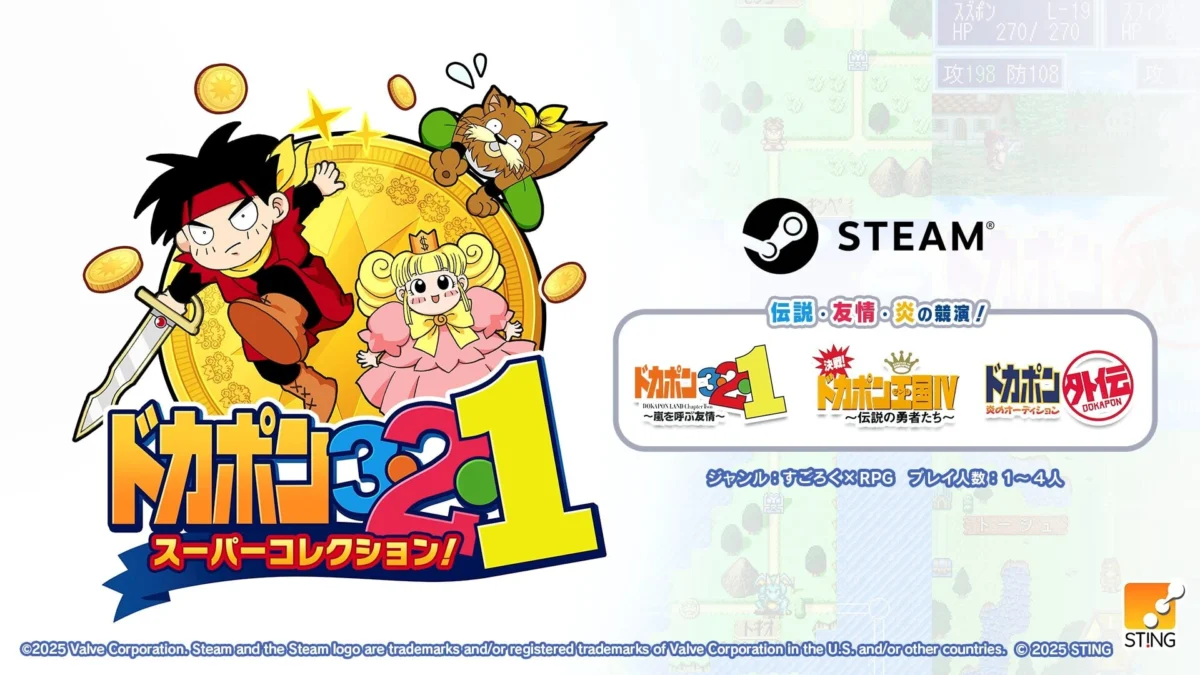
TOKYO, Japan – Fans of unique Japanese role-playing games and board game hybrids have a new reason to celebrate (and perhaps fear for their friendships), as developer Sting has officially announced the upcoming PC release of DOKAPON 3-2-1: Super Collection!. This highly anticipated bundle, which gathers three classic entries from the beloved "sugoroku RPG" series, is set to launch on Steam on June 29. While eagerly awaited by a dedicated fanbase, the release will, at least initially, cater exclusively to Japanese-speaking audiences, supporting only Japanese as a language option.
The DOKAPON 3-2-1: Super Collection! promises to deliver the quintessential Dokapon experience, blending strategic board game mechanics with deep RPG progression, all underscored by intense player-versus-player competition that has earned the series its notorious "friendship-destroying" moniker. This PC debut follows its initial launch for the Nintendo Switch in Japan earlier this year, on January 29.
Main Facts: A Trio of Treachery Arrives on Steam
The core of this announcement revolves around Sting’s decision to bring DOKAPON 3-2-1: Super Collection! to the PC platform via Steam. Scheduled for release on June 29, 2024, this digital collection is poised to introduce a new segment of players to the distinctive charm and brutal competitive nature of the Dokapon series. Developed by Sting, a company renowned for its niche, often experimental RPG titles, the collection bundles three foundational games: DOKAPON Kingdom IV, DOKAPON! 3-2-1, and DOKAPON Gaiden: Flame no Audition. These titles represent a significant era for the franchise, offering a deep dive into its unique gameplay philosophy.
At its heart, Dokapon defies easy categorization, presenting itself as a "sugoroku RPG." Sugoroku, a traditional Japanese board game akin to Chutes and Ladders or Snakes and Ladders, forms the structural backbone, with players navigating a game board via dice rolls. However, this simple premise is layered with complex RPG elements: character leveling, equipment management, spellcasting, and strategic decision-making that profoundly impact progress. The true genius and infamy of Dokapon, however, lie in its multiplayer focus. Players compete not just against AI, but viciously against each other, with mechanics designed to allow for sabotage, theft, and outright financial ruin of opponents. This intense, anything-goes approach is precisely what fuels the series’ reputation for turning friendly gatherings into fierce rivalries.
A significant point of discussion surrounding the PC launch is the confirmation that DOKAPON 3-2-1: Super Collection! will support only Japanese as a language option. This decision, while not uncommon for niche Japanese titles making their way to PC, means that a substantial portion of the global PC gaming audience will require proficiency in Japanese or rely on community-created translation efforts to fully engage with the game’s intricate mechanics and narrative. Despite this language barrier, the announcement has generated considerable buzz among import gamers and long-time fans who have patiently awaited wider availability of these classic titles. The Steam page for the collection highlights the blend of "legend, friendship, and fire" that defines these adventures, promising "tension-filled moments of sabotage and comeback, intense player interactions, and the thrill of stealing victory right from your rivals." It boldly states, "Friendship… eventually turns into betrayal. …but that’s what DOKAPON is all about."
Chronology: From Super Famicom Roots to Modern Platforms
The journey of the Dokapon series is a testament to its enduring appeal, evolving from its origins on classic Nintendo hardware to its current iteration on modern gaming platforms. The DOKAPON 3-2-1: Super Collection! specifically brings together titles from the Super Famicom (SNES) era, a period often considered the golden age of 16-bit RPGs.
Origins of the Dokapon Series
The Dokapon series first emerged in Japan in 1993 with the release of Dokapon Kingdom for the Super Famicom. Developed by Sting, this inaugural title immediately set itself apart with its unconventional blend of board game movement and deep role-playing mechanics. Unlike traditional RPGs focused solely on linear narratives or exploration, Dokapon introduced a highly competitive, player-versus-player element where the ultimate goal was often to become the wealthiest or most powerful adventurer by any means necessary—even if it meant hindering or outright bankrupting fellow players. This novel concept quickly garnered a cult following, laying the groundwork for a franchise that would consistently deliver unique and often chaotic multiplayer experiences. Over the years, the series saw releases on various platforms, including the PlayStation, PlayStation 2, Game Boy Advance, and Nintendo DS, with Dokapon Kingdom (Wii/PS2) being one of the more widely known entries in the West due to its English localization. Each iteration refined the core "sugoroku RPG" formula, deepening the RPG systems while maintaining the signature competitive spirit.
The Switch Launch: A Modern Revival
Before its PC announcement, DOKAPON 3-2-1: Super Collection! made its debut on the Nintendo Switch in Japan on January 29, 2024. This release marked a significant moment for the series, bringing three of its foundational Super Famicom titles to a contemporary console. The Switch, with its portability and ease of local multiplayer setup, proved to be an ideal platform for a game like Dokapon, which thrives on shared screen interaction and spontaneous gaming sessions. The collection’s launch on Switch was met with enthusiasm by Japanese fans, reinforcing the continued relevance and demand for these classic titles. It served as a modern reintroduction, allowing both long-time aficionados to revisit cherished memories and a new generation of players to discover the series’ unique brand of competitive fun. The success and positive reception of the Switch version likely played a crucial role in Sting’s decision to expand the collection’s availability to the PC platform, signaling a renewed focus on preserving and re-releasing key entries from their extensive back catalog.
The PC Port Announcement: Expanding Accessibility
The announcement of DOKAPON 3-2-1: Super Collection! for PC via Steam, slated for June 29, 2024, represents the latest chapter in the series’ ongoing evolution. This move broadens the game’s reach beyond its initial console release, making these cult classics accessible to the vast global PC gaming audience. While the Japanese-only language support limits immediate widespread adoption in Western markets, the PC platform offers inherent advantages, such as potentially higher resolutions, customizable controls, and the possibility of community-driven localization efforts down the line. For many PC gamers who appreciate unique Japanese imports, the Steam release signifies an opportunity to experience a significant piece of gaming history that might have previously been difficult to access. This strategic expansion to PC not only caters to an existing fanbase but also opens the door for the Dokapon series to find new adherents among players who gravitate towards distinctive, genre-bending experiences available on Steam. It underscores a trend among Japanese developers to port classic titles to PC, acknowledging the platform’s global reach and dedicated communities.
Supporting Data: Unpacking the Sugoroku RPG and its Legacy
To truly appreciate DOKAPON 3-2-1: Super Collection!, one must delve into the mechanics that define a "sugoroku RPG" and understand the historical significance of the three titles it encompasses. This collection is not merely a bundle of old games; it’s a curated experience showcasing the innovative design that has captivated players for decades.
Deeper Dive into the Sugoroku RPG Genre
The term "Sugoroku RPG" perfectly encapsulates the hybrid nature of Dokapon. Sugoroku, literally meaning "double sixes," refers to a category of Japanese board games played with dice, where players move pieces along a track. The most common form, E-Sugoroku (picture sugoroku), involves moving a piece across a board with various spaces, each triggering an event or consequence. Dokapon takes this fundamental concept and injects a robust RPG system. Players create characters, choose from different classes (e.g., Warrior, Magician, Thief), and then embark on a quest to defeat monsters, explore dungeons, and complete objectives on a dynamic game board.
Each space on the board can trigger a variety of events: encountering monsters for turn-based combat, finding treasure, landing on a shop to buy items and equipment, or even encountering negative spaces that impose penalties or trigger special events. As players defeat monsters and complete quests, they gain experience points, level up, learn new skills, and improve their stats, much like a traditional RPG. The ultimate goal often revolves around accumulating wealth, defeating a final boss, or conquering the most territory, but the path to victory is anything but straightforward. The genius of the sugoroku RPG lies in its blend of luck (dice rolls), strategy (character building, item usage), and player interaction, creating a dynamic and often unpredictable experience where fortunes can change in an instant.
The Included Titles: A Legacy of Chaos
The DOKAPON 3-2-1: Super Collection! features three pivotal titles from the Super Famicom era, each contributing to the series’ unique identity:
-
DOKAPON! 3-2-1 (1994, Super Famicom): This title is often cited as a cornerstone of the series, refining the core sugoroku RPG mechanics established in the original Dokapon Kingdom. It introduced many elements that would become franchise staples, including diverse character classes, intricate battle systems, and a strong emphasis on competitive play. Players navigate a world map, battling monsters, acquiring loot, and strategically maneuvering to gain an advantage over their rivals. Its bright, charming aesthetic belied a game that could be surprisingly cutthroat, setting the tone for the "friendship-destroying" reputation.
-
DOKAPON Gaiden: Flame no Audition (1995, Super Famicom): As a "gaiden" (side story) entry, Flame no Audition built upon the foundation of its predecessors while introducing new narrative elements and potentially expanded mechanics. Gaiden titles often experiment with different themes or character focuses, and Flame no Audition likely offered a fresh take on the familiar Dokapon formula. While details on its specific innovations are more obscure without official English localization, it contributed to the growing lore and gameplay diversity of the series, further cementing its status as a unique genre innovator.
-
DOKAPON Kingdom IV (1996, Super Famicom): This installment, despite its "IV" designation, represents another significant evolution for the series on the Super Famicom. By 1996, Sting had honed the Dokapon experience, and Kingdom IV likely featured more polished graphics, refined gameplay systems, and an even deeper focus on strategic player interaction. Dokapon Kingdom is arguably the most recognizable name in the series globally, thanks to its Wii and PS2 remakes receiving English localization. While this specific Kingdom IV is the original SNES version, it shares the core tenets of grand adventure, fierce competition, and unpredictable outcomes that define the "Kingdom" sub-brand.
These three titles, released consecutively, showcase the rapid development and iteration of the Dokapon formula during its formative years. They represent a blend of refinement and experimentation, providing players with a comprehensive look at the series’ 16-bit legacy.
Gameplay Mechanics and the "Friendship-Destroying" Element
The "friendship-destroying" nature of Dokapon is not a mere marketing slogan; it’s a fundamental aspect of its design, woven into nearly every gameplay mechanic. The game thrives on intense player interactions, where helping oneself often means actively hindering an opponent.
- Sabotage and Theft: Players can attack each other on the map, not just in direct combat but also through various means of sabotage. Stealing items, money, or even entire towns from rivals is commonplace. A well-timed spell or item can strip an opponent of their hard-earned progress, leading to moments of immense frustration and glee.
- Competitive Quests: Many objectives involve racing to a certain point or defeating a specific monster. The first player to achieve the goal reaps the best rewards, leaving others with lesser spoils or nothing at all. This "winner-take-all" mentality intensifies the competition.
- Boss Battles: While boss battles are cooperative in the sense that all players might be fighting the same threat, the reward for defeating the boss often goes to the player who dealt the final blow or contributed most significantly, creating an underlying rivalry even in joint efforts.
- Wealth Accumulation: The ultimate goal in many Dokapon scenarios is to become the wealthiest player. This is achieved through various means, including clearing towns of monsters and collecting taxes, selling valuable items, and, crucially, robbing other players. The zero-sum nature of wealth in the game means that one player’s gain often comes directly from another’s loss.
- Character Progression and Backstabbing: While building one’s character through leveling and acquiring powerful equipment is vital, it’s equally important to consider how these advancements can be used to dominate opponents. A powerful player might intentionally target a weaker rival to strip them of their gear, setting them back significantly.
These mechanics create a constant state of tension, where players must balance their own progress with the need to thwart their rivals. A seemingly innocent dice roll can lead to a chain of events that spirals into betrayal, making Dokapon a unique social experiment disguised as a video game.
New Features for the Collection
While the official Steam page for DOKAPON 3-2-1: Super Collection! broadly states that it is "Enhanced with new features for an even better experience!!", specific details on these enhancements have not been explicitly itemized. However, drawing from trends in modern retro game collections, players can reasonably anticipate a range of quality-of-life improvements and additions designed to modernize the classic experience:
- Visual Enhancements: Potential for improved resolution, upscaled graphics, and various display options (e.g., pixel-perfect, widescreen, CRT filters) to cater to different player preferences.
- Quality-of-Life Features: Save states, rewind functions (to undo unfavorable dice rolls or combat decisions), and fast-forward options for quicker traversal or combat.
- Controller Support: Comprehensive support for modern PC gamepads, ensuring a comfortable and authentic gameplay experience.
- Gallery Modes: Unlockable content such as concept art, original marketing materials, and perhaps even an in-game music player featuring the classic soundtracks.
- Online Multiplayer: While Dokapon is traditionally a local multiplayer experience, some modern ports of classic games have introduced online play. This would be a significant enhancement, though not confirmed. Given the nature of the game, robust netcode would be essential.
- Accessibility Options: Potentially adjustable text speeds, remappable controls, and other features to improve accessibility.
These potential enhancements aim to make the collection appealing not only to nostalgic fans but also to new players accustomed to modern gaming conveniences, without compromising the integrity of the original titles.
Official Responses: Sting’s Vision and Community Expectations
While no direct press release quotes from Sting accompany the PC announcement beyond the Steam page description, the messaging embedded within that description and the decision to port the collection to PC speak volumes about the developer’s strategy and understanding of its audience.
Developer’s Statement (Implied)
Sting’s official description on the Steam page serves as its primary communication regarding the collection. Phrases like "Legend, friendship, and fire—three DOKAPON adventures unite in one collection" and "But underneath lies a anything-goes, free-for-all sugoroku RPG experience!!" clearly articulate the essence of the game from the developer’s perspective. They emphasize the unique genre blend and, crucially, highlight the series’ notorious competitive spirit with lines such as "The signature DOKAPON experience delivers tension-filled moments of sabotage and comeback, intense player interactions, and the thrill of stealing victory right from your rivals" and the now-iconic, "Friendship… eventually turns into betrayal. …but that’s what DOKAPON is all about."
This messaging indicates that Sting fully embraces the chaotic, social dynamic that has defined Dokapon. They understand that players are drawn to the series precisely for its ability to foster intense, sometimes infuriating, but ultimately memorable interactions. The bundling of these three specific Super Famicom titles suggests a desire to present a foundational look at the series, allowing players to experience its evolution during a critical period. The decision to enhance the collection, even without specific details, implies a commitment to delivering a polished and respectful port that honors the originals while providing a contemporary experience.
Community Reception (Anticipated)
The Dokapon series, particularly Dokapon Kingdom on the Wii and PS2, enjoys a passionate cult following in the West. News of the Super Collection‘s PC release has therefore been met with a mix of excitement and familiar disappointment within this community. The excitement stems from the accessibility of these classic titles on a widely used platform like Steam. Many fans have long desired to play earlier Dokapon entries that were never localized, and a PC port, even in Japanese, offers new avenues for engagement, including the potential for fan-made translations.
However, the confirmed Japanese-only language support is a significant point of contention. While understandable for niche titles, it creates a barrier for many Western players eager to dive into the games’ intricate RPG mechanics, detailed event descriptions, and often humorous dialogue. Many community discussions revolve around the hope for an eventual official English localization or the prospect of dedicated fans creating unofficial patches. The Dokapon community is known for its dedication, and it wouldn’t be surprising to see such efforts emerge, demonstrating the strong desire for these games to be more widely understood and played.
The Language Barrier
The decision to release DOKAPON 3-2-1: Super Collection! exclusively in Japanese on PC is a critical factor influencing its global reach. For a game that blends complex RPG systems with narrative-driven board game events, understanding the text is paramount. Character stats, item descriptions, spell effects, quest objectives, and event choices all require language comprehension. For non-Japanese speakers, this means relying on translation tools, guides, or community-created patches, which can detract from the seamless gameplay experience. This limitation confines the game primarily to fluent Japanese speakers, dedicated import gamers, and those willing to invest extra effort into understanding the game. It underscores the ongoing challenge for many Japanese developers in balancing localization costs against the anticipated market size for niche titles outside of their domestic market.
Implications: Market Impact and the Future of Dokapon
The PC release of DOKAPON 3-2-1: Super Collection! carries several implications, ranging from its potential market impact to what it might signify for the future of the Dokapon series and the broader trend of retro game preservation.
Market Impact and Niche Appeal
The release of DOKAPON 3-2-1: Super Collection! on Steam will primarily appeal to a niche market. This includes:
- Dedicated Dokapon Fans: Long-time enthusiasts of the series, particularly those who have followed its Japanese releases or are familiar with its retro entries.
- JRPG and Import Game Aficionados: Players who actively seek out unique Japanese RPGs and are accustomed to playing titles without official English localization.
- Retro Gaming Enthusiasts: Collectors and fans of classic 16-bit era games who appreciate digital re-releases and preservation efforts.
- Japanese-Speaking Gamers: The primary target audience who can fully enjoy the game as intended.
While the language barrier will prevent a massive mainstream breakthrough in Western markets, the PC platform’s global reach means that even a niche release can find a significant audience. Success on Steam could be measured not just in raw sales numbers but also in community engagement, reviews, and the visibility it brings to the Dokapon brand. This release contributes to the growing catalog of unique Japanese titles available on PC, enriching the platform’s diversity.
Future of the Dokapon Series
The decision by Sting to release DOKAPON 3-2-1: Super Collection! on both Switch and PC could be interpreted as a strategic move to gauge renewed interest in the Dokapon series. If the collection performs well, even with its language limitations, it could signal to Sting that there is a viable market for further Dokapon projects. This might include:
- Further Localizations: Strong sales or significant community demand could prompt Sting to consider official English localizations for this collection or future titles.
- New Dokapon Games: Positive reception could encourage the development of entirely new Dokapon entries, potentially incorporating modern design philosophies while retaining the series’ core identity.
- More Retro Collections: Sting has a rich back catalog of unique and often quirky RPGs. The success of this collection might lead to similar bundles for other classic Sting titles.
The collection serves as a litmus test, providing valuable data on how a foundational Dokapon experience resonates with contemporary audiences across different platforms.
The Enduring Appeal of Retro Collections
The DOKAPON 3-2-1: Super Collection! exemplifies the enduring appeal of retro game collections. In an industry increasingly focused on cutting-edge graphics and live-service models, there remains a strong demand for revisiting or discovering classic titles. Retro collections offer several benefits:
- Preservation: They bring historically significant games to modern platforms, making them accessible to new generations and preventing them from being lost to time.
- Nostalgia: For older players, they offer a chance to relive cherished memories and experience games from their youth with modern conveniences.
- Discovery: New players can explore the roots of game design, appreciating innovative mechanics and storytelling from previous eras.
- Value Proposition: Bundling multiple games into one package often provides excellent value for money.
This collection, specifically, highlights the importance of preserving unique genre blends like the sugoroku RPG, showcasing a design philosophy that stands apart from many contemporary games. It reminds us that innovation isn’t solely tied to technological advancement but also to creative game design.
Community’s Role in Localization
Finally, the Japanese-only release underscores the crucial role of fan communities in bridging language barriers for beloved games. For titles without official English localization, dedicated fans often take it upon themselves to create unofficial translation patches, guides, and wikis. These efforts, driven by passion and a desire to share their favorite games with a wider audience, can significantly expand a game’s reach and impact. While not a substitute for official support, the potential for such community-driven localization for DOKAPON 3-2-1: Super Collection! is high, demonstrating the powerful connection between players and the games they love, even across linguistic divides.
In conclusion, DOKAPON 3-2-1: Super Collection!‘s arrival on PC is a significant event for fans of unique Japanese RPGs. While the language barrier presents a challenge, the opportunity to revisit or discover three pivotal titles from the "friendship-destroying" series is a welcome one, hinting at a potentially vibrant future for the Dokapon brand. The stage is set for a new wave of players to embark on adventures filled with chaos, strategy, and inevitable betrayal when the collection launches on June 29.


 Lina Irawan
 Sagoh
Sagoh