

In the fast-paced world of digital marketing, the visual landscape is constantly shifting. As social media platforms iterate on their UI/UX designs to prioritize mobile-first experiences, the technical requirements for content creators change accordingly. For social media managers and digital marketers, staying ahead of these shifts is not merely a matter of aesthetics; it is a fundamental requirement for maintaining brand authority, engagement, and reach.
![Social media image sizes for all networks [June 2026]](https://blog.hootsuite.com/wp-content/uploads/2023/01/Social-Media-Image-Sizes-2023.png)
Using the incorrect image dimensions can lead to unsightly cropping, pixelation, or the accidental cutting off of vital brand messaging. In 2026, where attention spans are measured in milliseconds, ensuring your visual content is perfectly optimized for the specific "real estate" of each platform is more critical than ever. This guide provides the definitive technical specifications for all major social networks, ensuring your brand remains sharp, professional, and impactful.
![Social media image sizes for all networks [June 2026]](https://blog.hootsuite.com/wp-content/uploads/2025/12/Social-media-image-sizes-for-all-networks-December-2025-556x556.png)
The Evolution of Visual Standards: A Chronology of Change
Social media platforms rarely announce massive, sweeping changes to image dimensions overnight. Instead, these updates typically arrive as a series of incremental adjustments designed to accommodate new hardware capabilities, such as higher-resolution smartphone screens, or to better integrate new ad formats.
![Social media image sizes for all networks [June 2026]](https://blog.hootsuite.com/wp-content/uploads/2025/12/Social-media-image-sizes-for-all-networks-January-2026-1-620x465.png)
Over the past few years, we have seen a definitive pivot toward the 9:16 vertical aspect ratio, driven by the explosive growth of short-form video content like Reels, TikToks, and YouTube Shorts. Platforms like X (formerly Twitter) and LinkedIn have followed suit, adapting their feed layouts to provide more screen coverage for vertical images. As we enter 2026, the industry standard has settled on a 1080-pixel width as the universal baseline for high-quality uploads, providing enough density to remain crisp on high-definition displays while remaining lightweight enough for rapid mobile loading.
![Social media image sizes for all networks [June 2026]](https://blog.hootsuite.com/wp-content/uploads/2025/04/Social-media-image-sizes-Instagram-620x558.jpg)
Strategic Implications: Why Dimensions Matter
The stakes for getting these dimensions right go far beyond simple visual appeal. When an image is improperly sized, the platform’s algorithm may automatically compress or crop it, which often results in:
![Social media image sizes for all networks [June 2026]](https://blog.hootsuite.com/wp-content/uploads/2025/12/Social-media-image-sizes-for-all-networks-January-2026-1-1-620x629.png)
- Algorithmic Penalties: Poorly rendered, pixelated, or oddly cropped images are often flagged by users as low-quality, leading to lower engagement rates. Platforms prioritize high-engagement content, meaning a poorly formatted image can indirectly throttle your total organic reach.
- Brand Erosion: Inconsistency is the enemy of brand identity. If your profile picture is cut off at the edges or your ad copy is obscured by a "Read More" button, you lose professional credibility.
- Conversion Friction: In e-commerce, a product image that is not optimized can fail to show essential details or CTA buttons. Every pixel of space is valuable real estate that should be used to guide the user toward a conversion.
Platform-by-Platform Technical Specifications
Instagram: The Visual Hub
Instagram remains the most demanding platform regarding visual quality. While it supports landscape and portrait, the grid remains square.
![Social media image sizes for all networks [June 2026]](https://blog.hootsuite.com/wp-content/uploads/2025/12/Social-media-image-sizes-for-all-networks-January-2026-3-620x753.png)
- Profile Picture: 320 x 320 pixels. Note that while displayed as a circle, the file itself is a square. Keep your focal point perfectly centered.
- Feed Posts: 1080 x 1080 (square), 1080 x 1350 (portrait), and 1080 x 566 (landscape).
- Stories & Reels: 1080 x 1920. Always leave a "safe zone" of approximately 14% at the top and 35% at the bottom to ensure text isn’t covered by UI elements.
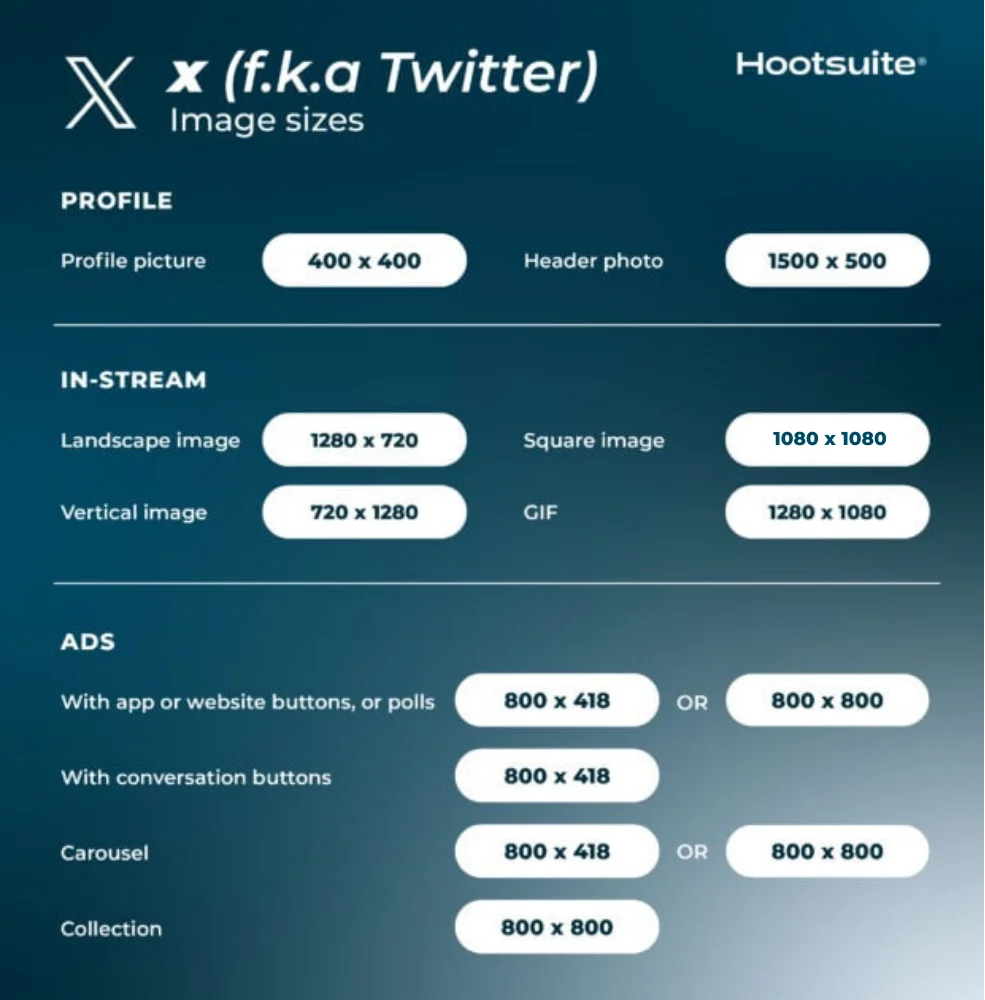
X (formerly Twitter): The Multimedia Pivot
X is currently doubling down on its video tab and multimedia experience, making high-resolution images a necessity for visibility.
![Social media image sizes for all networks [June 2026]](https://blog.hootsuite.com/wp-content/uploads/2025/04/Social-media-image-sizes-LinkedIn-620x651.jpg)
- Profile Picture: 400 x 400 pixels.
- Header Photo: 1500 x 500 pixels.
- In-Stream Images: 1200 x 675 pixels is the recommended standard for maintaining aspect ratio across both desktop and mobile feeds.
Facebook: The Multi-Device Challenge
Facebook is unique because it must serve content across vastly different screen sizes, from desktop monitors to low-end mobile devices.
![Social media image sizes for all networks [June 2026]](https://blog.hootsuite.com/wp-content/uploads/2025/04/Social-media-image-sizes-Pinterest-620x517.jpg)
- Profile Picture: 320 x 320 pixels.
- Cover Photo: 851 x 315 pixels.
- Shared Links: 1200 x 630 pixels. Failing to meet this size will often result in a small, low-resolution thumbnail that drastically reduces click-through rates.
LinkedIn: The Professional Standard
LinkedIn is unique in its separation of personal profile requirements and company page branding.
![Social media image sizes for all networks [June 2026]](https://blog.hootsuite.com/wp-content/uploads/2025/04/Social-media-image-sizes-Snapchat-620x325.jpg)
- Personal Profile: 400 x 400 pixels.
- Company Page Cover: 1128 x 191 pixels.
- Post Images: 1200 x 627 pixels for link previews and 1200 x 1200 for standard updates.
TikTok & Threads
- TikTok: 1080 x 1920 is the gold standard for both videos and carousels. Ensure your creative elements are within the center-safe zones.
- Threads: 1440 x 1920 is recommended to ensure your high-resolution photography holds up against the platform’s compression algorithms.
Supporting Data: The Impact of Optimization
Recent industry studies suggest that brands utilizing platform-specific optimized imagery see a 20% to 30% increase in engagement compared to those using "one-size-fits-all" assets. Furthermore, images that are correctly cropped to fill the mobile screen (the 9:16 vertical format) receive significantly higher view-through rates on ad campaigns, as they occupy the entirety of the user’s focus, effectively removing distractions from the feed.
![Social media image sizes for all networks [June 2026]](https://blog.hootsuite.com/wp-content/uploads/2025/04/Social-media-image-sizes-YouTube-620x321.jpg)
Official Guidance and Best Practices
Platform representatives consistently emphasize the importance of "Safe Zones." Because UI elements (like follow buttons, timestamps, and captions) overlay your content, you should never place critical information—such as logos, text, or faces—at the very edges of your creative assets.
![Social media image sizes for all networks [June 2026]](https://blog.hootsuite.com/wp-content/uploads/2025/12/Social-media-image-sizes-for-all-networks-January-2026-5-1-620x507.png)
Furthermore, always export your files in the file type preferred by the platform. While most platforms accept JPEGs and PNGs, using a high-quality WebP format is becoming the standard for speed and efficiency, especially for web-based social media managers.
![Social media image sizes for all networks [June 2026]](https://blog.hootsuite.com/wp-content/uploads/2025/04/Social-media-image-sizes-BlueSky-620x321.jpg)
Implications for Modern Marketing Teams
For enterprises, the manual resizing of images for five or six different platforms is an inefficient use of human capital. The modern workflow involves:
![Social media image sizes for all networks [June 2026]](https://blog.hootsuite.com/wp-content/uploads/2025/04/Social-media-image-sizes-Threads-620x321.jpg)
- Template Creation: Designing master assets at the highest resolution (typically 2048px or higher) and then creating "sub-templates" for specific aspect ratios.
- Centralized Asset Management: Using a single source of truth for all brand imagery to ensure everyone is using the latest logo versions and brand colors.
- Integrated Publishing Tools: Leveraging platforms like Hootsuite, which allow for real-time resizing and cropping within the composer tool, ensures that even if a team member forgets a specific dimension, the software provides a safeguard to prevent upload errors.
Conclusion: Consistency is Competitive
In 2026, the "correct" image size is not just a technical constraint; it is a strategic advantage. By adhering to these guidelines, you ensure that your content is optimized for the algorithm, the device, and the user. As social platforms continue to evolve, the brands that prioritize visual precision will be the ones that capture and retain audience attention in an increasingly crowded digital marketplace.
![Social media image sizes for all networks [June 2026]](https://blog.hootsuite.com/wp-content/uploads/2025/04/social-media-image-sizes-1.png)
Don’t leave your brand’s first impression to chance. By standardizing your image production workflow and keeping these dimensions at your fingertips, you ensure that every post, ad, and profile update serves as a professional reflection of your brand’s quality.












No comments yet. Be the first to join the conversation!