

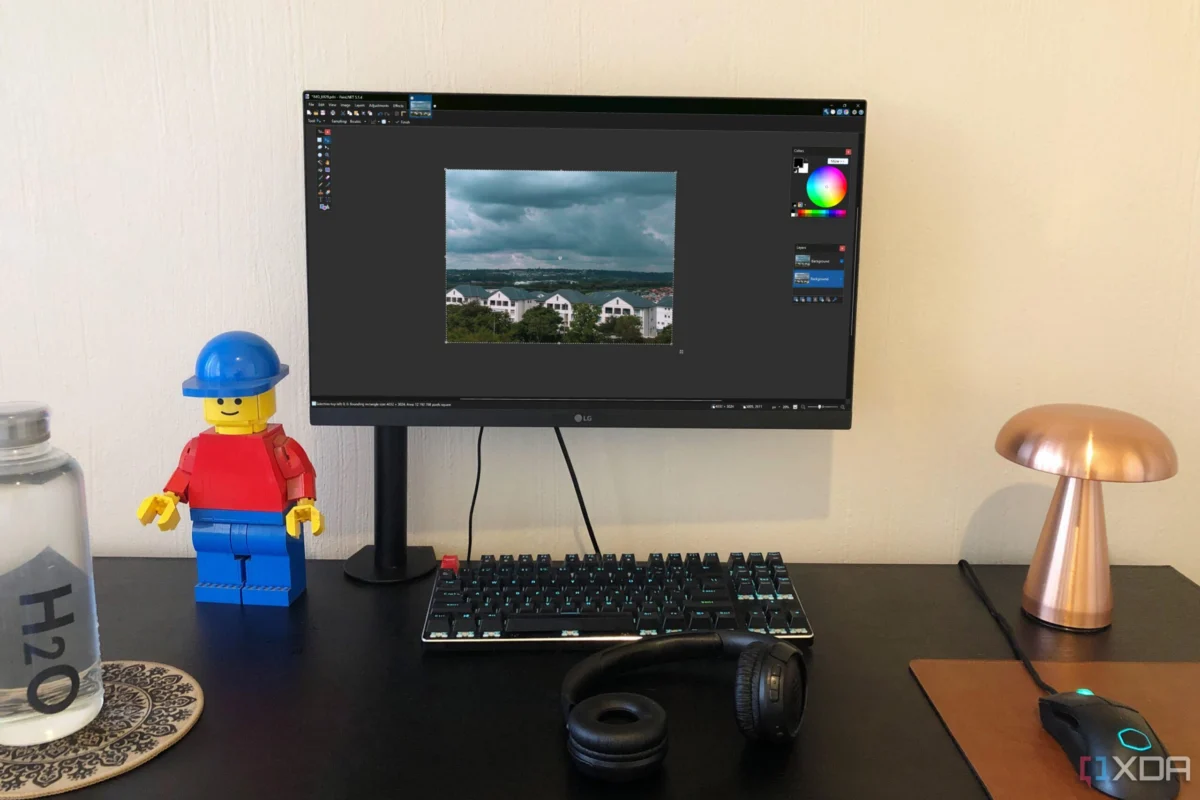
For over two decades, the open-source community and casual Windows users alike have shared a peculiar, minor grievance: the legendary image-editing software, Paint.NET, was not actually hosted at "Paint.net." Instead, users were long directed to the clunky "GetPaint.net" to download the application. This architectural oddity became a staple of internet trivia, a small branding hurdle that stood in the way of one of the most beloved freeware tools in existence.
However, as of late May 2026, that era has officially come to an end. Rick Brewster, the creator of the iconic software, has finally secured the domain name "Paint.net," ending a 22-year struggle against domain squatters and opportunistic entities. This victory represents more than just a URL change; it marks a triumph of digital sovereignty and a lesson in the long-term persistence required to protect intellectual property in the modern age.
The Origins of a Digital Staple
To understand the significance of this acquisition, one must look back at the origins of Paint.NET. Conceived in 2004 as an undergraduate senior design project at Washington State University, Paint.NET was intended to be a simple replacement for Microsoft Paint. Under the mentorship of Microsoft, the project grew rapidly, evolving into a robust, feature-rich editor that occupied a "Goldilocks zone" for users: it was significantly more powerful than the native Windows Paint but lacked the steep learning curve and resource-heavy footprint of industry giants like Adobe Photoshop or the open-source powerhouse GIMP.
For millions of Windows users—ranging from casual hobbyists touching up photos to developers creating UI assets—Paint.NET became an essential utility. Yet, throughout its rise to popularity, the domain "Paint.net" remained stubbornly out of reach. While Brewster built the software, the domain was held by third parties who had no connection to the project, effectively holding the brand identity hostage.
A Chronology of a Two-Decade Struggle
The timeline of this acquisition is a testament to the patience required in the world of domain management.
- 2004: Paint.NET is launched as an undergraduate project. By this time, the domain "Paint.net" is already registered, forcing Brewster to adopt "GetPaint.net" as the official home for his software.
- 2005–2024: For nearly two decades, the domain remained in the hands of various owners. During this period, Brewster frequently engaged in informal inquiries to purchase the domain, only to be rebuffed by owners who either refused to sell or demanded exorbitant sums that were financially untenable for a project largely sustained by community goodwill and modest donations.
- December 2025: The situation reached a boiling point. The then-owners of the domain executed a drastic redesign. The new site did not merely sit idle; it was crafted to mimic an official software repository, complete with links and advertisements designed to monetize the confusion of users searching for the legitimate Paint.NET application. This move, which involved profiting from the software’s reputation while potentially exposing users to questionable content, forced a legal confrontation.
- Early 2026: Brewster initiated legal action, citing clear instances of copyright infringement and "cybersquatting"—a practice where domains are registered or used with the intent to profit from the trademark of another.
- May 2026: After months of legal maneuvering, the dispute was resolved in favor of the creator. Brewster confirmed the acquisition of the domain, marking the end of the 22-year wait.
The Turning Point: The Cost of Squatting
The catalyst for this resolution was not just a change in strategy by Brewster, but a significant overstep by the domain holders. In the digital age, domain names are often viewed as real estate, and while squatting is common, crossing the line into consumer deception—specifically by impersonating a software vendor—triggers specific legal protections.

By redesigning their site to mimic the Paint.NET brand, the previous owners inadvertently handed Brewster the leverage he needed. In trademark law, the "likelihood of confusion" is a critical standard. When an entity uses a domain to intentionally deceive users into believing they are on the official site for a specific piece of software, the case for trademark infringement becomes significantly stronger. Brewster, backed by legal counsel, successfully argued that the domain’s use was an active attempt to profit from the reputation he had spent 22 years building.
Official Responses and the Migration Process
Following the announcement on X (formerly Twitter), the response from the software development community has been overwhelmingly positive. Users who grew up using the software expressed a sense of closure, noting that "GetPaint.net" had always felt like a temporary solution that somehow lasted two decades.
Rick Brewster has been transparent about the transition. In his communications, he emphasized that the migration is not merely a matter of flipping a switch. "There are 22 years of links out there that still need to work," Brewster explained. His team is currently in the process of mapping the old infrastructure to the new domain.
The strategy is clear: Paint.net will become the primary destination for all future downloads, tutorials, and plugin repositories. "GetPaint.net" will transition into a permanent redirect, ensuring that legacy links in forums, documentation, and educational materials remain functional. This approach prioritizes user experience and SEO continuity, preventing the "link rot" that often accompanies major site migrations.
Implications for Open Source and Independent Developers
The Paint.NET case serves as a broader case study for independent software developers and open-source contributors. It highlights several key lessons:
1. The Value of Brand Protection
Many independent developers focus exclusively on code, often neglecting the "business" side of their projects—including domain acquisition and trademark registration. While not every project requires a complex legal strategy, securing primary domain names early in a project’s life cycle is a vital defensive measure.

2. Legal Recourse against Cybersquatting
The victory reinforces the efficacy of the Uniform Domain-Name Dispute-Resolution Policy (UDRP) and other trademark-based legal frameworks. It demonstrates that even if a domain is owned by a third party, the way that domain is used matters. If a registrant uses a domain to infringe on a trademark or deceive the public, the original creator has a path to reclaim it.
3. Community as a Force Multiplier
Brewster’s ability to sustain Paint.NET for 22 years is largely due to the loyal community that stood by the software despite its fragmented web presence. This community provided the credibility that helped Brewster argue his case. When a project has a deep, well-documented history of legitimate use, it is much easier to prove in court that a squatter is acting in bad faith.
Looking Forward: What This Means for Paint.NET Users
For the end user, the immediate impact is a cleaner, more intuitive web experience. No longer will new users wonder if they have arrived at the "official" site. This consolidation under the primary domain also simplifies the branding for the software’s future updates.
Furthermore, the acquisition of the domain provides a clean slate for the future of the project. With the domain "Paint.net" finally in the hands of its creator, the software can enter its third decade with a stronger, more professional identity. It allows the project to move away from the "undergraduate project" roots and toward a more mature, enterprise-ready image.
Conclusion: A Victory for the Internet
The 22-year journey to reclaim "Paint.net" is a story of endurance. In an era where the internet is increasingly dominated by massive corporate platforms, the story of an individual developer successfully navigating the complexities of domain law to reclaim his work is refreshing. It is a reminder that the internet is, at its core, a collection of human endeavors, and that the people who build these tools are its true owners.
As the migration completes and "Paint.net" officially becomes the home of the software, it stands as a symbolic victory for developers everywhere. It serves as a reminder that while the path to digital success may be cluttered with squatters, bad-faith actors, and branding hurdles, persistence and the law can eventually clear the way. For Rick Brewster, the long wait is over; for the rest of us, the software we have relied on for years finally has a home that matches its stature.












No comments yet. Be the first to join the conversation!