Nana Wu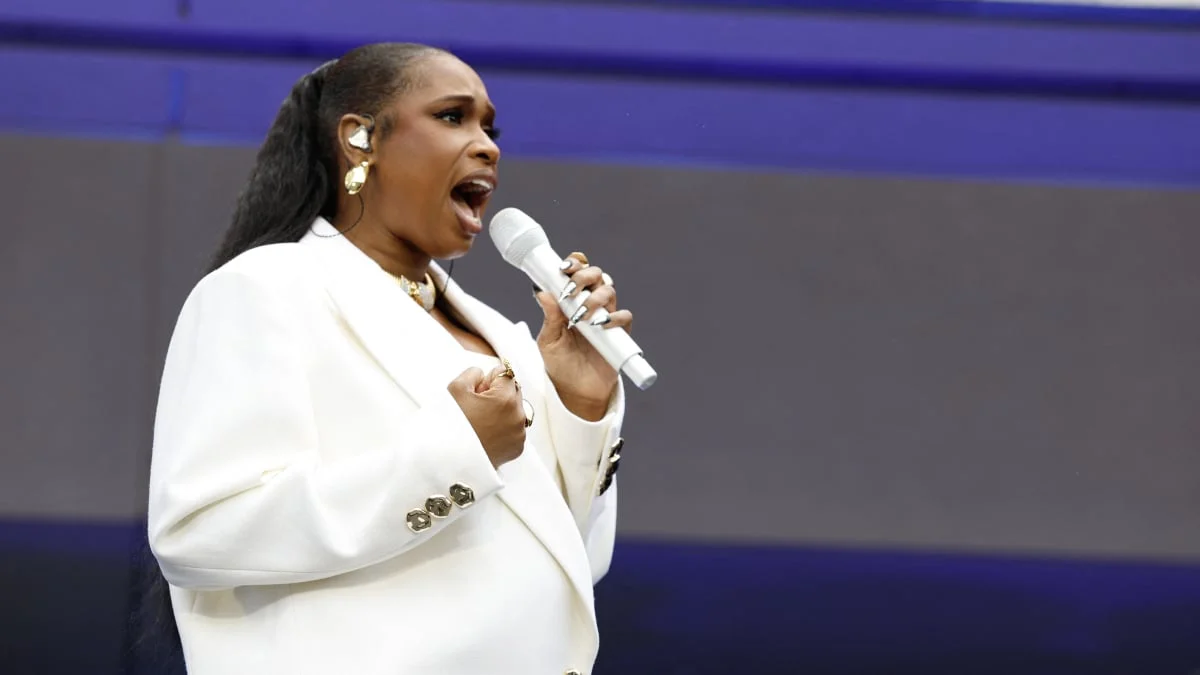
While the United States men’s national team may have been eliminated long before the closing stages of the 2026 FIFA World Cup, the "Star-Spangled Banner" is set to take center stage. On July 14, FIFA confirmed that Grammy and Academy Award-winning powerhouse Jennifer Hudson will perform a "special rendition" of the American national anthem during the pre-game ceremonies for the World Cup final on Sunday, July 19.
The match, held at the New York New Jersey Stadium (MetLife Stadium) in East Rutherford, New Jersey, will feature a high-stakes clash between Spain and Argentina. However, the inclusion of a U.S.-centric musical performance for a match involving two European and South American giants has ignited a firestorm of debate among global football purists and casual viewers alike.
The Chronology of a Controversial Decision
The announcement has raised immediate questions regarding the intersection of international sports protocol and host-nation commercialization. To understand why a non-competing nation’s anthem is being featured, one must look at the timeline of FIFA’s "grand vision" for the 2026 tournament.
- Tournament Kickoff: From the early group stages, FIFA emphasized that the 2026 edition—co-hosted by Canada, Mexico, and the United States—would be a "celebration of the continent."
- The Pre-Game Protocol: FIFA scheduled the official closing ceremony for 1:30 p.m. ET, exactly 90 minutes before the 3:00 p.m. ET kickoff. This window was designed to act as a bridge between the tournament’s conclusion and the final match itself.
- The Announcement: On July 14, FIFA formally identified Jennifer Hudson as the lead performer for the pre-game segment.
- The Public Reaction: Almost immediately, social media platforms were flooded with inquiries from international fans, questioning the relevance of the U.S. anthem at a final match that does not feature the host nation.
FIFA’s official stance is that the performance serves as a tribute to the primary host nation. While the tournament is shared, the final is being held on American soil. Consequently, officials argue that the performance represents the cultural footprint of the host country, a practice that, while rare, is not without precedent. In 1994, when the U.S. last hosted the men’s World Cup, saxophonist Kenny G performed "The Star-Spangled Banner" during the closing ceremonies preceding the final between Brazil and Italy.
Supporting Data: The Commercial Engine of the 2026 Cycle
To understand the decision-making process behind these elaborate ceremonies, one must look at the financial data. FIFA is currently navigating a record-breaking fiscal cycle, with the 2026 World Cup projected to generate upwards of $13 billion in total revenue.
The strategy behind the "Americanization" of the final—including the introduction of the first-ever halftime show—is rooted in capturing the massive, lucrative U.S. sports market. The data suggests this strategy is already paying dividends:
- Viewership Surges: Fox Sports reported that its group-stage broadcasts averaged over 5 million viewers per match, representing nearly double the engagement levels seen in the 2022 Qatar tournament.
- Multilingual Growth: Telemundo and Peacock have recorded historic numbers for Spanish-language broadcasts, indicating that the appeal of the tournament is expanding across all demographics within the United States.
- The "Super Bowl" Effect: By importing elements like half-time musical extravaganzas and high-profile celebrity guest appearances, FIFA is attempting to mirror the structure of the NFL’s Super Bowl. The objective is clear: to convert casual American viewers, who may not traditionally follow the sport, into long-term consumers.
The Entertainment Lineup: A Global Spectacle
The pre-game and half-time segments are being treated as standalone productions. The pre-game ceremony, headlined by Post Malone, will feature a roster of global stars including Robbie Williams, Nicole Scherzinger, and Laura Pausini. Even internet culture is being integrated, with popular streamer IShowSpeed slated for an appearance. Additionally, sources suggest that Hollywood icon Tom Cruise is expected to make a cameo, further cementing the event’s status as a crossover between professional athletics and mainstream entertainment.
The half-time show is perhaps the most significant departure from traditional football norms. Curated by Coldplay’s Chris Martin, the 11-minute performance will feature an unprecedented lineup: Madonna, Shakira, BTS, and Justin Bieber. The production will also include Burna Boy, conductor Gustavo Dudamel, and the PS22 Chorus, alongside characters from Sesame Street and The Muppets.
This segment is officially tied to the FIFA Global Citizen Education Fund, an initiative designed to expand access to education and football programs for children worldwide. While the charitable aspect is widely lauded, the decision to stop the match for an 11-minute show has drawn intense criticism from traditionalists who believe the sport’s rhythm should remain undisturbed by the theatrics of American halftime culture.
Implications: A Shift in the Global Football Paradigm
The inclusion of the U.S. anthem and the massive, celebrity-led halftime show represent a broader, arguably irreversible shift in how FIFA views its product.
The Cultural Divide
Traditional football fans, particularly in Europe and South America, view the game as a continuous, 90-minute narrative. They argue that the introduction of hydration breaks (which some critics claim are thinly veiled commercial opportunities) and elaborate halftime shows erode the purity of the sport. The criticism is that the game is becoming a vehicle for advertising rather than the primary focus of the event.
The Institutional Response
FIFA has largely remained steadfast in its commitment to this new model. Despite the backlash, the governing body points to the "global expansion" of the game. For FIFA, the goal is to make the World Cup an event that transcends the sport itself. By treating the final as a cultural summit, they are broadening the reach of the tournament, ensuring that even those who are indifferent to soccer might tune in for the spectacle.
Economic Realities
The push to align with American media standards is a calculated risk. The financial rewards of tapping into the U.S. market are too significant to ignore. As long as viewership records continue to be shattered, FIFA is unlikely to revert to a more traditional, minimalist format. The "Americanization" of the tournament is, in effect, the cost of scaling the sport to a truly global—and globalized—commercial level.
How to Follow the Final
As the world turns its attention to the New York New Jersey Stadium, fans can expect an experience that feels as much like a major concert tour as it does a championship match.
- The Ceremony: The closing festivities commence at 1:30 p.m. ET on Sunday, July 19.
- The Match: Kickoff for the final between Spain and Argentina is set for 3:00 p.m. ET.
- Broadcast Information:
- English-Language Coverage: Airing on Fox, with streaming available through Fox One and the Fox Sports mobile application.
- Spanish-Language Coverage: Available on Telemundo and Peacock. Peacock has confirmed that all 104 matches of the 2026 tournament are available for streaming, ensuring full coverage of the final for the Spanish-speaking audience.
Whether one views the inclusion of the U.S. national anthem and the star-studded halftime show as an innovative evolution of the sport or a regrettable dilution of its heritage, one thing is certain: the world will be watching. The 2026 World Cup final is poised to be the most-watched, most-debated, and most commercially aggressive event in the history of international football. As Spain and Argentina prepare to battle for the trophy, the spectacle surrounding them will serve as a definitive statement on the future of the game in the United States and beyond.

 Rifan Muazin
 Suro Senen