

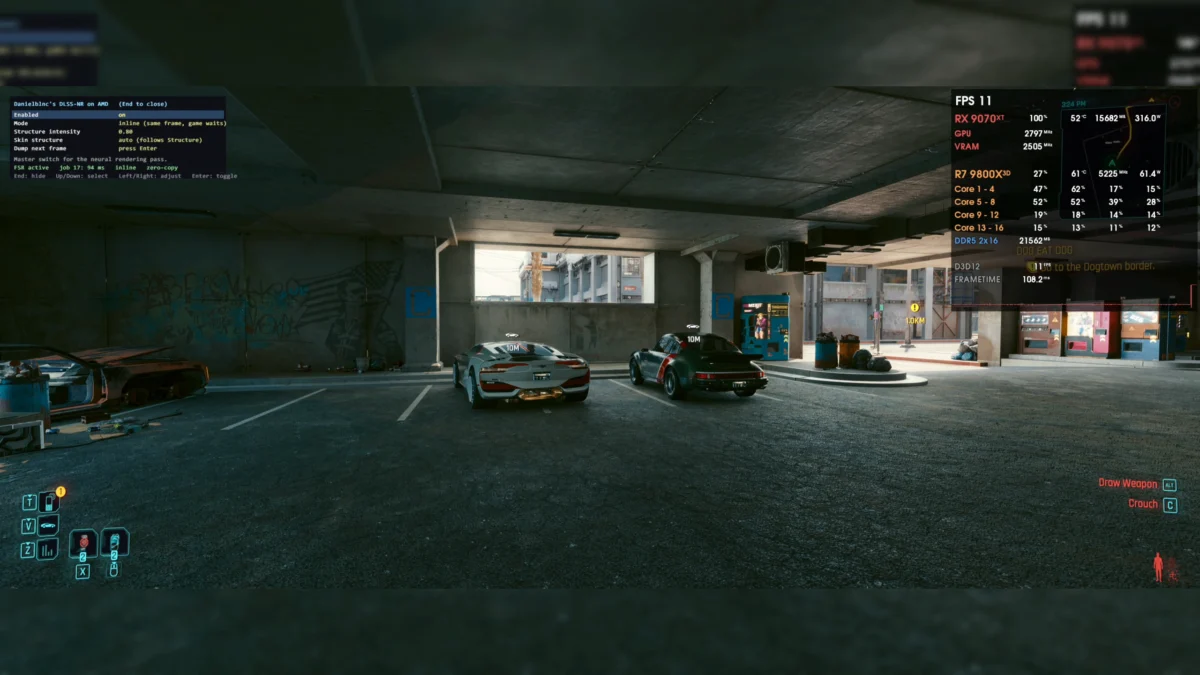
The PC gaming landscape is currently witnessing a fascinating tug-of-war between proprietary technological ecosystems and the persistent ingenuity of the modding community. Following the official debut of Nvidia’s DLSS 5 (Deep Learning Super Sampling) in NBA 2K27, the industry has been set abuzz by the arrival of "DLSS-NR-on-AMD," a sophisticated software workaround developed by modder danielblnc. This project allows users to force Nvidia’s latest AI-upscaling architecture onto AMD’s RDNA 4 (RX 9000 series) graphics cards, challenging the long-held notion that such features are strictly locked behind vendor-specific hardware barriers.
The Genesis of the Breakthrough: DLSS 5 Meets RDNA 4
The integration of DLSS 5 into NBA 2K27 marked a significant milestone for Nvidia, showcasing a new frontier in AI-driven graphical fidelity. Designed primarily for the RTX 50-series architecture, the technology utilizes advanced neural networks to reconstruct frames at unprecedented quality levels.
However, within 24 hours of its release, the modding community—long known for bridging the gaps between rival GPU manufacturers—responded. Developer danielblnc released a tool capable of injecting the DLSS 5 pipeline into DirectX 12 games that already feature FSR (FidelityFX Super Resolution) support. By effectively "tricking" the game into recognizing the AMD GPU as a compatible Nvidia environment, the mod bridges the gap between Nvidia’s proprietary NGX API and AMD’s matrix-accelerated hardware.
How the "Impossible" Port Works
Because the "DLSS-NR-on-AMD" project is closed-source, technical details remain guarded. However, industry experts and analysts have pieced together a plausible explanation for how this injection works. The mod appears to function as a dynamic API wrapper. When a game launches, the wrapper intercepts the requests sent to the Nvidia NGX library, redirecting them to the injected DLSS 5 DLL.
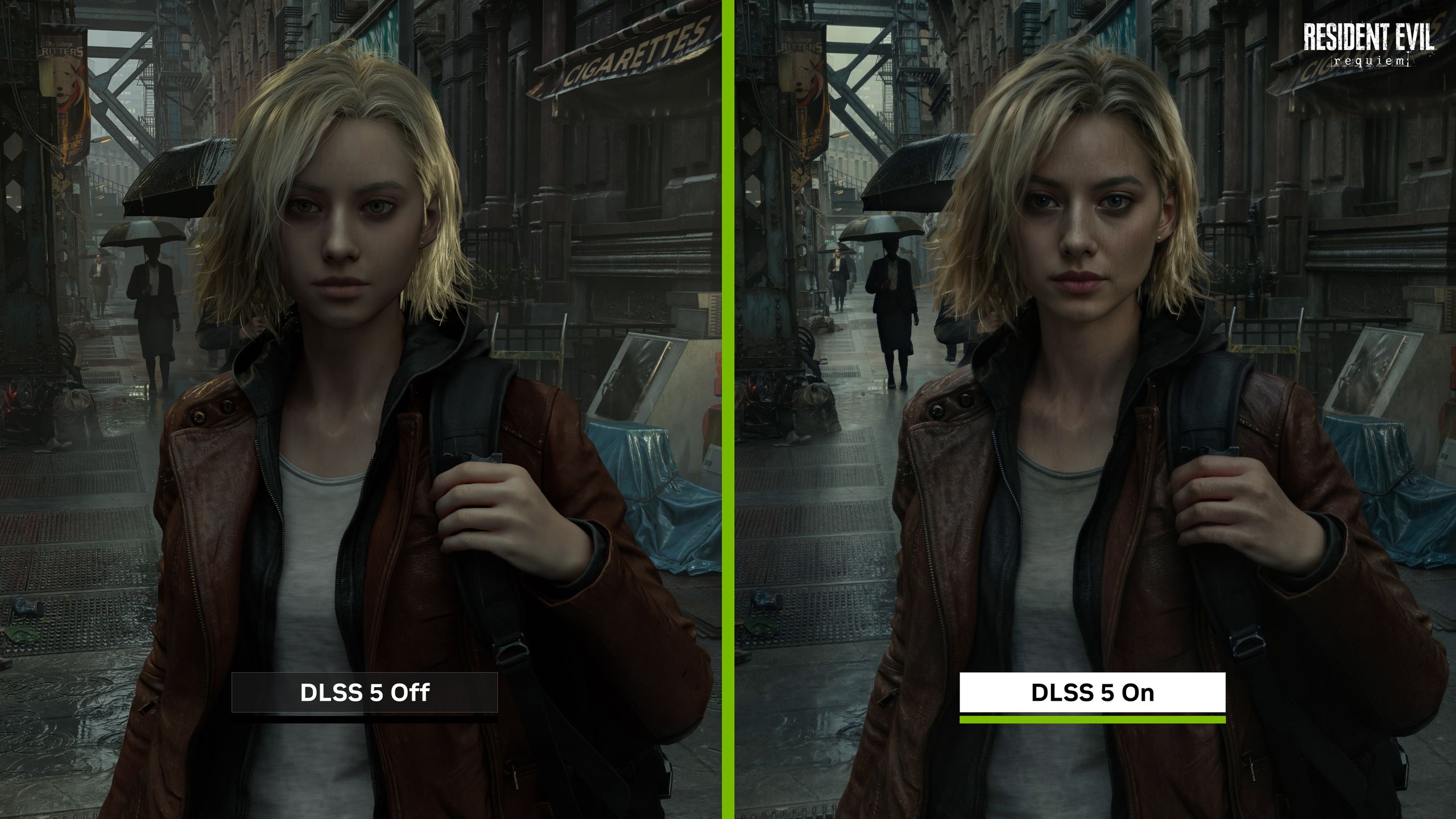
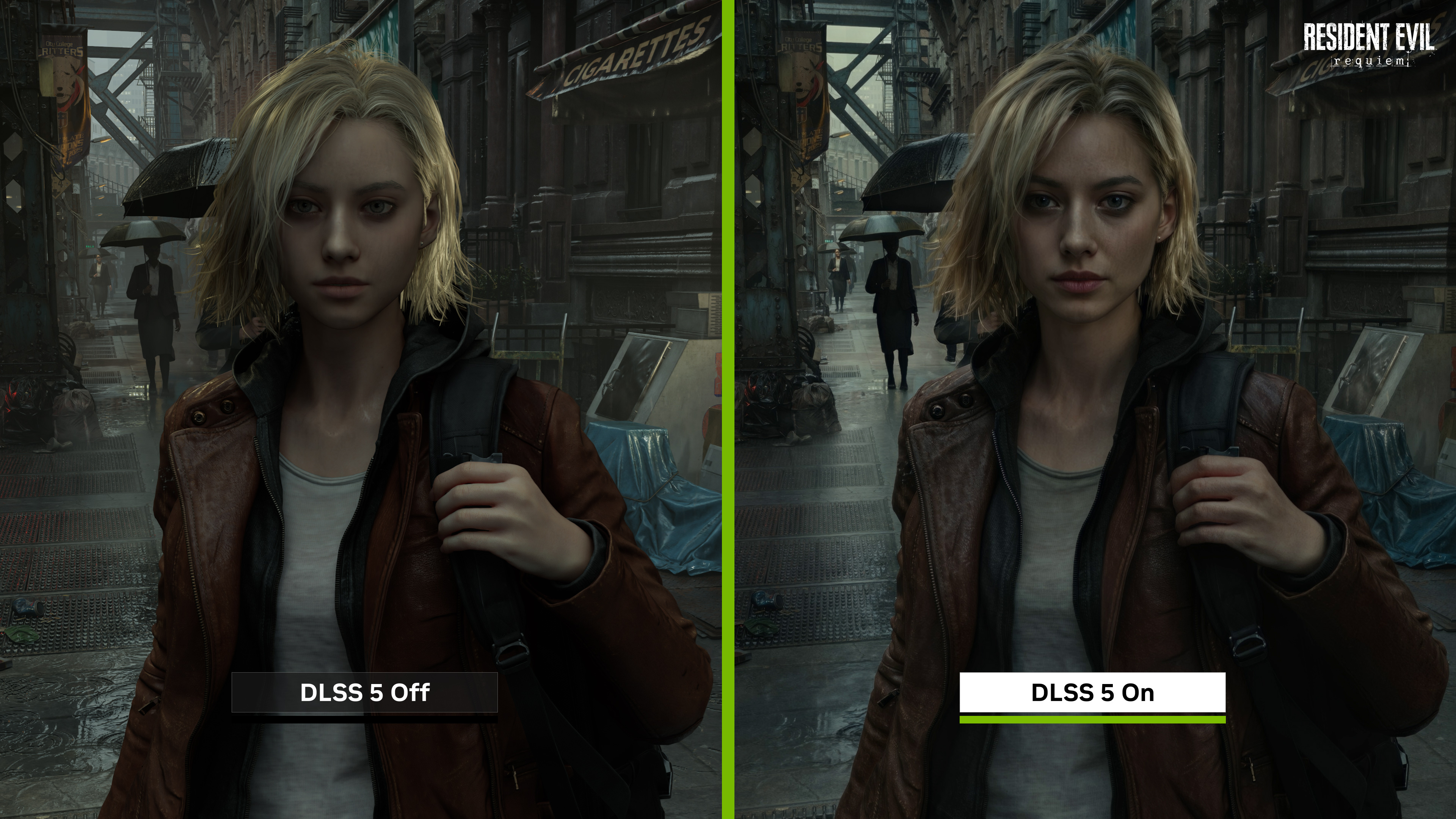
Once the DLL is successfully loaded, the mod performs a complex translation task. Rather than relying on Nvidia’s native CUDA cores, the tool extracts the neural model data—the "brain" of the upscaler—and translates these mathematical calculations into a format that AMD’s HIP RT backend can process. Essentially, it leverages the compute power of AMD’s RDNA 4 matrix accelerators to mimic the output of Nvidia’s Tensor cores. The frame data is then funneled back into the game’s existing FSR pipeline, resulting in an image that maintains the visual characteristics of DLSS 5, even when running on silicon never intended to host it.
Chronology of the Mod’s Evolution
- The Leaks: The project was catalyzed by the unauthorized leak of the DLSS 5 DLL file, which allowed developers to experiment with the file outside of its intended environment.
- Initial Testing: Early tests in Cyberpunk 2077 were underwhelming, with users reporting single-digit frame rates. The initial build struggled to manage the overhead of the neural model on AMD hardware.
- The First Optimization: A rapid patch was deployed by danielblnc, providing a 12% boost in performance. While this pushed the frame rate from 28 FPS to a "stable" 30 FPS at 1080p on an RX 9070 XT, it highlighted the massive compute tax required for this translation.
- Refinement: Subsequent minor updates have provided marginal performance gains (roughly 2%), suggesting that while the "proof of concept" is sound, significant optimization hurdles remain.
Performance Realities and Hardware Limitations
It is critical to distinguish between "functional" and "optimal" performance. While the mod successfully forces the DLSS 5 menu and image quality to appear in-game, the performance cost is substantial.
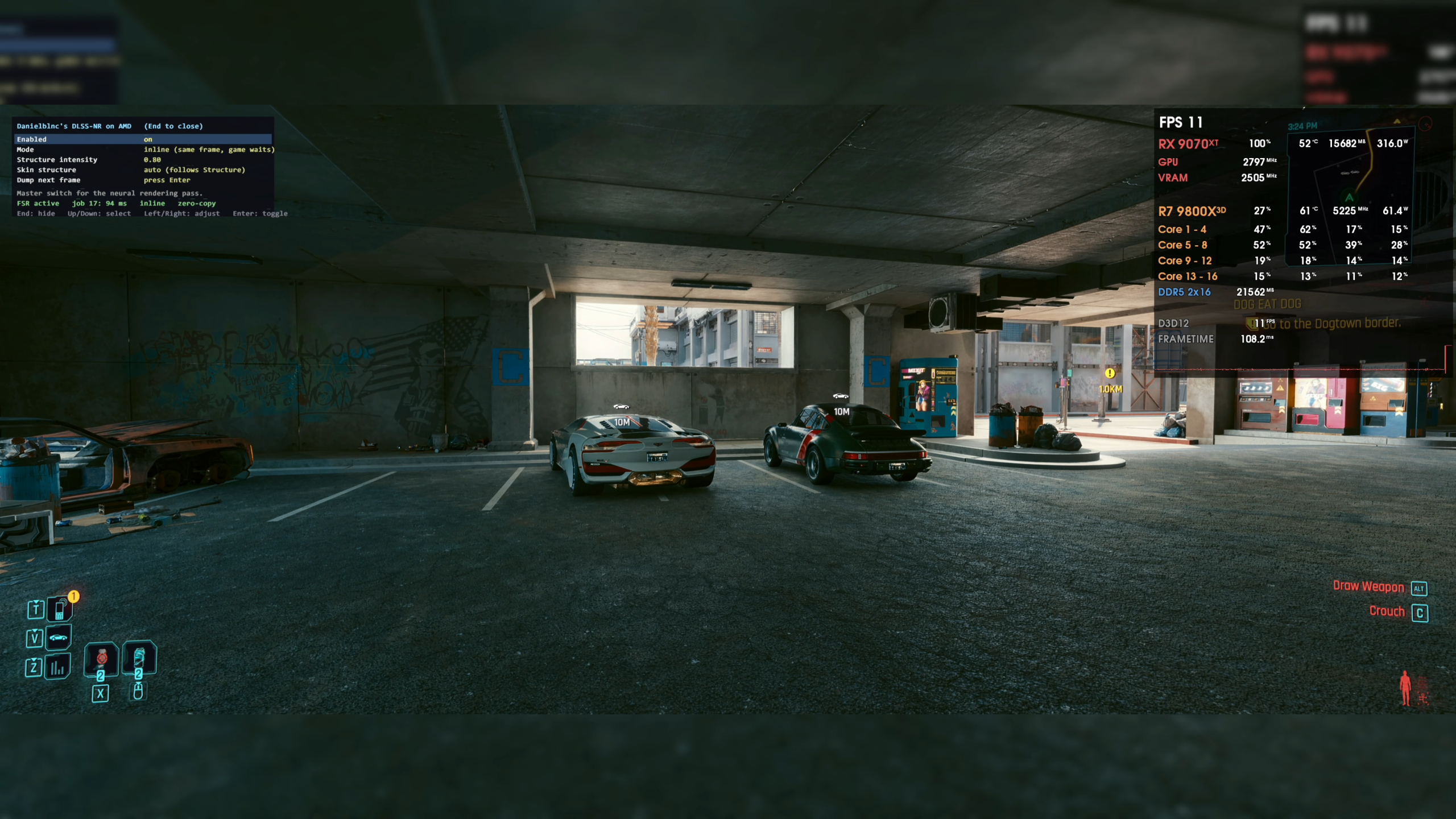
Reports from early adopters using the RX 9070 XT indicate that the lack of dedicated Tensor cores—which are specifically architected for the rapid FP8 operations that DLSS 5 relies on—creates a massive bottleneck. When running high-fidelity titles like Cyberpunk 2077, native performance often exceeds 80+ FPS, but enabling the current version of the mod can slash that frame rate to as low as 11-12 FPS.
The discrepancy arises from the architectural difference between the two companies. Nvidia’s DLSS 5 is built on the foundation of FP8 math, a format native to Tensor cores. While the RX 9000 series (RDNA 4) does include support for FP8, it lacks the specialized, high-throughput AI hardware found in Nvidia’s Blackwell architecture. As a result, the GPU is forced to perform emulation-heavy tasks to execute the AI model, leading to the significant performance drops observed in recent tests.
The Role of Anti-Cheat and Compatibility
One of the most significant limitations of "DLSS-NR-on-AMD" is its incompatibility with protected software. Because the mod works by injecting a modified DLL and hooking into the game’s rendering pipeline, it is flagged by most modern anti-cheat software (such as BattlEye or Easy Anti-Cheat). Consequently, the mod is currently limited to single-player, offline titles.
Furthermore, while the mod shows promise on RDNA 4, testing on older RDNA 3 (RX 7000 series) hardware has yielded abysmal results. Without native, efficient FP8 support, the performance penalty becomes so severe that the technology becomes effectively unusable for gaming purposes.
The Future: Will Native Support Follow?
While the community mod is a technical triumph, it is not a sustainable solution for the average gamer. However, the development has sparked a wider conversation about the future of AI upscaling. Nvidia has recently confirmed that due to the shared architecture regarding FP8 support in the RTX 40-series, DLSS 5 will eventually be rolled out to older Nvidia hardware.
This creates a curious scenario: as Nvidia optimizes the DLSS 5 model to run more efficiently on older RTX 40-series cards, the "DLSS-NR-on-AMD" mod will likely benefit by proxy. If the model becomes lighter and more efficient, the overhead required for the translation wrapper will decrease, potentially leading to higher frame rates on AMD hardware in the future.
Implications for the GPU Market
The existence of this mod presents several key implications for the broader PC industry:
- Erosion of Proprietary Walls: Modders continue to prove that software-locked features can be ported, putting pressure on manufacturers to open their ecosystems or face community-led bypasses.
- The "AI-First" Gaming Era: This experiment highlights that the next generation of GPU performance will be defined by AI capabilities rather than raw rasterization. Hardware manufacturers that lack a clear, hardware-accelerated path for AI-driven features will find themselves at a distinct disadvantage.
- Community Innovation vs. Official Support: While danielblnc has shown incredible technical prowess, the mod serves as a reminder that official driver-level integration is always superior. The current state of the mod is a hobbyist project, not a replacement for native, manufacturer-supported upscaling like FSR or XeSS.
Conclusion: A Glimpse into a Converged Future
The "DLSS-NR-on-AMD" mod is a testament to the insatiable curiosity of the PC enthusiast community. While it is currently a "proof of concept" that carries a heavy performance cost, it represents a significant leap forward in understanding how neural rendering can be generalized across different architectures.
As we look toward the future, the boundary between Nvidia’s proprietary DLSS and open-source alternatives like FSR may continue to blur. For now, however, those wishing to experience the cutting edge of AI upscaling will find that the best way to do so remains the path laid out by the hardware manufacturers themselves—even if a dedicated few continue to fight for a more accessible, hardware-agnostic future. The ambition of the modding community is clear: they do not accept that software should be tied to hardware, and they are willing to spend countless hours of compute time to prove it.











