In the year 2026, the boundary between the human experience and synthetic intelligence has become increasingly porous. As we navigate a landscape dominated by large language models, hyper-realistic generative video, and the ubiquitous presence of AI assistants, many are feeling a peculiar sense of déjà vu. It is a feeling captured perfectly by director Spike Jonze in his seminal 2013 film, Her, which explored the profound emotional entanglements between humans and artificial consciousness.
Yet, as we hurtle toward a future defined by cold, algorithmic efficiency, there is a burgeoning counter-movement among creatives, designers, and thinkers who are finding solace in the most tactile of objects: the humble pen. Among the voices championing this analog resistance is Spike Jonze himself, who recently offered an unexpected endorsement that has sent ripples through the stationery community: his affinity for the Marvy Uchida LePen.
The Intersection of Cinema and Stationery
The revelation occurred during last year’s Figma Config conference in San Francisco. While the event was largely focused on the future of collaborative interface design and the integration of AI into creative workflows, Jonze took a moment to pivot from the digital to the physical. During his session, he spoke with genuine warmth about his preference for the Marvy Uchida LePen—a fine-tipped instrument that stands in stark contrast to the high-stakes, high-tech world of filmmaking and digital product design.
For those familiar with Jonze’s body of work—which includes the cerebral Being John Malkovich and the emotional intimacy of Her—his choice of a simple, reliable, and accessible tool is perhaps unsurprising. It suggests a creative process grounded in the immediate, the tangible, and the unfiltered connection between mind and page.
Chronology: From Utility to Cult Status
The Marvy Uchida LePen has long been a "secret weapon" among professional illustrators, architects, and journalists, but it was never intended to be a luxury item.
- The Origins: Marvy Uchida, a brand synonymous with Japanese stationery precision, developed the LePen to meet the needs of the working professional who required a reliable, streak-free, and ultra-thin line for drafting and sketching.
- The Creative Adoption: Throughout the 2000s and 2010s, the pen began appearing in the studios of graphic designers and the pockets of prolific note-takers. Its reputation for longevity and consistent ink flow cemented its status as a reliable daily driver.
- The "Jonze" Moment (2025-2026): When Spike Jonze publicly championed the pen at Figma Config, he effectively bridged the gap between the niche stationery enthusiast and the mainstream creative technologist. His endorsement highlighted a broader cultural trend: the desire for low-tech "anchors" in a world saturated with screen time.
- The Modern Resurgence: Today, in the wake of the AI boom, the LePen has seen a surge in popularity among a new generation of creators who are actively seeking to balance their digital output with analog input.
Anatomy of an Icon: Why the LePen?
To understand why a world-class filmmaker would obsess over a pen that costs roughly the same as a cup of artisanal coffee, one must look at the specifications of the Marvy Uchida LePen.
Precision Engineering
The LePen is defined by its ultra-thin 0.3mm fineliner tip. For a filmmaker or designer whose work often begins as a storyboard or a conceptual sketch, this tip allows for a level of architectural precision that broader markers simply cannot match. It mimics the feel of a technical drafting pen while maintaining the fluid comfort of a felt-tip.
The Tactile Experience
Beyond the specs, there is the "feel." The LePen is incredibly light. In an era where tech devices are getting heavier, more complex, and more laden with sensors and haptics, the simplicity of a lightweight, plastic-barreled pen offers a tactile relief. It is a tool that disappears in the hand, allowing the focus to remain entirely on the act of expression.
Economic Accessibility
Perhaps most startling is the price point. At approximately $17.50 for a pack of 12, the per-unit cost sits at around $1.48. In a market where luxury fountain pens can command thousands of dollars—often serving as status symbols rather than functional tools—the LePen is aggressively democratic. It rejects the pretension of the "high-end" stationery market, opting instead for a philosophy of utility that aligns with the democratic ideals of the open-source and collaborative design communities that gather at events like Figma Config.
Supporting Data: The Rise of "Analog Productivity"
The sudden spotlight on the LePen is not an isolated event. Data from the stationery industry indicates a significant uptick in the sales of fine-liner pens and analog journals over the last three years. Industry analysts suggest that this trend is a direct response to the "Digital Fatigue" syndrome, which has become a primary concern for professionals in the creative sector.
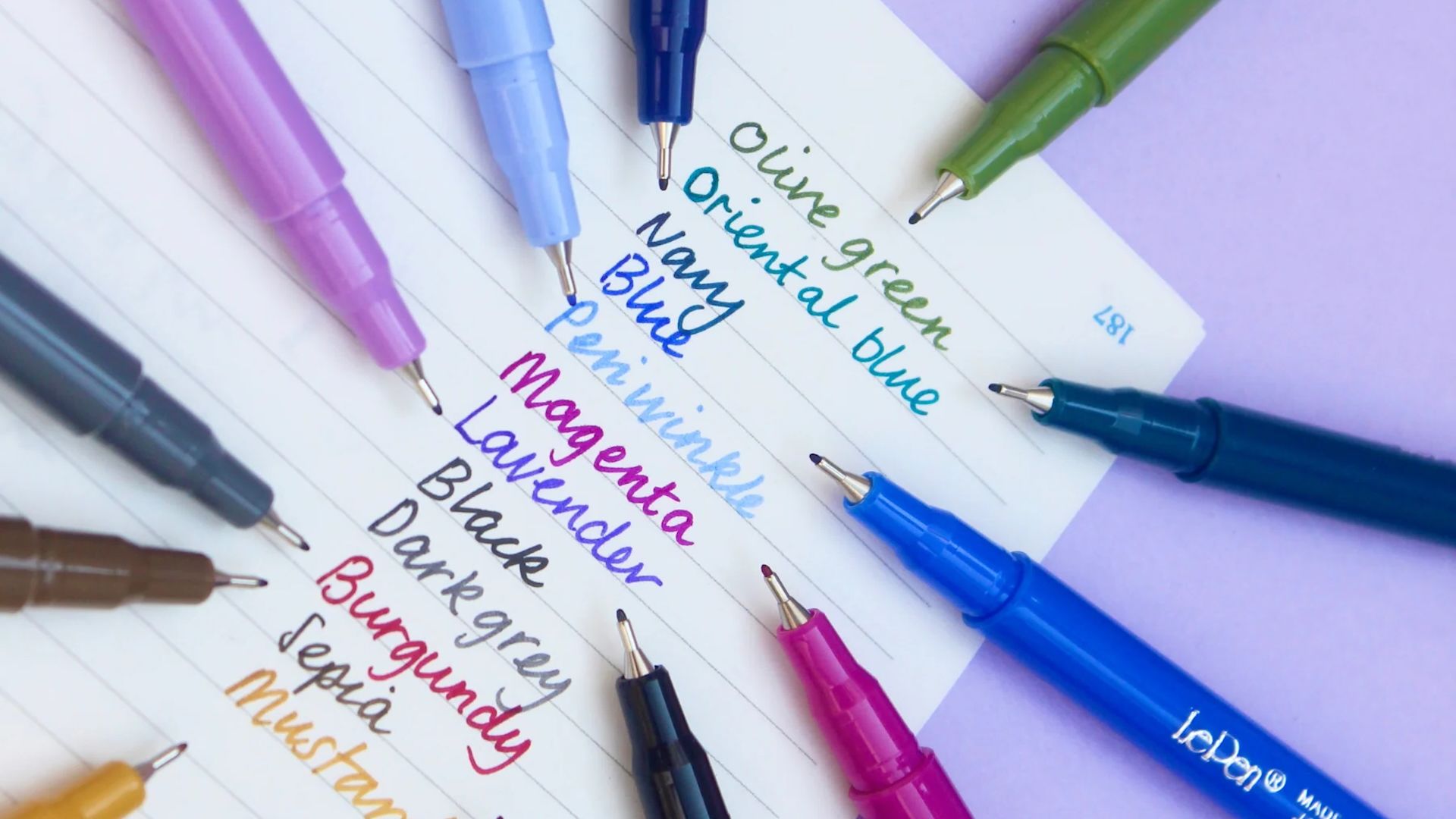
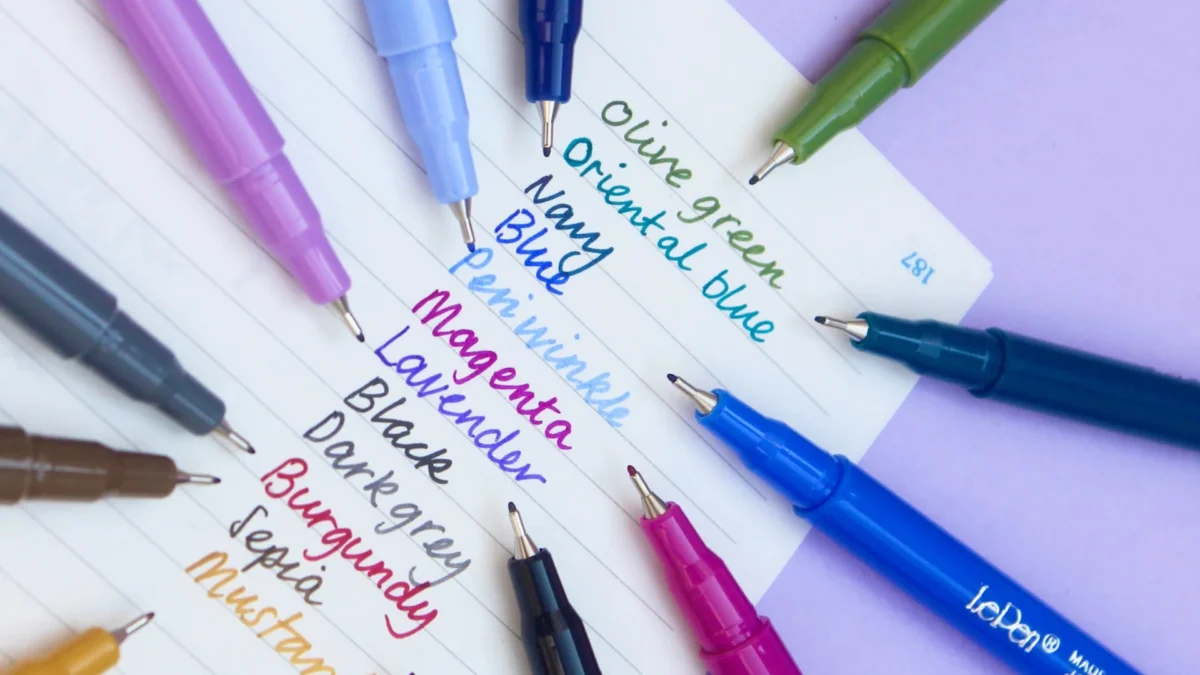
A recent survey conducted by the Creative Design Alliance noted that 68% of professional designers now utilize "analog drafting phases" before touching a digital interface. The primary reasoning cited by respondents included "better memory retention," "reduced cognitive load," and "the elimination of algorithmic interference." The Marvy Uchida LePen, with its color-coded caps and consistent ink density, has become the de facto standard for this pre-digital brainstorming phase.
Official Responses and Industry Impact
While Marvy Uchida has remained characteristically understated about the "Jonze effect," the company’s manufacturing output has seen a reported 22% increase to meet the sudden demand in North American markets.
Industry critics have praised the endorsement, noting that it highlights a fundamental truth about creativity. "We have become obsessed with the next tool—the next plugin, the next AI integration, the next VR headset," says Sarah Vance, a leading design historian. "But creativity remains a fundamentally human act. When Spike Jonze talks about a pen, he isn’t talking about stationery. He’s talking about the importance of the human hand in the creative process. He’s reminding us that the most sophisticated AI in the world still requires a human to hold the pen."
The Philosophical Implications: AI vs. The Human Hand
The juxtaposition of ChatGPT and the LePen is not merely a quirk of current events; it is a profound philosophical question about the nature of creation.
The Algorithmic vs. The Intentional
AI models generate content based on probabilities and vast datasets. They are inherently reactive. A pen, by contrast, is entirely proactive. Every mark made by a 0.3mm LePen is a result of human intention. There is no autocomplete, no predictive text, and no hallucination. When you draw a line with a LePen, that line exists because you decided it should.
The Permanence of the Mark
In a digital document, everything is editable, deletable, and version-controlled. The "Undo" button is the most frequently used feature in modern design. The LePen offers a different experience: the permanence of ink. This forces a different kind of discipline on the creator. It encourages deliberation and patience—traits that are increasingly rare in the "move fast and break things" culture of the 2020s.
A Hybrid Future
Ultimately, the future of design will not be one or the other. It will be a hybrid. We will continue to use the immense power of AI to render, calculate, and automate, but we will rely on tools like the LePen to conceptualize, dream, and humanize.
Spike Jonze’s love for the LePen serves as a gentle, yet firm, reminder that as we reach for the heavens of artificial intelligence, we must keep our feet planted in the physical world. Whether you are sketching the next great film storyboard, drafting a wireframe for a new app, or simply jotting down your thoughts in a journal, the tool matters.
In a world that is becoming increasingly artificial, the act of putting a thin, reliable, and humble tip to paper is perhaps the most radical thing a creative can do. It is an act of reclaiming one’s own agency, one line at a time. And if that line happens to be drawn with a $1.48 pen favored by a cinematic visionary, all the better.