Rifan Muazin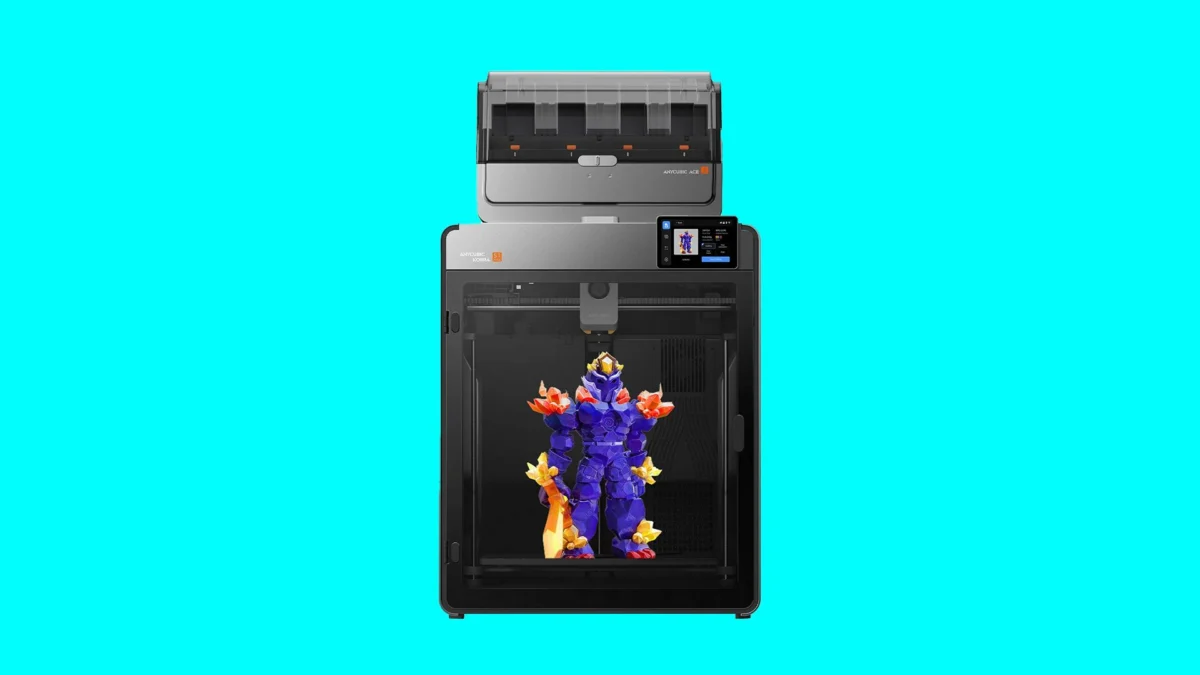
The landscape of desktop manufacturing has undergone a seismic shift over the last decade, transitioning from niche hobbyist experimentation to a cornerstone of modern creative workflows. Standing at the forefront of this evolution is Anycubic, a manufacturer that has consistently lowered the barrier to entry for high-quality additive manufacturing. To mark its 11th anniversary, the company has launched a significant promotional campaign, offering discounts of up to $500 on printer bundles, materials, and accessories.
For those who have been waiting for the opportune moment to enter the world of 3D printing or for seasoned pros looking to expand their “printer farm,” the current anniversary sale represents one of the most aggressive pricing structures seen this year. Among the highlights is a substantial $170 discount on the Kobra S1 ACE 2 Pro Combo—a machine lauded for its ability to handle complex, multi-material projects with ease.
Main Facts: The Anniversary Sale Landscape
The Anycubic 11th anniversary event is not merely a clearance sale; it is a strategic push to make advanced technology accessible to a wider demographic. The core of the promotion centers on "bundles," which are designed to provide a complete "out-of-the-box" experience.
The standout offer, the Kobra S1 ACE 2 Pro Combo, represents a significant leap forward in FDM (Fused Deposition Modeling) technology. By enabling 16-color printing, Anycubic is catering to a growing demand for high-fidelity, multi-colored prototypes and artistic models that previously required manual assembly or expensive, industrial-grade equipment.
Beyond hardware, the sale encompasses:
- Resin Printers: Significant markdowns on the Photon series, known for high-resolution output suitable for jewelry design, dental modeling, and miniature painting.
- Consumables: Discounts on PLA, ABS, and high-performance resin cartridges.
- Newsletter Incentives: A tiered voucher system available exclusively to subscribers, which can be stacked on top of existing promotional pricing.
Chronology: A Decade of Innovation
To understand the significance of this anniversary, one must look at the trajectory Anycubic has traveled since its inception in 2015.
The Early Years (2015–2018)
Anycubic entered the market during a "Wild West" phase of 3D printing. At the time, machines were largely DIY kits that required significant mechanical knowledge to assemble. The company quickly gained traction by releasing the Photon series, which democratized SLA (Stereolithography) printing. By making resin printing affordable and relatively user-friendly, they moved the technology out of industrial laboratories and onto the desktops of home creators.
The Expansion Phase (2019–2022)
As the community grew, so did the demand for reliability. Anycubic responded by refining their FDM lines, focusing on auto-leveling beds and faster print speeds. During this period, the company shifted its focus from "tinkerer" machines to "appliance-like" printers, prioritizing the end-user experience.
The Modern Era (2023–Present)
The current era is defined by speed, connectivity, and material diversity. The introduction of the Kobra series and the ACE (Anycubic Color Engine) represents the company’s push into high-speed, multi-color production. Today, Anycubic stands as a dominant force in the global market, competing with legacy giants by prioritizing value-to-performance ratios.
Supporting Data: Why the Hardware Matters
In the world of additive manufacturing, "performance" is measured by three metrics: print speed, material compatibility, and ease of use.
The Kobra S1 ACE 2 Pro Advantage
The Kobra S1 ACE 2 Pro is currently marketed as a flagship solution for creators who require both speed and aesthetic complexity. The "16-color" capability is facilitated by an advanced filament-switching system. In practical terms, this allows designers to prototype products with realistic color-coding or create intricate artistic pieces without the need for post-processing painting.
Comparative Market Positioning
Recent industry analysis suggests that the consumer 3D printing market is trending toward "multi-material capability." While competitors have struggled with high price points for multi-color systems, Anycubic’s bundle-based discount model positions them as the primary challenger for the "prosumer" market. By bundling the hardware with necessary accessories (like specialized build plates and high-flow nozzles), the company is reducing the "hidden costs" that often catch new buyers off guard.
Official Responses and Corporate Strategy
In communications regarding the anniversary, Anycubic representatives have emphasized a commitment to the "democratization of creation." The company’s internal strategy focuses on lowering the barrier to entry, not just in terms of purchase price, but in terms of the technical learning curve.
"We believe that every designer, regardless of their experience level, should have access to tools that match their imagination," stated a spokesperson during the launch of the anniversary campaign. "By providing these bundles, we are ensuring that when a customer unboxes their machine, they have everything they need to start printing immediately, rather than waiting for individual parts to arrive."
The inclusion of newsletter-exclusive vouchers is a strategic move to build a direct-to-consumer relationship. By moving away from third-party distributors and fostering a direct community, Anycubic gains real-time feedback on user needs, which they claim directly informs the R&D cycle for next year’s product releases.
Implications for the Creative Industry
The impact of these price reductions extends far beyond the hobbyist garage. Several sectors are poised to benefit from this accessibility.
Educational Integration
With professional-grade printers becoming significantly more affordable, K-12 and university makerspaces can now equip entire classrooms for the price of a single industrial machine from five years ago. This allows for a more hands-on approach to engineering, architecture, and industrial design curricula.
Small Business and Prototyping
Freelance designers and small-batch manufacturers are the biggest winners. The ability to print functional prototypes in multiple colors allows for rapid iteration. A product designer can now present a fully colored, functional prototype to a client in a single day—a task that previously would have taken weeks of outsourcing to a bureau.
The "Prosumer" Shift
We are currently witnessing the end of the "hobbyist" era and the beginning of the "prosumer" era. As machines like the Kobra series become more reliable, the distinction between a "home printer" and a "professional printer" is blurring. This shifts the focus from how the printer works to what the user creates.
Conclusion: A Strategic Time to Invest
Whether you are a professional designer looking to streamline your workflow or a hobbyist ready to move beyond basic, single-color prints, the Anycubic 11th anniversary sale offers a rare intersection of high-tier hardware and accessible pricing.
It is important for potential buyers to remember that while these machines are user-friendly, they remain sophisticated pieces of equipment. Prospective owners should familiarize themselves with slicer software—such as the proprietary Anycubic software or community favorites like Orca Slicer—to maximize the performance of their new machines. Additionally, buyers should keep in mind that the advertised prices do not include regional taxes, which should be factored into the total investment cost.
As the industry moves toward a future where 3D printing is as ubiquitous as paper printing, Anycubic’s current promotional efforts serve as a clear indicator of where the market is heading: faster, more colorful, and increasingly affordable.
Disclaimer: Prices mentioned reflect the ongoing promotional period. Consumers are encouraged to verify final checkout totals, as regional tax rates and shipping fees may apply. Always consult the official Anycubic website for the most accurate and up-to-date pricing information.


 Asep Darmawan
 Nana Wu