

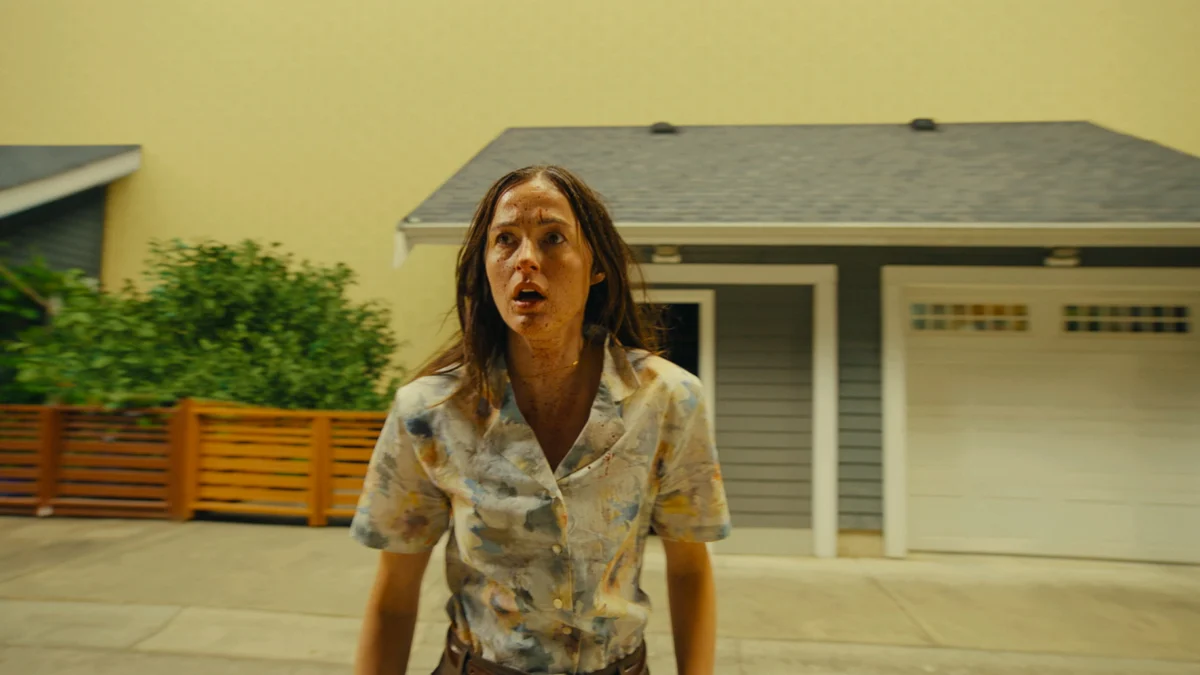
The theatrical landscape is undergoing a seismic shift, one driven not by traditional studio development pipelines, but by the raw, kinetic energy of the internet’s most innovative digital storytellers. In an exclusive development that has caught industry analysts off-guard, A24’s Backrooms—the feature-length adaptation of Kane Parsons’ viral digital IP—has exploded out of the gate with a staggering $9 million in preview showings.
This performance signals a new era for horror and genre cinema, where established online fanbases are translating into "blockbuster-level" theatrical engagement. As the industry watches in awe, the success of Backrooms and its contemporary, Obsession, suggests that the "YouTube-to-Silver-Screen" pipeline is no longer a niche experiment, but the most potent engine for growth in modern film distribution.
The Main Facts: A $9 Million Opening Sprint
The buzz surrounding Backrooms began with pre-sale metrics that mirrored the fervor typically reserved for massive franchise tentpoles like Scream 7. However, once the 4 PM preview screenings commenced, the film defied even the most optimistic projections. With $9 million in its pocket from just a few hours of screenings, Backrooms has officially surpassed the $7.8 million preview haul of Scream 7 and is nipping at the heels of major studio heavyweights like John Wick: Chapter 4 ($8.9 million).
While initial forecasts projected a solid but modest opening weekend between $40 million and $45 million, distribution sources are now whispering that those numbers are conservative at best. Given the film’s massive traction among audiences under 25, industry insiders anticipate that Backrooms could comfortably eclipse the $60 million to $80 million range, placing it in the same league as Five Nights at Freddy’s—another property that proved the immense commercial power of fan-driven digital lore.
A Chronology of the ‘Backrooms’ Phenomenon
The journey of Backrooms from an obscure internet aesthetic to a major motion picture is a testament to the power of independent creativity.
- The Origin: Kane Parsons, a young filmmaker who gained global notoriety for his unsettling, surrealist short films based on the "Backrooms" creepypasta, cultivated a massive following on YouTube. His ability to create high-concept horror on a shoestring budget caught the attention of major production houses.
- The Collaboration: Recognizing the potential, a coalition of industry powerhouses—Atomic Monster, Blumhouse, 21 Laps, Odd Fellow, and Chernin Entertainment—teamed up to support Parsons’ directorial debut. A24 stepped in to shepherd the project, co-financing the film with a modest budget of under $10 million.
- The Production: Filming captured the eerie, liminal essence of the original digital shorts. The narrative follows a therapist, played by Oscar nominee Renate Reinsve, who embarks on a harrowing search for her missing patient, portrayed by Chiwetel Ejiofor. Her investigation leads her into a freakish, shifting furniture store—a gateway to an alternate reality that defies physics and logic.
- The Premiere: Following months of viral marketing and organic growth, the film’s release this week saw unprecedented ticket demand. By the morning of its debut, tracking data indicated that the film was the "first choice" for young moviegoers, competing directly with major upcoming releases like Final Destination: Bloodlines.
Supporting Data: The Battle of the Box Office
The current box office climate is defined by an intriguing tension between legacy franchises and digital-native hits. While Backrooms is dominating the conversation, it is not the only digital-led success story.
Curry Barker’s Obsession, distributed by Focus Features, has become a genuine cultural phenomenon. The film recently beat out the Disney/Lucasfilm behemoth Star Wars: The Mandalorian and Grogu in Wednesday box office receipts, pulling in $5.6 million compared to the franchise giant’s $4.1 million.
Comparative Performance Metrics:
| Film | Wednesday Haul | Running Cume |
|---|---|---|
| Obsession | $5.6M | $73.5M |
| The Mandalorian and Grogu | $4.1M | $108.8M |
Obsession has now secured the No. 1 spot in marquee theaters, including the iconic AMC Empire in Times Square and Regal Union Square. The data suggests that audiences are actively prioritizing these creator-driven projects, creating a "double-feature" effect where fans of Obsession are naturally gravitating toward the surreal horror of Backrooms.

Official Responses and Critical Reception
The critical response to Backrooms has been polarized, reflecting the divide between traditional cinematic analysis and the visceral, experiential nature of modern internet-born horror. Currently, the film holds an 88% critic score on Rotten Tomatoes against a 74% audience score.
Critics have lauded the film’s atmosphere and visual ingenuity, with many praising the directorial choices of Parsons, who managed to maintain the "lo-fi" dread of his original works while utilizing a feature-film budget. However, some traditionalists remain skeptical of the film’s unconventional pacing and narrative structure.
Industry executives, however, are far more focused on the bottom line. With a production budget under $10 million, Backrooms is expected to be firmly in the black by the end of its first weekend. For the production companies involved, this is a masterclass in risk-mitigation: identify an audience that already exists, provide the creative freedom to translate their vision, and allow the community to drive the marketing through organic engagement.
Implications: The Death of the Traditional Studio Pipeline?
The success of Backrooms and Obsession has profound implications for the future of the film industry. For decades, studios have relied on internal development, focus groups, and established intellectual property (IP) owned by massive conglomerates. Today, the "IP" is being incubated on platforms like YouTube, where the barrier to entry is non-existent and the feedback loop with the audience is instantaneous.
1. The Power of "Front-Loaded" Engagement
Modern hits are increasingly "front-loaded," meaning they rely on massive, highly motivated fanbases to show up on opening day. This changes how studios handle marketing; rather than traditional billboard campaigns, they are increasingly relying on influencer partnerships, viral social media trends, and direct engagement with the creators’ existing communities.
2. Democratization of Horror
Horror has always been a genre of the people, but the digital age has allowed for a level of experimentation that is rarely seen in mainstream action or drama. Backrooms proves that a surreal, nightmarish concept can achieve mass-market appeal if it is presented with a distinct visual identity that resonates with the internet generation.
3. The "Double Feature" Effect
The competition between Obsession and The Mandalorian and Grogu highlights a shifting preference. Even against a massive brand like Star Wars, audiences are showing a desire for "fresh" content that feels urgent and unique. The fear now is for the longevity of established legacy franchises; if they cannot match the cultural relevance and "event" status of these digital-first films, their market share may continue to erode.
4. Financial Viability
The low-budget, high-return model of Backrooms is a direct challenge to the "blockbuster inflation" of the last decade. Studios spending $200 million on a single film are now forced to look at the math: is it better to invest in one gargantuan gamble or ten $10 million films that each tap into a specific, loyal online subculture? The success of this current weekend suggests that the latter is a far more sustainable—and profitable—business model.
As we look toward the remainder of the year, the industry must reckon with the fact that the next "Steven Spielberg" might not be coming from film school, but from a bedroom in the suburbs with a high-end graphics card and a YouTube account. The Backrooms phenomenon is not just a blip on the radar; it is a signal that the theater-going experience is being reclaimed by a new generation of creators, and for those willing to adapt, the box office remains a goldmine.











No comments yet. Be the first to join the conversation!