

When Stephen King’s Misery hit bookshelves in 1987, it arrived as a visceral, bone-chilling manifestation of the author’s own complicated relationship with his massive, sometimes overbearing fanbase. By the late 80s, King was already a literary titan, having cemented his status as the master of modern horror. Yet, Misery felt different—it was a meta-commentary, a claustrophobic nightmare about a writer held captive by his "number one fan."
When Rob Reiner transitioned this harrowing tale to the silver screen in 1990, he made a series of creative choices that would define the film’s legacy. Most notably, he consciously dialed back the graphic, visceral gore that permeated the source material. By shifting the focus from physical dismemberment to a psychological "chess match," Reiner transformed a standard horror premise into an Academy Award-winning masterclass in suspense.
The Source Material: A Manifestation of Artistic Anxiety
To understand why Reiner made his directorial choices, one must first look at the brutal nature of King’s 1987 novel. The story follows Paul Sheldon, a successful novelist famous for his Victorian-era romance series featuring the character Misery Chastain. After a horrific car accident in the snowy wastes of Colorado, Paul is rescued by Annie Wilkes, a former nurse who serves as his self-appointed caretaker.
However, the "kindly" facade quickly crumbles. Annie is a volatile, obsessive individual whose adoration for the Misery series curdles into homicidal rage when she discovers Paul has killed off her favorite character. In the novel, the violence is relentless. Annie does not merely hobble Paul; she severs his foot with an axe and eventually cauterizes the wound with a blowtorch. The novel is punctuated by scenes of graphic carnage, including the murder of a local sheriff, who is stabbed and then run over with a lawnmower.
A Strategic Departure: Chronology of the 1990 Adaptation
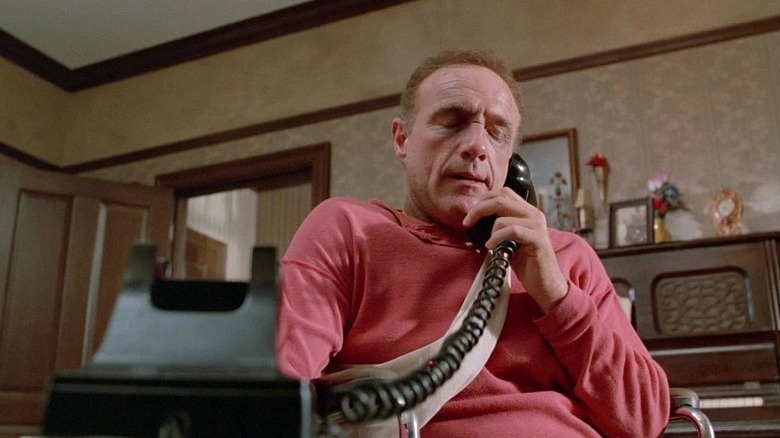
The 1990 film adaptation, starring James Caan as Paul and Kathy Bates as Annie, took a deliberate step away from this splatter-horror aesthetic. During the production process, Rob Reiner—who had recently enjoyed critical and commercial success with The Princess Bride (1987) and When Harry Met Sally… (1989)—sought to refine the narrative’s tone.
Reiner understood that cinema functions differently than literature. While a reader’s imagination can handle the extreme, prolonged physical torture described by King, a film audience requires a different kind of engagement to remain invested. In a 1990 interview with the Los Angeles Times, Reiner clarified his intent: he wanted the film to be an intellectual duel. By stripping away the more gratuitous, stomach-churning elements, he ensured the tension remained rooted in the power dynamic between the captor and the captive.
The "Hobbling" vs. The Axe
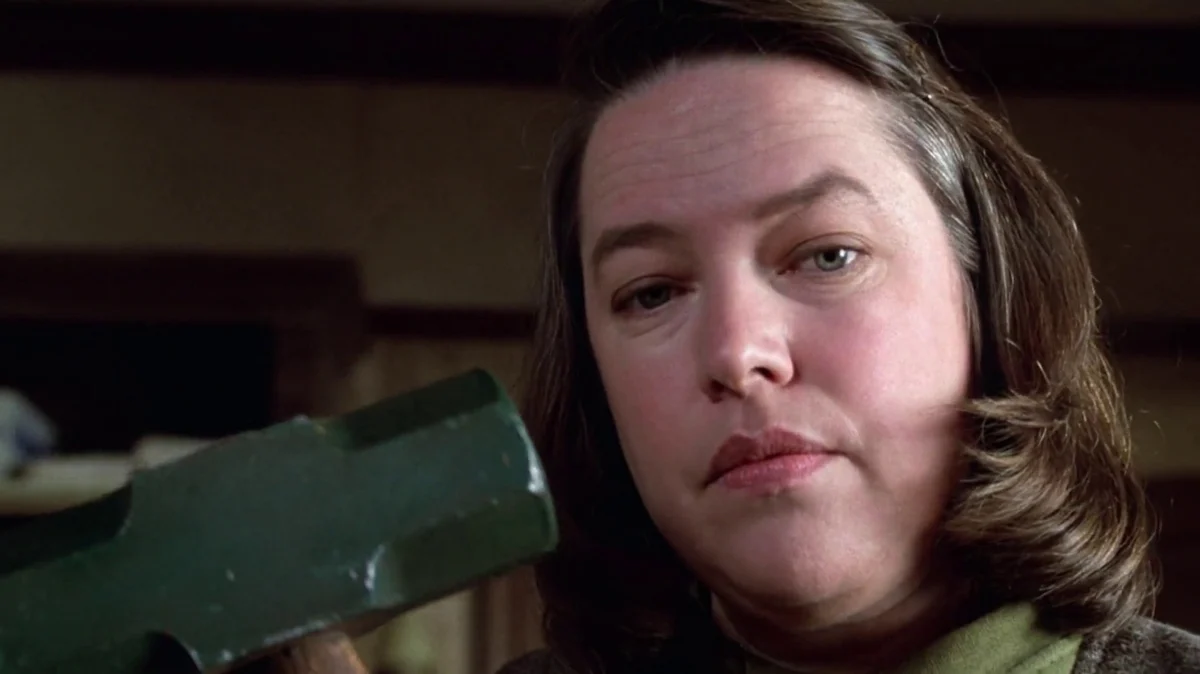
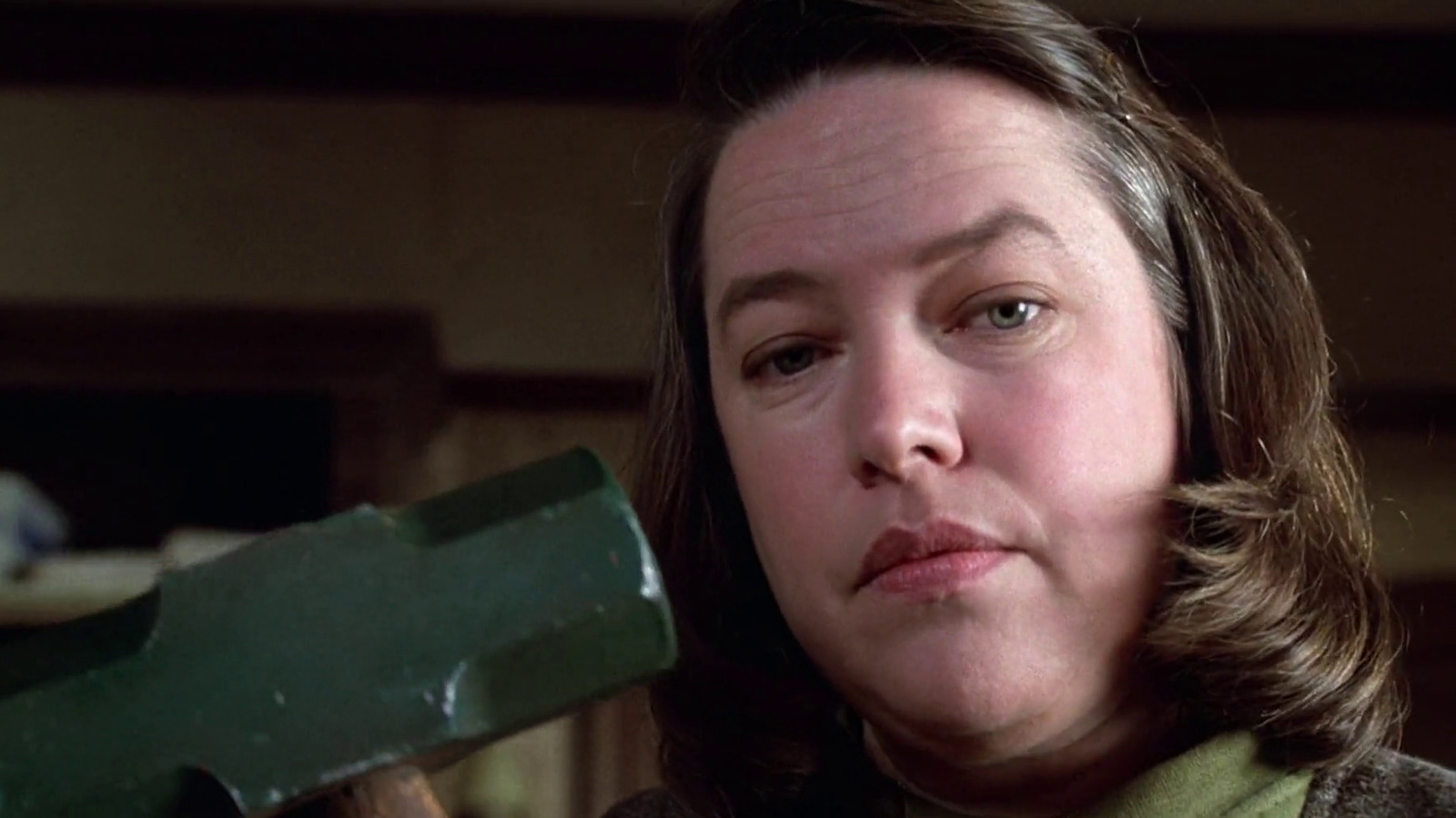
The most significant change, which remains a touchstone of 90s cinema, is the "hobbling" scene. In the book, Annie’s use of an axe to amputate Paul’s foot is a prolonged, bloody event. In the film, Reiner replaces this with a sledgehammer, breaking Paul’s ankles. While still undeniably horrific, the film’s version avoids the overt splatter, focusing instead on the agonizing sound design and the emotional terror of the moment. This change effectively keeps the audience focused on the psychological degradation of Paul Sheldon rather than the mechanics of the mutilation.
Supporting Data: Why the "Chess Match" Works
Reiner’s approach allowed the film to transcend the "horror" genre label, elevating it to a psychological thriller. By toning down the gore, he created space for the performances to breathe. The film functions as a two-person stage play, an intense game of cat-and-mouse where every line of dialogue is a tactical move.
The success of this approach is evidenced by the film’s critical reception. Kathy Bates’ portrayal of Annie Wilkes is widely considered one of the greatest villainous performances in cinematic history. Her ability to pivot from sweet, maternal concern to chilling, cold-blooded menace was facilitated by the film’s grounded, rather than cartoonishly violent, tone.
Comparative Analysis: Book vs. Film
| Element | Stephen King’s Novel | Rob Reiner’s Film |
|---|---|---|
| Paul’s Injury | Foot severed with an axe | Ankles smashed with a sledgehammer |
| Sheriff’s Death | Stabbing and lawnmower death | Single gunshot to the chest |
| Tone | Relentless, visceral, grotesque | Psychological, suspenseful, intellectual |
| Climax | Explicit, protracted violence | Calculated, desperate struggle |
Official Perspectives and Director Intent
Rob Reiner was remarkably transparent about his creative process regarding the film’s violence. Reflecting on the adaptation, he noted:
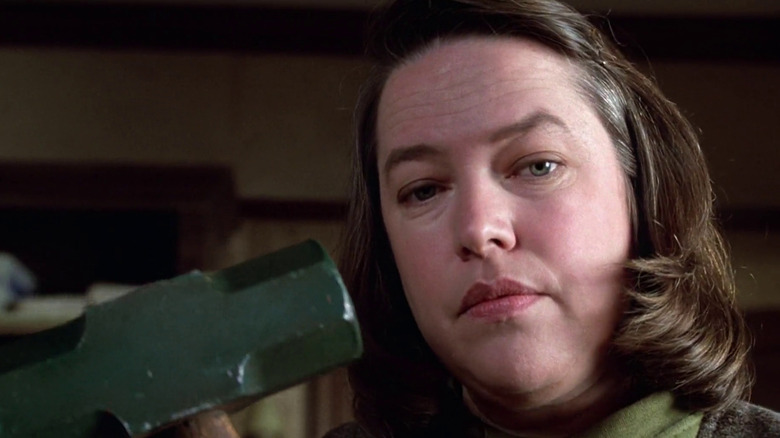
"We got rid of the most gory and horrific parts. […] I wanted to concentrate on the idea of this chess match between the artist and his fan. You definitely see in this film why fan is short for ‘fanatic.’ It’s tricky, because to some degree, getting attention is a real compliment. But if you go one step farther…"
Reiner’s perspective highlights a fundamental truth about the nature of fame and obsession. By focusing on the "fanatic" aspect rather than the "slasher" aspect, the film becomes a cautionary tale about the entitlement of the audience. The horror isn’t just the blood; it’s the violation of the artist’s autonomy.
The Implications: A Lasting Legacy
The decision to pivot away from gore arguably secured the film’s place in the pantheon of cinema history. Misery remains the only Stephen King adaptation to win an Academy Award, with Kathy Bates taking home the Oscar for Best Actress. This is a significant distinction when considering other high-profile King adaptations like The Shawshank Redemption, The Green Mile, and Stand By Me, which garnered numerous nominations but failed to secure the win.
By prioritizing the psychological interplay, Reiner ensured that the film would not be dismissed as a "B-movie" horror flick. It was taken seriously by critics and the Academy alike. The film’s success solidified Reiner’s reputation as a director of immense range, capable of moving from the lighthearted whimsy of The Princess Bride to the suffocating dread of Misery.
Furthermore, the legacy of the film serves as a meta-commentary on the relationship between creators and consumers. As social media and parasocial relationships have become the norm, the themes of Misery—the feeling of ownership fans project onto creators—have only become more relevant.
Conclusion: The Power of Restraint
Rob Reiner’s Misery is a masterclass in the power of restraint. By refusing to rely on the crutch of gratuitous violence, the production team forced the audience to look deeper into the terrifying logic of Annie Wilkes. The "chess match" approach allowed the film to endure, proving that the most frightening monsters are not the ones who use axes, but the ones who believe they are acting out of love.
Ultimately, Misery stands as a reminder that in storytelling, what you leave out is often just as important as what you put in. By cutting the gore, Reiner didn’t dilute the horror; he distilled it, leaving behind a pure, crystalline vision of madness that continues to resonate with audiences more than thirty years later.











No comments yet. Be the first to join the conversation!