The digital landscape of American political campaigning has taken an unprecedented and legally precarious turn. Following recent international friction regarding the unauthorized use of Nintendo intellectual property in campaign-related AI content, the current administration has launched "Arcade.gov"—a portal featuring a suite of browser-based games designed to promote the administration’s platform. However, the rollout has been marred by immediate allegations of widespread copyright infringement, amateurish technical execution, and ethical concerns regarding the intersection of state-run platforms and partisan messaging.
The Genesis of the Arcade.gov Initiative
The launch of Arcade.gov marks a novel, albeit controversial, attempt to integrate gamification into government communication. Designed to coincide with the lead-up to the midterm elections, the site hosts several titles that mirror the mechanics and aesthetics of iconic 8-bit and 16-bit era video games. According to official statements provided to Fox News, the project is framed as an effort to "further contrast between a culture of fun and winning and the dark socialist vision Democrats have for America."
While the administration positions the games as a lighthearted engagement tool, the gaming community and legal experts were quick to point out that the site’s branding and gameplay mechanics lean heavily on established industry icons. By repurposing the cultural cachet of legendary titles like Tetris, Snake, and Duck Hunt, the administration has effectively invited a scrutiny that extends far beyond political policy, landing squarely in the realm of intellectual property (IP) law.
Chronology: From Mario to the Arcade.gov Launch
To understand the current legal friction, one must look at the recent history of the administration’s digital strategy:
- Mid-2026 (The Nintendo Incident): The administration faced a formal, albeit polite, admonishment from Japanese officials regarding the use of Super Mario and Animal Crossing assets in AI-generated campaign videos. The incident signaled a disregard for international IP norms that many assumed would lead to a more cautious approach to digital content.
- September 4, 2026 (The Launch): Arcade.gov goes live. Within hours, social media platforms, particularly X (formerly Twitter), were flooded with criticism from developers and gamers pointing out broken mechanics and blatant aesthetic similarities to copyrighted logos.
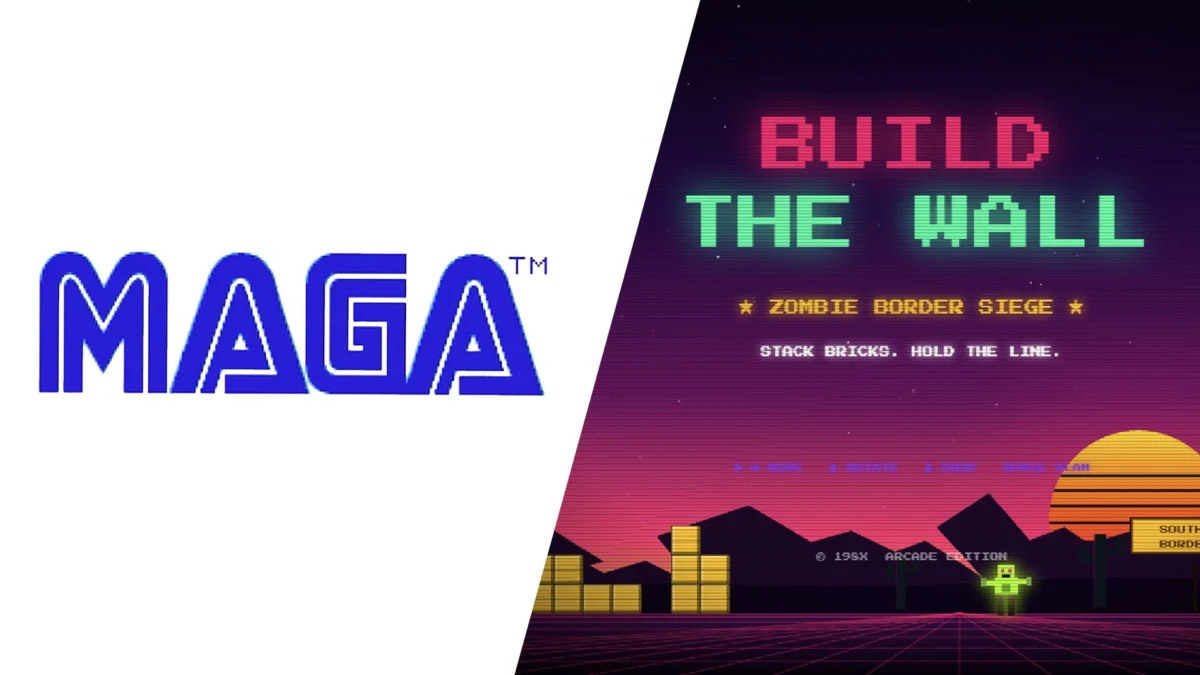
- September 5–7, 2026 (The Backlash): As users began testing the games, reports of critical bugs—such as the Tetris clone failing to clear lines—circulated alongside side-by-side comparisons of the Arcade.gov branding and established corporate logos from Microsoft (Xbox) and Sega.
Technical Analysis: The Quality Gap
The gaming community has been particularly scathing regarding the technical execution of the Arcade.gov suite. The games, which are intended to serve as a showcase of "winning," have instead become a focal point for criticism regarding the state of U.S. government-backed software development.
Broken Mechanics
The most prominent title, Build the Wall, is a clear attempt to capitalize on the mechanics of Tetris. However, user reports indicate that the game is functionally broken. Lines do not clear when filled, and the game exhibits erratic behavior that renders it unplayable. Similarly, Rio Run—a Snake derivative featuring a caricature of border official Tom Homan—has been criticized for its rudimentary design and arguably offensive thematic content. Trump Savings Tycoon, a reimagining of the classic Duck Hunt, tasks players with catching gold bars and money, a title that has drawn ire for its overtly materialistic messaging and lack of polish.
Design Inconsistencies
Beyond the gameplay, users noted curious errors in the site’s presentation. For example, the use of the British/Commonwealth spelling of "colouring" in a game purportedly promoting "American" values has been cited as evidence of a rushed or outsourced development process that lacked even basic oversight.
Legal Implications: Parody vs. Infringement
The most pressing question surrounding Arcade.gov is whether the administration is in violation of copyright law. The use of clear visual references to the Xbox and Sega logos, combined with the replication of famous game loops, has prompted calls for legal action from the public.
The Parody Defense
In the United States, "parody" is often cited as a protected form of speech under the First Amendment. However, legal experts suggest that the "parody" defense is not a blanket shield. To qualify as fair use, a work must generally transform the original material, providing social commentary or criticism. Whether the government can claim that its official communications platform is a "joke" remains a point of significant contention.
If Microsoft, Sega, or The Tetris Company choose to pursue litigation, the administration would face a difficult burden of proof. The commercial nature of the messaging—promoting a specific political candidate—complicates the "fair use" argument, as the games are not merely social satire but active political campaign tools.
The Corporate Stance
As of this writing, neither Microsoft nor Sega has issued a formal cease-and-desist letter, though the public tagging of these corporations on social media has put them in an awkward position. For these companies, the decision to sue the U.S. government is fraught with complexity. A lawsuit could be perceived as a political act, potentially alienating parts of their consumer base. Conversely, failing to defend their IP could set a dangerous precedent, weakening their trademark protections in future cases.
Implications for Political Communication
The Arcade.gov saga highlights a growing divide between traditional governance and the "content-first" strategy of modern political campaigning. By prioritizing "engagement" and "virality" over technical quality and legal compliance, the administration has successfully captured the news cycle, but at the cost of its professional reputation in the tech and gaming sectors.
The Erosion of Professionalism
The failure of the games to function as intended—specifically the Tetris clone—serves as a metaphor for the broader criticisms leveled against the administration’s digital strategy. When a government project is launched with such visible technical flaws, it invites a deeper skepticism about the competence of the departments responsible for its creation.
The Normalization of IP Theft
Perhaps the most dangerous implication is the potential normalization of IP theft in political discourse. If political entities can routinely borrow—or steal—the aesthetic labor of creative industries without consequence, it threatens the integrity of the creative economy. The precedent set by the earlier Mario incident, followed by the launch of Arcade.gov, suggests a pattern of behavior that ignores the value of intellectual labor in favor of cheap, high-visibility content.
Conclusion
The Arcade.gov experiment stands as a cautionary tale for political communication teams. While the goal of reaching younger, gaming-adjacent demographics is sound in theory, the execution has fallen short on every metric: quality, legality, and public reception. Whether or not the administration faces formal legal consequences from industry giants, the reputational damage is already evident.
As the midterms approach, the government’s digital strategy will likely remain under intense scrutiny. If Arcade.gov is the standard-bearer for the administration’s "culture of winning," it remains to be seen whether the electorate will find the effort compelling, or if they will continue to view these digital endeavors as a series of broken, legally questionable, and ultimately amateurish attempts to stay relevant in a rapidly evolving media landscape. For now, the "game" continues, but the administration is playing on a field where the rules of copyright and quality control are far less forgiving than the political arena.