Writing is famously one of the most difficult professions to capture on film. The act itself is a solitary, largely internal struggle—a slow churn of half-formed ideas, the agonizing rhythm of second-guessing, and the brief, elusive surges of creative flow. Because the process is so static, filmmakers often resort to "writer’s block" as a narrative crutch, using it to push characters into external conflicts that have little to do with the actual labor of putting pen to paper.
In Agata the Writer, the feature debut of video artist Kuba Dorabialski, this cinematic challenge is met with a bold, almost perverse sense of rebellion. Premiering at the Venice Film Festival’s Giornate degli Autori, the film is a slippery, elegant exploration of not just the writing life, but of immigrant identity, the ethics of trauma tourism, and the uncomfortable dissonance of searching for home in the ruins of a history that isn’t yours.
The Narrative Premise: A Search for "Slavic Similitude"
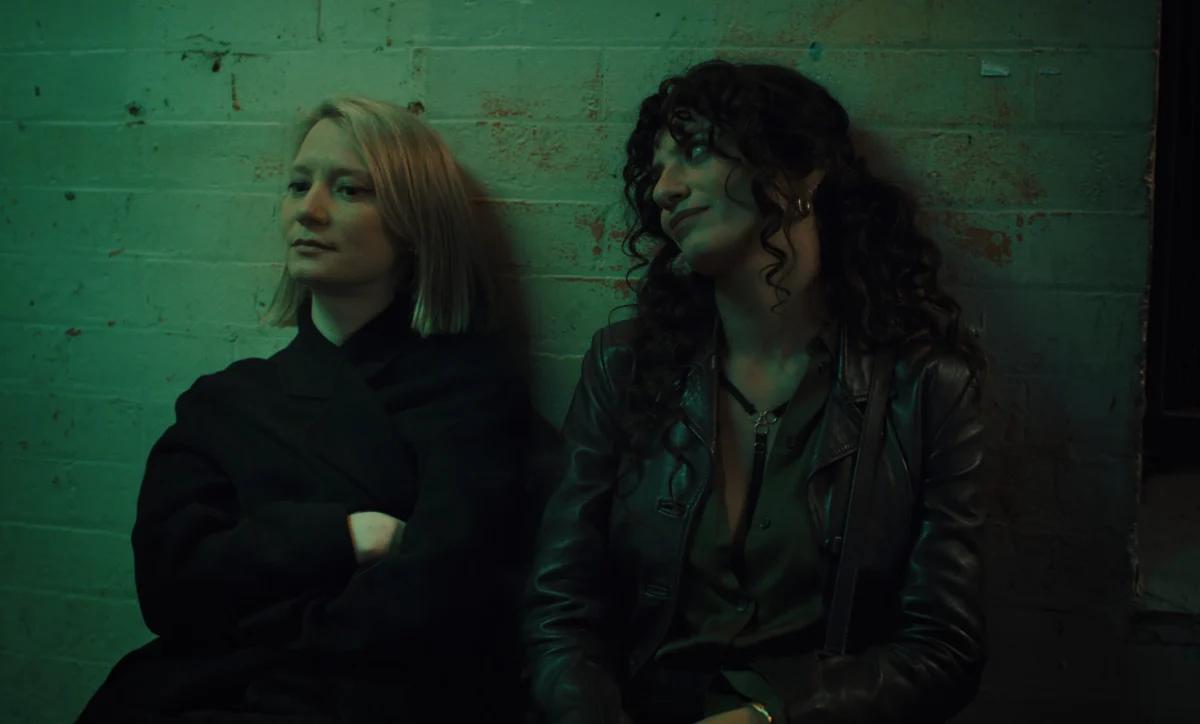
The film introduces us to Agata (played with a masterclass of twitchy, cerebral intensity by Mia Wasikowska), a Polish-Australian novelist who has achieved moderate success with a series of satirical, light-hearted books. Seeking artistic legitimacy and a deeper sense of self, she decides to pivot toward "serious" literature. Her chosen subject: a father-daughter relationship set against the harrowing backdrop of the Bosnian War.
To research this, Agata relocates to Sarajevo for a few months. She is driven by a desire to find what the film’s arch, omniscient narrator calls a "Slavic similitude"—a bridge between her own Polish roots and the unfamiliar, scarred landscape of Bosnia.
However, upon arrival, the reality of the city refuses to conform to her literary expectations. Sarajevo is presented through a lens of mineral-gray dampness and a persistent, whistling wind. It is not an unwelcoming city, but it is one that keeps its distance, refusing to serve as a passive backdrop for Agata’s creative ambitions.
A Chronology of Artistic Unraveling
The trajectory of the film mirrors Agata’s own psychological erosion.
- Arrival and Alienation: Agata arrives in a wintry, severe Sarajevo. She is buoyed by the encouragement of her editor, Davina (Mia Morrissey), but immediately feels the friction of being an outsider attempting to commodify another culture’s trauma.
- The Clash of Perspectives: Agata meets Jasmina (Vedrana Božinović), a local theater director. Their interactions serve as the film’s emotional pivot point. When Agata naively asks Jasmina if she "enjoyed" those years during the war, the response is a cold, piercing corrective: "Enjoy? It was genocide." Yet, in a moment of unsettling complexity, Jasmina adds, "But everything was more authentic." This encounter highlights the core tension of the film—the "vulgarity" of the artist trying to aestheticize suffering.
- The Red Herring of Theft: As Agata struggles with her manuscript, her rented house is targeted by an unidentified intruder. This subplot serves to heighten her sense of displacement and paranoia. She begins to view herself not as a writer, but as an art thief—someone stealing the property and history of a city that does not belong to her.
- The Structural Collapse: In the film’s most daring sequence, Dorabialski abandons the traditional narrative thread entirely to immerse the audience in Agata’s incomplete, voiceover-driven manuscript. The action grinds to a halt, forcing the viewer to inhabit the exact space of the writer’s unfinished thought.
Supporting Data: The One-Man-Band Approach
Agata the Writer is a testament to the vision of Kuba Dorabialski, who takes solo credit for writing, shooting, editing, and scoring. This "one-man-band" approach is not merely a stylistic choice; it is a thematic necessity. By controlling every facet of the film’s aesthetic, Dorabialski mirrors Agata’s own monomaniacal struggle to control her narrative.
Mia Wasikowska’s performance acts as the perfect anchor for this experiment. Having previously played a "malleable figment of a writer’s imagination" in Mia Hansen-Løve’s Bergman Island, Wasikowska brings a seasoned, meta-textual awareness to the role. Her Agata is characterized by a "halting, loping gait" and a murmuring delivery that suggests a woman who is constantly editing her own existence in real-time.
The film is tonally resonant with other recent meditations on the intersection of travel and trauma, most notably the Canadian Oscar submission Nina Roza. Like Nina Roza, Agata refuses to provide the audience with a tidy resolution, preferring to dwell in the "intractable narrative swerves" that define the creative process.
Official and Critical Perspectives
The film has garnered attention at the Venice Film Festival for its uncompromising nature. While some distributors may find the film’s elusiveness a challenge for marketing, critics have lauded it as one of the most "bracingly singular" works of the festival.
Dorabialski’s background as a video artist is evident in the film’s composition. The bookending shots of a winding hillside road, coupled with the recurring image of a sound recordist (played by the director himself) trying to capture the "natural white noise" of the environment, emphasize the filmmaker’s interest in the process of capturing reality, rather than just the reality itself.
Implications: The Ethics of the Creative Act
The core implication of Agata the Writer is a provocative question: Is the act of writing an act of theft?
By framing Agata as a character who is simultaneously trying to write a book and feeling like a burglar, the film confronts the "trauma tourism" inherent in historical fiction. Agata’s struggle is not just about writer’s block; it is about the moral weight of her ambition. She wants to be a "serious" writer, but she is beginning to realize that her "earnest" attempt to write about the Bosnian War is, in itself, a form of intellectual and cultural appropriation.
Furthermore, the film challenges the audience’s desire for narrative cohesion. By dangling plot threads—the thief, the unfinished manuscript, the mysterious sound recordist—Dorabialski forces the viewer to confront the frustration of the creative journey. The film suggests that the "rational" story is a lie; the truth of the writing process is found in its irrational, wayward, and ultimately lonely rhythms.
Conclusion: A Knotty, Wise Debut
Agata the Writer is a film that understands that the hardest part of writing is not the act of putting words on a page, but the confrontation with one’s own ego. It is a "wise, knotty, subtly tricky" piece of cinema that respects the audience’s intelligence enough to leave things unresolved.
For those interested in the craft of storytelling, or the psychological toll of the artistic life, this film offers a rare look into the mirror of the creative mind. It reminds us that while a story may eventually come together, the most profound work often happens in the spaces where the story fails to coalesce. In the end, Dorabialski has crafted a film that is as elusive, frustrating, and ultimately rewarding as the profession it depicts.