

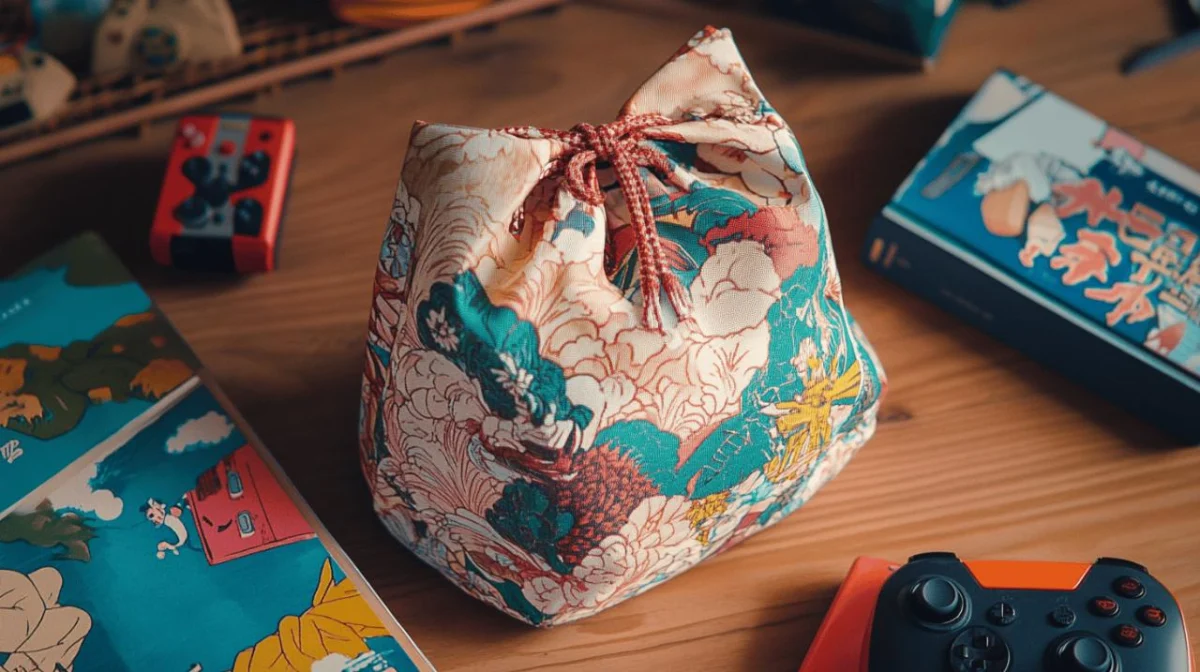
The Japanese tea ceremony, known as Chanoyu or Chadō ("The Way of Tea"), is far more than a simple act of preparing a beverage. It is a choreographed, meditative art form that seeks to embody the four principles established by Sen no Rikyū: Wa (Harmony), Kei (Respect), Sei (Purity), and Jaku (Tranquility). At the heart of this practice, often overlooked by the casual observer but vital to the practitioner, is the ceremonial bag—a functional masterpiece designed to safeguard the delicate tools that make the ritual possible.
The Chronology of an Ancestral Accessory
The history of the tea ceremony bag is intrinsically linked to the evolution of Zen Buddhism and the formalization of tea culture in Japan.
The Kamakura Period (1192–1333): The Genesis
The seeds of the tea ceremony were sown during the Kamakura period, as Zen Buddhist monks returning from China brought with them the custom of consuming powdered green tea (matcha) to remain alert during long hours of meditation. As the practice migrated from the monastery to the aristocratic and samurai classes, the need to transport these delicate tools—the bamboo whisk (chasen), the tea scoop (chashaku), and the tea bowl (chawan)—became apparent. Early iterations of these bags were simple, utilitarian pouches, yet they quickly evolved into objects of aesthetic significance as the "Way of Tea" gained social prestige.
The Muromachi and Momoyama Periods: Refinement
As the ceremony became codified under the influence of masters like Murata Jukō and later Sen no Rikyū, the aesthetic requirements for equipment became rigorous. The bag transitioned from a mere container into a statement of the host’s dedication to the ritual. By the 16th century, the selection of fabrics—often incorporating silks and complex weaves—became a reflection of the host’s status and their commitment to the aesthetic of wabi-sabi (finding beauty in simplicity and imperfection).
Supporting Data: Anatomy of the Ceremonial Bag
A high-quality ceremonial bag is not merely a piece of luggage; it is an engineered protective environment. To understand its importance, one must look at the technical requirements of the tools it houses.
Material Science and Ethical Sourcing
Modern artisans, particularly those in the renowned Uji region—the historic heart of matcha production—prioritize materials that balance durability with the tactile softness required to prevent scratching the glaze of ceramic tea bowls. Increasingly, there is a shift toward sustainable and fair-trade textiles. Organic cotton, high-grade linen, and heritage-grade silks are favored for their ability to breathe, preventing moisture buildup that could damage the sensitive bamboo tools or lead to mold within the bag.
Dimensional Standards
The internal geometry of these bags is highly standardized to ensure the security of the contents:
- Height: Typically between 25 and 30 centimeters. This provides enough clearance for the vertical storage of the chasen without crushing its delicate tines.
- Width: Usually 20 centimeters, allowing for the stable nesting of the chawan.
- Compartmentalization: Professional-grade bags feature internal partitions. These are not merely for convenience; they prevent the "clinking" of metal or ceramic against wood, which would disrupt the silence and mindfulness of the pre-ceremony setup.
The Philosophy of Selection: Aligning with the Ritual
Selecting a bag is a rite of passage for any student of the tea ceremony. It is an expression of the practitioner’s personal journey toward the four pillars of Chanoyu.
Interpreting Motif and Symbolism
The patterns on a tea bag are never accidental.
- Floral Motifs: Often used to denote the changing seasons, reflecting the Japanese sensitivity to kigo (seasonal references).
- Geometric Patterns: These represent the structural integrity of the universe and the order that the ceremony seeks to restore to the participant’s mind.
- Authenticity Markers: Bags originating from Uji often feature motifs associated with the tea leaf or the mountainous landscapes of the region, signaling that the contents within are of the highest pedigree.
Tailoring the Bag to the Occasion
The choice of bag depends on the formality of the event:
- Chakai (Informal Tea Gathering): A simple, durable bag is sufficient. It reflects the humble, intimate nature of the gathering.
- Chaji (Formal Tea Gathering): These require highly elaborate bags, often constructed from brocade or reinforced textiles, designed to protect a complete set of ceremonial utensils. These are often considered family heirlooms, passed down through generations of tea practitioners.
Official Perspectives: The Artisan’s Responsibility
Master artisans from the Kyoto and Uji regions emphasize that the bag is the "guardian of the ritual." According to traditional guilds, the construction of the bag is as much a spiritual exercise as the tea ceremony itself.
"The bag protects the silence of the tea room," notes one master artisan. "If the tools are cared for with reverence, the tea will taste of that respect." This sentiment is echoed by the standards of the Urasenke and Omotesenke schools of tea, which teach that the way one handles their equipment bag is an extension of their character. A disorganized bag is viewed as a reflection of a distracted mind, contradicting the very purpose of the practice.
Implications: Preservation and Legacy
The continued demand for high-quality, artisanal tea bags has significant implications for both the cultural heritage of Japan and the sustainability of traditional craftsmanship.
Maintenance as a Form of Mindfulness
The care of the bag is an exercise in Sei (Purity).
- Cleaning: Using a soft-bristled brush to remove dust prevents the accumulation of particles that could abrade the fabric.
- Storage: The consensus among experts is to store these bags in cool, dry, dark environments. Many recommend using an acid-free silk or cotton wrapping during long periods of non-use to prevent color fading and fiber degradation.
- Restoration: Much like the art of Kintsugi (repairing broken pottery with gold), the repair of a tea bag is seen as a way to extend the object’s life and honor its history.
The Future of the Craft
As global interest in matcha and Japanese aesthetics grows, the market is seeing an influx of mass-produced, low-quality imitations. This has created a bifurcated market: one that treats the bag as a fast-fashion accessory, and another that maintains the rigorous standards of the Edo-period masters. The implications are clear: for the tradition to survive, practitioners must support the artisans who continue to source materials ethically and construct bags using the time-honored techniques of the Uji region.
Conclusion: The Vessel of Tranquility
The ceremonial tea bag serves as the bridge between the chaotic outside world and the serene interior of the tea room. By providing a safe harbor for the chawan, chasen, and chashaku, the bag enables the practitioner to transport their practice anywhere. It reminds us that even in travel, the principles of harmony, respect, purity, and tranquility can be maintained.
Whether one is a novice just beginning to acquire their first set of tools or a seasoned practitioner with decades of experience, the choice of a ceremonial bag is an investment in the longevity of the practice. It is a testament to the fact that in the world of the Japanese tea ceremony, every detail—no matter how small—is a crucial component of the path to enlightenment. As we continue to honor these ancestral methods, we ensure that the profound beauty of Chadō remains vibrant and intact for generations to come.












No comments yet. Be the first to join the conversation!