

The global race to achieve artificial general intelligence (AGI) has triggered an unprecedented arms race in hardware infrastructure. At the center of this technological gold rush is Nvidia, whose dominance in the AI accelerator market remains unchallenged. However, as the complexity of large language models (LLMs) scales, so too does the price of the hardware required to train them.
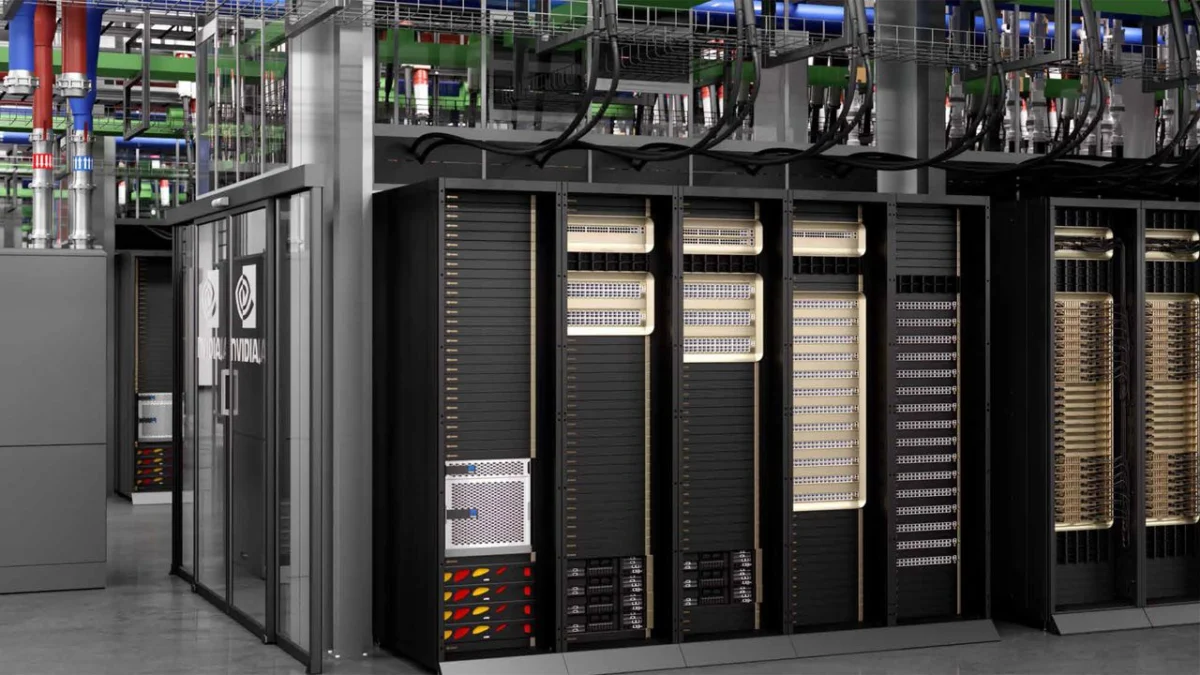
New data from Morgan Stanley Research has unveiled the staggering financial realities of the next generation of AI infrastructure. A single Vera Rubin-based VR200 NVL72 rack is now estimated to cost hyperscale cloud service providers (CSPs) a massive $7.8 million per unit. This figure marks a substantial leap over the roughly $4 million price tag associated with the preceding GB300 NVL72 systems, signaling a new, more expensive era for the world’s most powerful data centers.
The Anatomy of a Price Hike: Understanding the VR200 NVL72
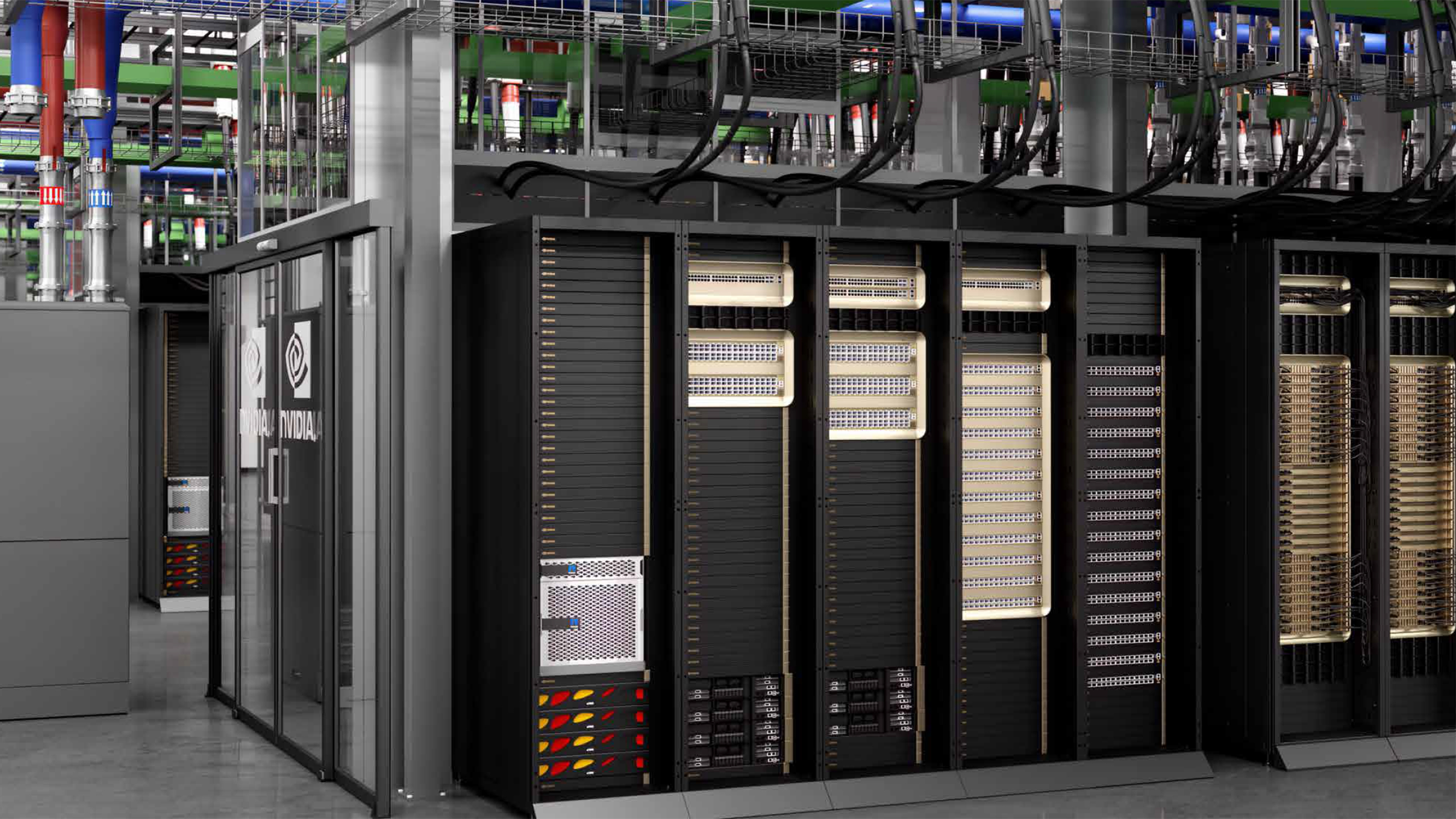
To understand why a server rack now commands the price of a luxury real estate portfolio, one must look at the Bill of Materials (BOM). The VR200 NVL72, while housed in the familiar Oberon chassis architecture, is a fundamentally different beast than its predecessors.
Nvidia’s strategy involves a delicate balance of proprietary hardware. According to industry analysis, Nvidia intends to charge approximately $55,000 for each Rubin GPU and $5,000 for each Vera CPU when sold in volume to the industry’s largest players. While these individual component prices are significant, they are only part of a much larger expenditure.
The shift to the Vera Rubin architecture incorporates significantly more sophisticated networking, advanced printed circuit board (PCB) designs, and highly specialized cooling and power delivery systems. As these systems move closer to the physical limits of current semiconductor manufacturing—requiring complex chip packaging—the costs naturally escalate. The result is a $7.8 million price point that has left industry analysts and hyperscalers grappling with the long-term sustainability of such massive capital expenditures.
Chronology: The Escalating Cost of AI Infrastructure
The trajectory of AI hardware costs has been exponential, reflecting the rapid evolution of the "compute-at-any-cost" mentality that has gripped the tech sector since the breakout success of ChatGPT.

- Pre-2023: AI infrastructure costs were largely tied to standard high-performance computing (HPC) budgets, where price-per-watt and price-per-flop were the primary metrics.
- Late 2023 – Early 2024: The introduction of the GB200 NVL72 set a new benchmark for performance and price, with costs hovering around the $4 million mark.
- March 2026: Initial industry murmurs suggested that upcoming full-scale systems would approach the $7 million threshold, a figure that seemed high at the time but now appears conservative.
- May 2026: Morgan Stanley’s detailed BOM analysis confirmed that the VR200 NVL72 would push costs as high as $7.8 million, driven largely by a massive influx of memory content.
This rapid escalation highlights a crucial pivot in data center architecture: the bottleneck is no longer just raw processing power, but the ability to feed that power with high-speed memory and storage.
The Memory Explosion: A 435% Increase
The most striking revelation in the cost breakdown is the allocation for memory. In the VR200 NVL72, memory accounts for approximately 25% of the total system cost—a staggering $2 million per rack. This represents a 435% increase in memory spending compared to the GB300 series.
The reasons for this are rooted in the physical requirements of next-generation AI models. Each VR200 rack now packs 54 TB of LPDDR5X memory, a threefold increase over the 17 TB found in the GB200.
The Cost of High-Bandwidth Demands
The transition to LPDDR5X, particularly when utilized in specialized SOCAMM2 modules—which are proprietary to Nvidia’s Vera CPUs—has introduced massive overhead.
- Raw Material Costs: Analysts at SemiAnalysis estimated that the price per GB of LPDDR5X was roughly $8 in early 2026. However, market volatility and the specialized nature of these modules mean this cost is prone to rapid inflation.
- The "Nvidia Tax": Beyond the market price of the memory itself, Nvidia adds a significant markup. When the price of LPDDR5X fluctuates toward $10 or $12 per GB, the total system cost for memory alone can easily exceed $500,000 for the LPDDR5X component, excluding the even more expensive HBM4 (High Bandwidth Memory) integrated directly onto the Rubin GPUs.
- Storage Integration: Furthermore, the inclusion of over $1 million worth of 3D NAND storage—a component that was virtually negligible in previous rack generations—further inflates the BOM, ensuring that the system is essentially a self-contained, ultra-fast data ecosystem.
Implications for Hyperscalers and the Industry
The jump to an $8 million per-rack price tag carries profound implications for the tech industry’s "Big Four"—Amazon, Google, Microsoft, and Meta.
1. The Margin Squeeze
Server manufacturers are finding their margins increasingly thin. As Nvidia captures a larger percentage of the value chain by selling full-scale, pre-integrated systems, the third-party server manufacturers (Original Design Manufacturers or ODMs) are left with less room to maneuver. The complexity of the Rubin systems means that the risks associated with assembly, testing, and shipping these massive units are higher than ever, yet the profit potential for the manufacturers is not scaling at the same rate as the BOM cost.
2. The Capital Expenditure (CapEx) Ceiling
Hyperscalers are currently engaged in a massive spending spree, but there is a growing concern regarding the return on investment (ROI). If a single rack costs nearly $8 million, a data center with thousands of such racks represents a multi-billion dollar commitment. For these companies to justify this expenditure, the revenue generated by their AI services must grow at a rate that matches or exceeds the hardware depreciation cycles. If the pace of model improvement plateaus, or if the "AI bubble" faces a correction, these massive infrastructure investments could become a significant liability.
3. The Power and Cooling Paradox
The cost of the hardware is only one side of the coin. A $7.8 million rack consumes a massive amount of electricity and generates immense heat. This necessitates further capital investment in liquid cooling infrastructure and specialized power distribution units (PDUs). The total cost of ownership (TCO) for a VR200-based facility is therefore significantly higher than the initial sticker price suggests.
A Future Defined by Specialized Hardware
Nvidia’s move toward the Vera Rubin architecture is a calculated gamble on the continued necessity of extreme-scale computing. By vertically integrating the memory, processing, and networking components into a single, high-priced package, Nvidia is effectively standardizing the future of the AI data center.
For the rest of the industry, the message is clear: the barrier to entry for training the next generation of foundation models is rising. The era of "off-the-shelf" components is fading, replaced by a world of highly customized, proprietary systems that require astronomical investment.
As we look toward the latter half of 2026 and into 2027, the success of the Vera Rubin platform will likely serve as the ultimate litmus test for the AI industry. If the performance gains provided by this $7.8 million hardware justify the cost, we may see a continued acceleration toward even more expensive, integrated systems. If, however, the financial burden proves too heavy for the hyperscalers to bear, we may see a shift toward more cost-effective, specialized hardware architectures that prioritize efficiency over raw, unbridled power.
For now, the silicon gold rush continues, and at $7.8 million per rack, the price of admission has never been higher.









No comments yet. Be the first to join the conversation!