

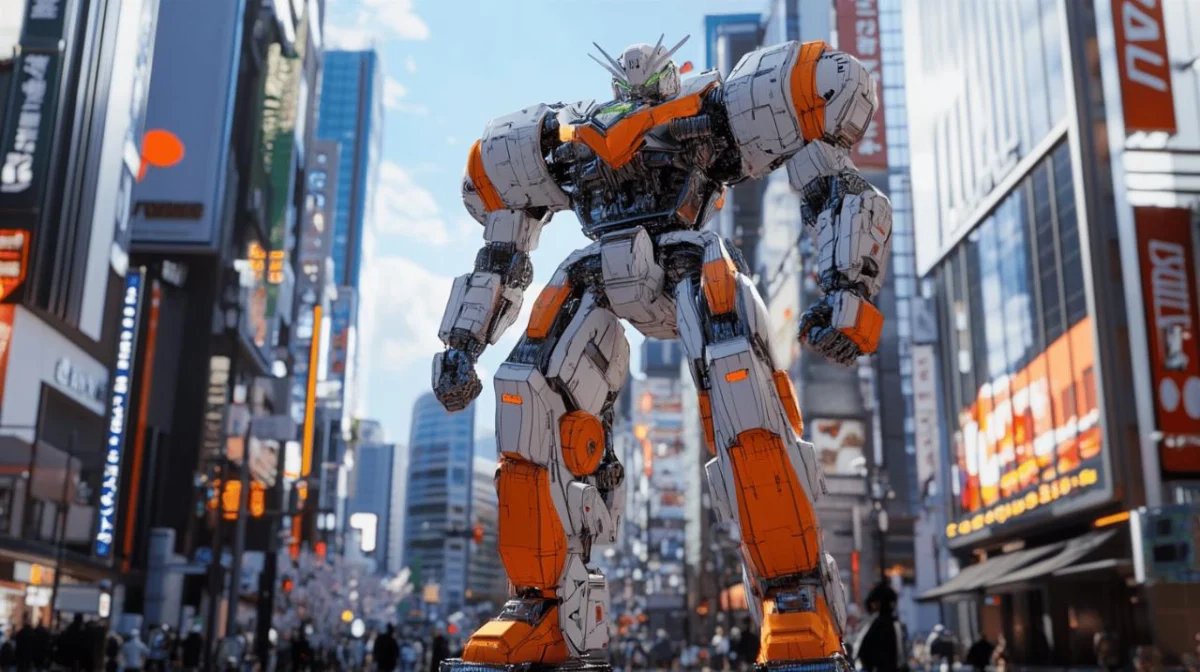
The global construction industry stands at a critical juncture. Faced with the twin challenges of a shrinking workforce and an aging demographic, the sector is looking toward radical technological innovation to maintain productivity. Leading this charge is Japan, a nation long at the forefront of robotics, which has unveiled a groundbreaking solution: the HRP-5P. Developed by the National Institute of Advanced Industrial Science and Technology (AIST), this autonomous humanoid robot is not merely a prototype; it is a vision of the future of manual labor.
The Genesis of HRP-5P: Bridging the Demographic Gap
The development of the HRP-5P was not driven by curiosity alone, but by necessity. Japan is currently grappling with one of the most severe demographic crises in the developed world. With a rapidly aging population and a birth rate that continues to decline, the country’s construction sector—historically reliant on a steady stream of young, manual laborers—has faced a chronic shortage of skilled workers.
AIST researchers recognized early on that traditional automation, such as assembly-line robotics, was ill-suited for the dynamic and unpredictable nature of construction sites. Unlike a factory floor, a building site is chaotic, full of obstacles, and constantly changing. To solve this, the HRP-5P was designed as a "maçon" (mason) robot—a humanoid capable of navigating these environments with human-like dexterity. Since its formal presentation in September 2018, the robot has served as a proof-of-concept for the potential of autonomous machinery to perform heavy lifting, drywall installation, and structural assembly without fatigue or error.
Technical Specifications: The Anatomy of a Robot Builder
The HRP-5P is an engineering marvel, standing roughly 182 centimeters tall and weighing approximately 101 kilograms. What sets it apart from its predecessors is its sophisticated integration of motion planning and object detection.
Advanced Perception Systems
At the heart of the HRP-5P’s capability is its multi-sensor fusion system. The robot utilizes high-resolution cameras and LiDAR sensors to map its surroundings in real-time. This allows it to distinguish between construction materials—such as a heavy sheet of drywall—and structural hazards. By analyzing the environment, the HRP-5P can plan its trajectory, ensuring that it moves through a site without colliding with human workers or pre-existing structures.
Dexterity and Load-Bearing Capacity
The HRP-5P is designed to handle the physical burdens that often lead to workplace injuries among human workers. It can manipulate heavy panels, align them with sub-millimeter precision, and secure them using standard tools. Its design emphasizes stability and torque, allowing it to maintain its center of gravity even when carrying significant weights across uneven terrain.
Chronology of Development and Deployment
The path to the HRP-5P involved years of iterative design:
- 2015–2017: AIST researchers focus on the "bipedal locomotion" problem, ensuring that a robot could walk over debris-strewn ground while maintaining balance.
- September 2018: The HRP-5P is unveiled to the public, demonstrating its ability to pick up drywall, move it to a specific location, and attach it to a frame.
- 2019–2021: Testing phases expand beyond simple interior tasks, exploring the robot’s utility in heavy industry, including shipbuilding and aeronautics.
- 2022–Present: The technology is integrated into broader "Smart Construction" ecosystems, where the robot acts as part of a larger digital twin infrastructure.
Supporting Data: The Efficiency of Automation
The case for integrating robots like the HRP-5P is supported by compelling efficiency metrics. In the construction industry, time is the ultimate currency.
Benchmarking Performance
The HRP-5P is part of a larger wave of automation. Consider the following industry benchmarks:
- Paving and Finishing: Current robotic floor-finishers achieve a precision of 0.5mm over a 250-meter span per day, a level of accuracy that is difficult for human crews to maintain consistently over long shifts.
- Bricklaying: Technologies like Hadrian X have demonstrated the ability to lay 1,000 bricks per hour, a task that would take a human mason several hours to complete with the same level of uniformity.
- 3D Printing: Companies like China’s Winsun have successfully printed entire residential structures in just 24 hours, utilizing eco-friendly materials and significantly reducing waste.
When these technologies are synthesized with the HRP-5P’s ability to handle interior construction, the potential for reduced project timelines is immense. For example, a project that previously required 20 workers and four weeks might be completed by a team of five humans and three robotic units in under two weeks.
Official Perspectives and Industry Implications
The AIST team views the HRP-5P not as a replacement for the human workforce, but as a "collaborative assistant." In the official view of the Japanese Ministry of Economy, Trade and Industry (METI), the goal of this technology is to shift the human role from "manual laborer" to "system supervisor."
The Economic Impact
The economic argument is clear: as labor costs rise and the pool of available workers shrinks, companies that adopt robotic solutions will be the only ones capable of competing in a global market. By offloading dangerous, repetitive, or physically taxing tasks to machines, construction firms can reduce insurance premiums, decrease downtime due to injury, and improve the overall quality of construction.
Expansion into New Sectors
While the construction of buildings remains the primary focus, the underlying technology of the HRP-5P has significant cross-industry applications. The robotics used to navigate a construction site are, in principle, similar to those required for maintenance in the confined, hazardous spaces of a ship’s engine room or an aircraft’s fuselage. AIST is actively exploring these sectors, aiming to create a universal robotic platform that can adapt to different industrial environments through software updates rather than hardware redesigns.
The Future: A Symbiotic Workplace
The introduction of humanoid robots into the construction site is not without its challenges. The most significant hurdle remains the "human-robot interface." How do we ensure that a 100kg robot and a human crew can work side-by-side without incident?
Safety Protocols and Training
Safety is the cornerstone of the HRP-5P project. Modern protocols involve "geo-fencing" robots in specific work zones while allowing humans to supervise from a distance. Furthermore, the integration of real-time AI monitoring means that if a human enters a "danger zone," the robot’s sensors immediately register the proximity, and the machine halts its operation instantly.
Training programs are also evolving. Workers are no longer just learning to use hammers and saws; they are being trained in the basics of robot programming, maintenance, and fleet management. This upskilling is essential to the future of the industry, creating high-value jobs for those who know how to manage the robotic workforce.
The Evolution of the Smart Site
Looking ahead, the construction site will become a digital ecosystem. Drones will perform thermal imaging to ensure structural integrity and energy efficiency; exoskeletons will allow human workers to carry loads that were previously impossible; and robots like the HRP-5P will serve as the backbone of assembly.
Conclusion: A Paradigm Shift
The HRP-5P is more than just a piece of hardware; it is a symbol of a paradigm shift. Japan’s proactive approach to its demographic crisis demonstrates that technology can be a powerful tool for social and economic stability. While the transition will require significant investment in both capital and education, the long-term benefits are undeniable.
By embracing the HRP-5P, the construction industry is shedding its image as a labor-intensive, slow-moving sector and stepping into a future defined by precision, speed, and safety. As the technology continues to mature, we can expect to see these humanoid assistants on job sites globally, working in tandem with human experts to build the cities of tomorrow. The era of the robotic mason has arrived, and it is built on a foundation of ingenuity and necessity.












No comments yet. Be the first to join the conversation!