

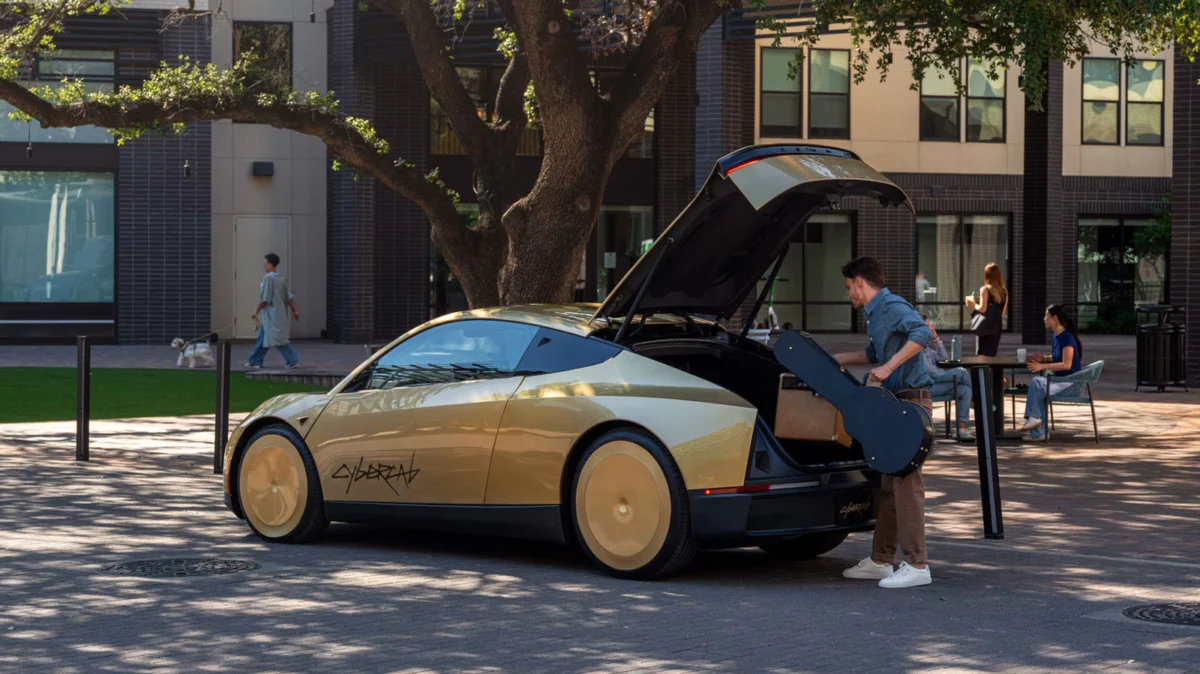
The landscape of American urban transportation shifted irrevocably this week as Tesla officially launched its Cybercab robotaxi service. Marking a pivotal transition from concept to consumer reality, the company has begun deploying its purpose-built, steering-wheel-less autonomous vehicles onto public roads. While the vision for a driverless future has been a cornerstone of Elon Musk’s long-term roadmap for over a decade, the sight of the distinct, angular Cybercab navigating the streets of Austin, Texas, signals that the era of the robotaxi has finally arrived.
The Main Facts: A New Chapter in Mobility
Tesla’s deployment represents a significant milestone in the evolution of autonomous driving technology. Users in select Texas markets—including Dallas, Houston, Miami, Orlando, and Tampa—can now access the company’s ride-hailing functionality via the Tesla app on both iOS and Android platforms. However, the true headline is the introduction of the Cybercab itself.
Currently, the Cybercab is in its initial rollout phase, exclusive to Austin. Access is not currently a "user-choice" feature; rather, the system dynamically assigns vehicles based on availability, passenger count, and route optimization. While the broader fleet in Texas currently includes a mix of autonomous-capable Model Y vehicles, the integration of the Cybercab marks the first time a vehicle designed from the ground up without manual controls has been authorized for public transit duty.
The vehicles are currently owned and operated directly by Tesla, serving as a controlled testbed for the company’s vision of a decentralized, revenue-generating transportation network.
A Chronology of Autonomy
To understand the gravity of this launch, one must look back at the arduous journey Tesla has navigated.
- The Vision (2016): Elon Musk first outlined his "Master Plan, Part Deux," which explicitly detailed a future where Tesla owners could add their cars to a shared fleet, allowing the vehicle to earn money while the owner was at work or asleep.
- The Unveiling (2024): Tesla formally unveiled the Cybercab prototype. The design shocked industry observers: a two-seater coupe featuring butterfly doors, no steering wheel, no pedals, and a minimalist interior defined by a single, large infotainment screen.
- The Regulatory Hurdle (2025): The year leading up to this launch was defined by intense lobbying and safety certification processes. Tesla successfully secured authorization from Texas regulators to operate a fleet of 314 driverless vehicles, a crucial step in moving from closed-track testing to real-world deployment.
- The Launch (September 2026): Tesla officially activated the Robotaxi app functionality. Following the debut in Austin, the company confirmed that the service will scale across its authorized Texas footprint, with further expansion contingent on state-by-state regulatory approval.
Supporting Data: Fleet Composition and Operational Scope
Behind the sleek exterior of the Cybercab lies a complex operational infrastructure. According to regulatory filings cited by The New York Times and industry monitors, Tesla’s authorized autonomous fleet in Texas consists of 314 units. Of this number, 45 are the purpose-built Cybercabs, while the remainder of the fleet is comprised of Model Y vehicles retrofitted for high-level autonomous operation.
This distinction is vital for analysts: the Model Ys serve as the workhorses, proving the software’s capability in familiar, mass-produced chassis, while the Cybercabs act as the "halo" vehicles for the brand’s long-term goal.
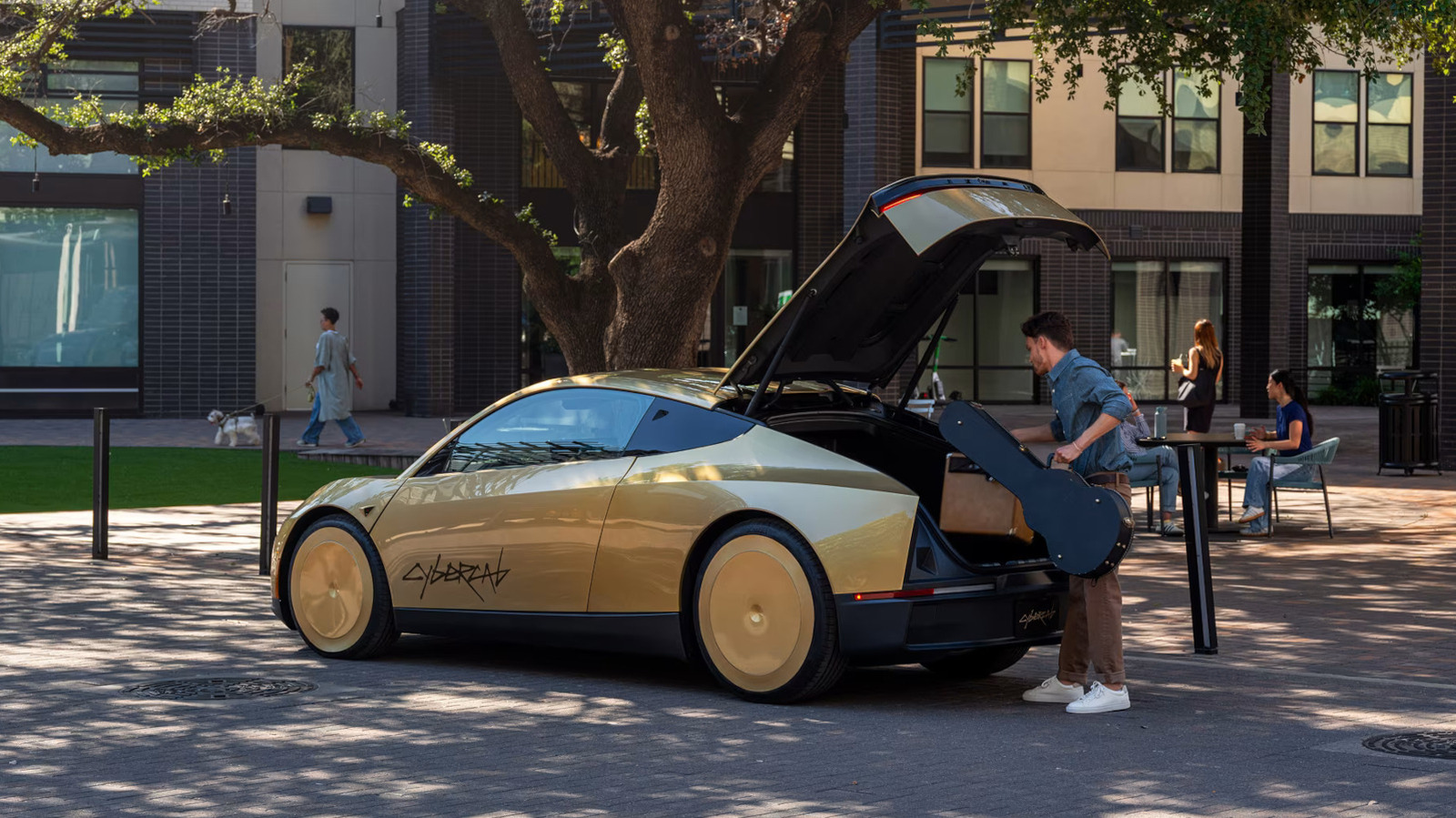
The interior architecture of the Cybercab is a departure from traditional automotive design. By removing the front engine bay and the driver’s cockpit, Tesla has optimized the space for a two-person bench seat. Despite its compact footprint, the vehicle features a dedicated trunk space, designed to accommodate luggage, groceries, or sports equipment, signaling that Tesla is positioning the vehicle as a legitimate replacement for personal car ownership rather than a mere shuttle service.
Implications for the Ridesharing Industry
The arrival of the Cybercab places Tesla in direct competition with incumbents like Waymo (Alphabet) and Cruise (GM). However, Tesla’s business model is fundamentally different. While competitors have largely operated as taxi services using high-cost sensors like LiDAR, Tesla has doubled down on its "Vision-only" approach, utilizing cameras and neural network processing.
The Economic Shift
The ultimate goal, according to Musk, is to drive the cost per mile of transportation to a level below that of public bus tickets. By removing the human driver—a cost that typically accounts for 60-70% of a ride-hailing fare—Tesla expects to lower the barrier to entry for mobility.
The Fleet Ownership Model
Tesla is currently taking inquiries from parties interested in "building the robotaxi network." This is a clear indicator that the company does not intend to be the sole operator of these vehicles forever. The business model involves selling fleets to private enterprises, logistics companies, and eventually, individual investors who wish to operate their own "micro-fleets." If successful, this would transform the automotive industry from a retail-sales-focused market into a "Transportation-as-a-Service" (TaaS) economy.
Official Responses and Public Reception
Tesla’s official communications have been characteristically triumphant, with the company’s social media channels declaring, "The future has arrived in Austin."
However, the rollout has been met with a mix of excitement and cautious scrutiny. Safety advocates have raised questions regarding the behavior of the autonomous software in unpredictable urban environments, particularly during inclement weather or complex traffic scenarios. Tesla maintains that its neural networks are safer than human drivers, citing vast datasets collected from millions of Tesla vehicles globally that contribute to the "Full Self-Driving" (FSD) training loop.
Public reaction in Austin has been varied. Early adopters have praised the convenience and the "futuristic" aesthetic of the Cybercab, while local officials continue to monitor the impact on traffic congestion and public safety protocols. The 314-vehicle cap serves as a "safety buffer," allowing regulators to evaluate the performance of the fleet before permitting a wider, statewide deployment.
Future Outlook: The Road Ahead
As Tesla navigates the initial months of the Cybercab rollout, the industry will be watching several key indicators:
- Maintenance and Durability: How will the Cybercabs hold up under the constant, high-mileage demands of a taxi service?
- Safety Records: Will the fleet maintain a superior safety record compared to human-driven vehicles, or will early accidents create a "trust deficit" that stalls public adoption?
- Scaling Constraints: Can Tesla ramp up production of the Cybercab to meet the demand of prospective fleet owners, or will supply chain bottlenecks limit the growth of the robotaxi network?
The launch in Austin is not the end of the journey; it is a live-fire test of a thesis that could redefine the 21st-century city. For now, the Cybercabs roaming the streets of Texas are more than just cars—they are the mobile, silicon-brained embodiments of a technological revolution. Whether they become the ubiquitous standard of transportation or a niche curiosity remains to be seen, but one thing is certain: the era of the driverless commute has officially commenced.











