

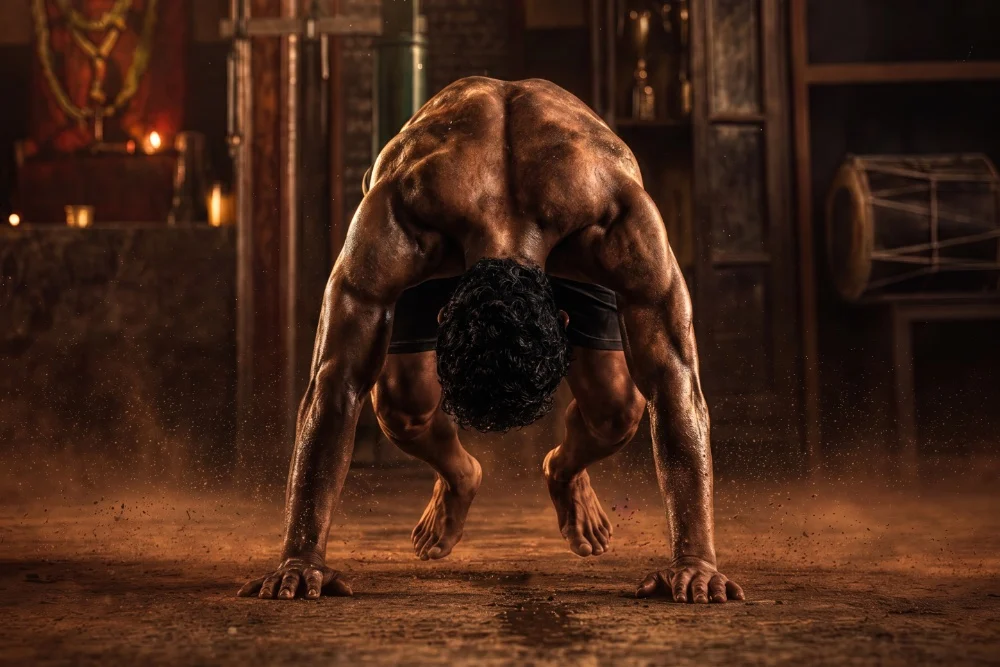
In a cinematic announcement that has electrified the Indian film industry, Jio Studios and Aatpat Productions have officially unveiled the teaser and global release date for Khashaba, the highly anticipated biographical sports drama helmed by visionary filmmaker Nagraj Manjule. The film, which chronicles the life of Khashaba Dadasaheb Jadhav—the wrestler who etched his name into history as independent India’s first-ever individual Olympic medalist—is slated for a grand theatrical release on January 1, 2027.
For Manjule, Khashaba represents a poignant return to the Marathi-language roots that propelled him to international acclaim. Known for his unflinching gaze and visceral storytelling, Manjule’s latest project promises to be a magnum opus that bridges the gap between grassroots regional narratives and global sporting triumph.
The Man Behind the Myth: Who Was Khashaba Jadhav?
To understand the weight of Manjule’s upcoming film, one must understand the man who inspired it. Khashaba Dadasaheb Jadhav, often referred to as "Pocket Dynamo," was not merely an athlete; he was a symbol of resilience in a newly liberated nation.
Born in a small village in Maharashtra, Jadhav’s journey began in the akharas (traditional mud-pits) of rural India. At a time when India was struggling to find its footing on the world stage, Jadhav’s pursuit of excellence was marked by extreme financial hardship and lack of government support. His historic bronze medal win at the 1952 Helsinki Olympics was a watershed moment for Indian sports. It proved that a man from a mud pit could hold his own against the finest athletes in the world. Khashaba seeks to dramatize this arduous climb, capturing the grit, sweat, and indomitable spirit required to transcend the limitations of the era.
Chronology of a Filmmaking Force: Nagraj Manjule’s Evolution
Nagraj Manjule’s career is a testament to the power of authentic regional cinema. His trajectory has been nothing short of meteoric, and Khashaba acts as the latest pillar in a body of work that has redefined contemporary Indian filmmaking.
- The Breakthrough: Manjule burst onto the scene with Fandry (2013), an unflinching, poetic exploration of caste discrimination that won the National Film Award and drew global critical praise for its raw realism.
- The Phenomenon: In 2016, he released Sairat, a romantic tragedy that became a cultural earthquake in Maharashtra. It shattered box-office records and became the most successful Marathi film of its time, ultimately being remade in several other Indian languages.
- The National Pivot: Following his success in Marathi, Manjule expanded his canvas to Hindi cinema with Jhund (2022). Starring Bollywood legend Amitabh Bachchan, the film explored the transformative power of sports in slum communities, echoing themes of social upliftment that have become synonymous with Manjule’s brand of storytelling.
- Digital Expansion: Earlier this year, Manjule ventured into the streaming space with the Prime Video series Matka King, starring Vijay Varma, proving his versatility across long-form narrative structures.
With Khashaba, Manjule returns to the language and cultural landscape that birthed his unique cinematic voice, albeit with the backing of a production powerhouse capable of delivering his vision to a truly global audience.
Production Dynamics: A Powerhouse Collaboration
The production of Khashaba is a significant marker for the Indian film industry. Jio Studios, under the leadership of Jyoti Deshpande, has become a juggernaut of high-stakes, high-quality production. Having backed the Dhurandhar duology—among the highest-grossing films in Indian history—and the record-shattering Raja Shivaji, Jio Studios has demonstrated an uncanny ability to identify stories that resonate with both the masses and the critics.
By pairing the commercial might of Jio Studios with the artistic integrity of Aatpat Productions, the film is positioned as a "prestige project." The production team, led by Jyoti Deshpande and Gargee Kulkarni, has ensured that the film receives the scale it deserves. While the identity of the lead actor portraying Jadhav remains a closely guarded secret—likely to heighten audience curiosity—the supporting cast is a "who’s who" of the Marathi film industry’s most formidable talents.
Names like Jitendra Joshi, Mahesh Manjrekar, Girish Kulkarni, Vaibhav Mangale, Chhaya Kadam, and Gargee Kulkarni indicate that the film will not rely on a single star performance but will be anchored by a rich, ensemble-driven narrative. Furthermore, the collaboration with the legendary composer duo Ajay-Atul ensures that the film’s soundscape will be as powerful as its visuals. Known for their ability to evoke intense emotional responses, Ajay-Atul’s score is expected to be a critical component of the film’s atmosphere, particularly in the sequences depicting the transition from the mud pits of Maharashtra to the Olympic arenas of Helsinki.
The Implications: Why ‘Khashaba’ Matters
The announcement of Khashaba comes at a pivotal time for Indian cinema. The industry is currently undergoing a shift, moving away from purely commercial escapism toward "event-based" storytelling that highlights national history, unsung heroes, and regional identities.
1. Cultural Reclaiming
Khashaba serves as a vehicle for national pride. By focusing on the first individual Olympic medalist, the film taps into a collective desire to celebrate indigenous heroes who have been overlooked by mainstream history books. It is a narrative that appeals to the Indian diaspora as much as the domestic audience.
2. The Global Stage
The choice of a 2027 release date signals a long, deliberate post-production cycle, suggesting that the producers are aiming for high technical standards. This is not just a regional film; it is a film designed to compete on international streaming platforms and film festivals, potentially placing Marathi cinema back in the conversation for global accolades.
3. The Manjule Factor
Manjule has built his career on taking marginalized figures and placing them at the center of the frame. By applying his signature style—which often involves a delicate balance between brutal realism and lyrical beauty—to a sports biopic, he is effectively reinventing a genre that has, until now, been dominated by standard "underdog" tropes.
Anticipation and Industry Reception
The teaser, which premiered in theaters before hitting digital platforms, offers a stark, evocative glimpse into the world of 1950s India. The visual language—muted, earthy tones contrasted with the intensity of the wrestling mat—suggests a film that prioritizes atmosphere.
Industry analysts suggest that Khashaba will be a litmus test for the "regional-to-global" pipeline. If successful, it could pave the way for more biographies of regional icons to be produced with the budget and marketing muscle usually reserved for pan-Indian action blockbusters.
"The story of Khashaba Dadasaheb Jadhav is not just about a medal," notes one industry observer. "It is about the cost of dreams in a post-colonial society. Nagraj Manjule is the perfect person to tell this story because he understands the cost of those dreams better than anyone."
Looking Ahead to January 2027
As the countdown to January 1, 2027, begins, the focus will undoubtedly shift toward the casting. Who will embody the resilience of Jadhav? How will Manjule handle the technical challenges of recreating the 1952 Helsinki Olympics?
Whatever the answers, the collaboration between Jio Studios, Aatpat Productions, and Nagraj Manjule has created an undeniable momentum. Khashaba is not just another biopic; it is a cinematic homecoming for a director who has proven that the most powerful stories are often found in the soil of our own history. With the combined force of a legendary director, a stellar cast, and a production house with a Midas touch, Khashaba is poised to be the defining cinematic event of 2027.
The wrestling mat is set, the history is written, and by the dawn of 2027, the world will finally witness the story of the man who dared to dream in mud, and won in gold.










