

The smart home landscape has shifted dramatically over the past year. With the introduction of generative AI-powered "Alexa+" and a fundamental change in how Amazon handles user privacy, choosing the right smart speaker is no longer just about sound quality or aesthetics—it is about deciding how much of your daily life you are willing to integrate with an increasingly cloud-reliant artificial intelligence.
As of early 2025, Amazon’s lineup remains the most accessible entry point into home automation, yet the diversity of the "Echo" brand can be overwhelming. From audiophile-grade sound systems to simple bedside companions, here is a comprehensive breakdown of the best Alexa-enabled devices currently on the market and what you need to know before inviting them into your home.
The Top Performers: Our Categorical Picks
While the Echo ecosystem is vast, a few standout devices consistently rise above the rest based on real-world testing and utility.
The Audiophile’s Choice: Echo Studio (2nd Gen)
If sound fidelity is your priority, the Echo Studio (2nd Gen) is the gold standard within the Amazon lineup. Despite occupying a footprint similar to the standard 4th Gen Echo, the Studio’s internal engineering is in a different league. Equipped with three 1.5-inch midrange drivers and a substantial 3.75-inch woofer, it delivers a soundstage that easily fills large, open-concept living areas.
In our testing, the Studio handled complex tracks—ranging from the intricate piano arrangements of Jack’s Mannequin to the layered harmonies of modern pop—with startling clarity and deep, controlled bass. It effectively competes with premium hardware like the Apple HomePod but at a more accessible price point. Beyond the acoustics, it functions as a comprehensive smart home hub and supports Spatial Audio and Dolby Atmos, making it a powerful cornerstone for a modern home theater or music room.
The Bedroom Companion: Echo Spot (2nd Gen)
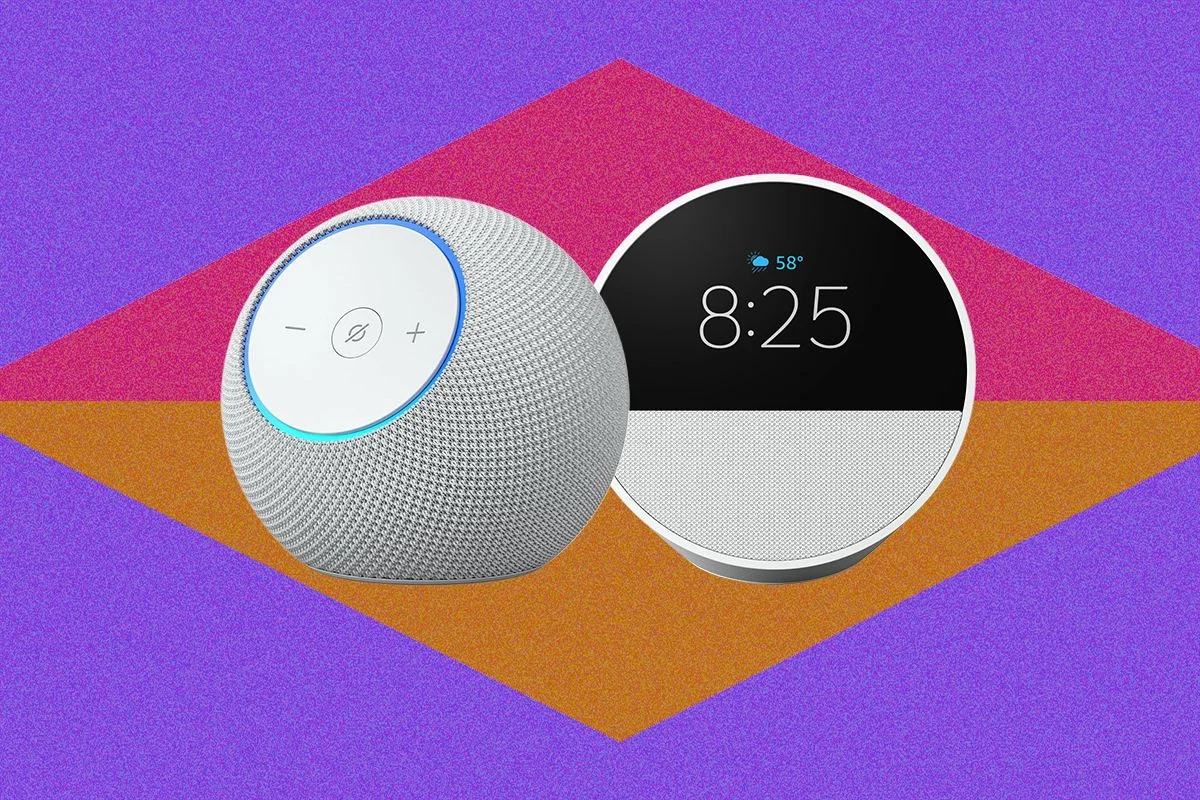
After a multi-year hiatus, the Echo Spot returned in 2024, and it is arguably the most sensible choice for a bedside table. It avoids the "clutter" of full-blown smart displays by utilizing a simple, semi-circular screen that provides essential information—time, weather, and active alarms—without the distraction of rotating news feeds or slideshows.
Importantly, the device lacks a camera, addressing a major privacy concern for bedroom hardware. The screen dims to a soft, non-intrusive red glow in dark environments, ensuring your sleep quality isn’t disrupted. While it isn’t intended to be your primary music system, its speaker is more than adequate for morning lo-fi playlists or news briefings.
The Family Essential: Echo Dot Kids (5th Gen)
For households with younger members, the Echo Dot Kids offers a safe, controlled introduction to voice assistants. Physically similar to the standard 5th Gen Dot, its primary value lies in the robust parental control suite. Parents can set strict time limits, filter out explicit content, and review interaction logs through the Amazon Kids portal. The device ships with a one-year subscription to Amazon Kids+, granting access to a massive library of Audible books, educational games, and kid-friendly skills.
A Comprehensive Look at the Echo Portfolio
Beyond our top picks, the broader Echo ecosystem offers specialized devices for every room in the house.

- Echo Dot (5th Gen) with Clock: A perennial favorite, the LED display is perfect for glancing at the time or weather. However, its spotty inventory levels make it a "catch it when you can" purchase.
- Echo Hub: This is not a speaker; it is a dedicated wall-mounted control panel. It is designed for the power user who wants to manage lights, locks, and thermostats without shouting commands. It performs its task admirably, though it should be paired with external speakers if you intend to stream high-quality audio.
- Echo Pop: The "cute" option of the lineup. While it serves as a perfectly capable, compact speaker for dorm rooms or offices, the standard Echo Dot offers superior audio performance for a marginal price increase.
- The Echo Show Series (5, 8, 15, 21): These displays serve varying roles. The Echo Show 5 is a compact, if somewhat limited, entry-level display. The Echo Show 8 (4th Gen), while popular in previous iterations, has seen a dip in audio quality in its latest version. We currently recommend the Echo Show 11 for those wanting a display that balances screen real estate with decent sound. The Echo Show 15 and 21 are ambitious devices that attempt to act as kitchen TVs, though their performance in that specific capacity is still maturing.
The "Alexa+" Era: Implications for Privacy and Processing
Perhaps the most significant change to the ecosystem is the transition to Alexa+, a generative AI-based evolution of the classic voice assistant.
What is Alexa+?
Alexa+ promises a more conversational, intuitive experience. It can handle complex, multi-part requests and maintain context over a longer conversation. It is currently available via a 30-day free trial, followed by a monthly subscription fee (unless you are a Prime member, which offers better value). Early testing suggests the conversational tone is a massive improvement, but the core utility for many users remains largely unchanged from the standard assistant.
The Privacy Shift
The arrival of Alexa+ coincides with a major policy update. As of March 28, 2025, Amazon discontinued the "Do Not Send Voice Recordings" privacy feature. Previously, users could opt for local-only processing to keep their voice data off the cloud. That is no longer an option. All voice interactions—whether with standard Alexa or the new Alexa+—are now processed via Amazon’s cloud servers. This is a critical development for privacy-conscious users to note, as it represents a fundamental change in how personal data is handled within the smart home.
Strategic Purchasing: When to Buy
The retail pricing of Echo devices is notoriously volatile. If you are looking to build out a smart home, timing is everything.
- Major Sales Events: Always wait for Amazon Prime Day or Black Friday. During these windows, it is standard to see discounts of 40 to 50 percent across the entire lineup.
- Bundle Deals: Amazon frequently bundles Echo devices with smart bulbs or plugs. If you are just starting, these bundles are almost always cheaper than purchasing the components individually.
Frequently Asked Questions (FAQs)
What is the difference between an Echo and an Echo Show?
An Echo is a speaker designed primarily for audio interaction. An Echo Show includes a display and a camera, allowing for video calls, visual recipe viewing, and security camera monitoring. Both share the same underlying intelligence, but the Show provides a visual interface for tasks that are difficult to manage via voice alone.
Is Alexa "always listening"?
Technically, yes. These devices are designed to continuously monitor for a "wake word." They do not begin recording or transmitting data to the cloud until they detect that word. However, "false positives"—where the device misinterprets ambient noise as a wake word—can occur. Users should utilize the physical mute button (which disconnects the microphones) whenever they desire total privacy.
How do I stop the "ads" on my Echo Show?
Echo Shows often display suggestions, sports scores, and "featured content." While you can disable interest-based ads in the Alexa Privacy settings, the only way to achieve a truly distraction-free experience is to set the device to "Photo Display" mode. Note that this turns your smart display into a static digital photo frame, disabling widgets and other helpful features.
How are these devices tested?
Our methodology involves installing each unit in a home environment for several weeks. We evaluate microphone sensitivity, audio fidelity across various genres, and the reliability of smart home integrations. We also test the "smart" features—such as scheduling, reminders, and third-party skills—to ensure the software experience matches the hardware quality.
Conclusion
The Amazon Echo ecosystem remains the most pervasive smart home platform for a reason: it is affordable, functional, and deeply integrated into the fabric of modern life. However, with the transition to cloud-only processing and the introduction of paid AI features, users must weigh the convenience of a smarter assistant against the trade-offs in data privacy. Whether you choose the audiophile-focused Echo Studio or the privacy-conscious Echo Spot, the best device for you is the one that fits your specific daily routine without adding unnecessary friction to your home environment.












No comments yet. Be the first to join the conversation!