Azzam Bilal Chamdy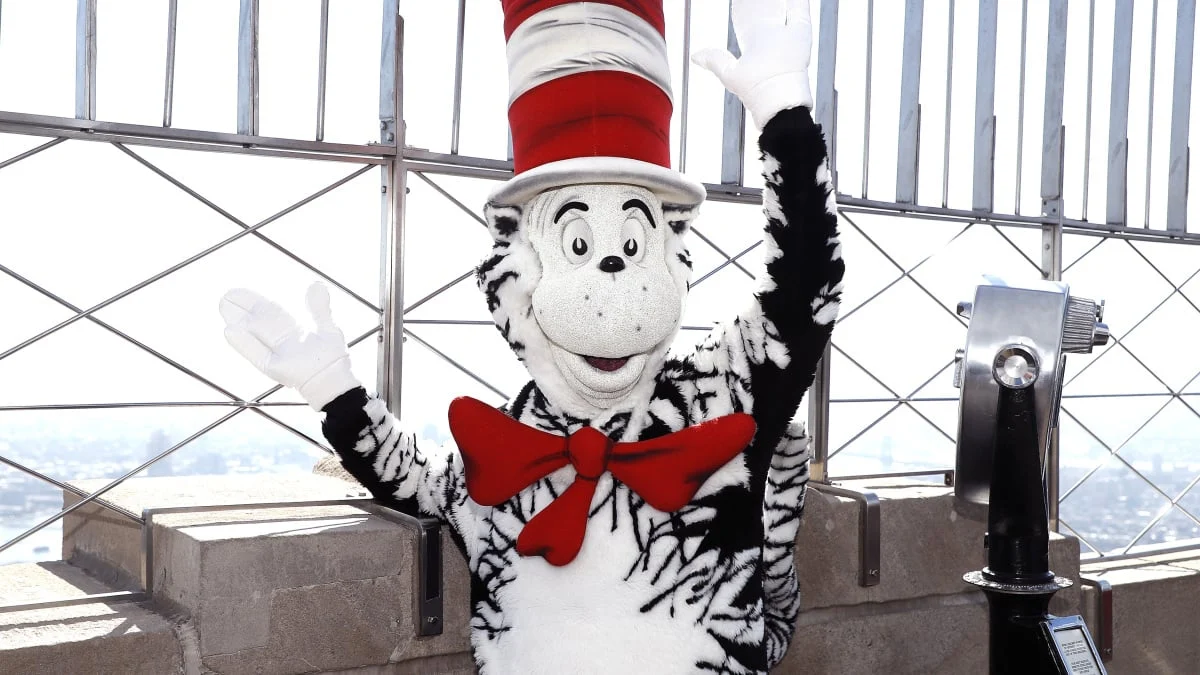
Of all the cultural icons one might expect to trigger school lockdowns, federal threat assessments, and widespread police intervention, the whimsical, top-hatted protagonist of Dr. Seuss’s beloved children’s literature would surely be at the bottom of the list. Yet, in a startling display of how modern digital misinformation can warp reality, a sinister, AI-generated reimagining of the "Cat in the Hat" has transcended the boundaries of internet creepypasta to become a genuine threat to public safety across the United States.
What began as a niche, macabre joke among online horror enthusiasts has metastasized into a series of localized panics, forcing school districts to shutter their doors, law enforcement agencies to mobilize homeland security units, and, in at least one instance, leading to the arrest of a juvenile.
The Genesis: A Meme Turns Malignant
The trend can be traced back to late June, when a TikTok user posted a short, edited clip of Mike Myers’ 2003 portrayal of the Cat in the Hat. The footage was stripped of its comedic context, paired with a dissonant, eerie soundtrack, and captioned with a grim narrative. The video, which reportedly garnered over 4 million views in its first week, acted as a digital contagion.
The source material itself provided an uncanny foundation for this horror-tinged trend. The original prosthetic costume from the 2003 film—often criticized for its "uncanny valley" effect—recently surfaced in a high-profile auction. Images of the hollow-eyed, weathered suit, detached from the movie’s set, provided the perfect aesthetic for users looking to manufacture "found footage" horror.
As the trend migrated from TikTok to Snapchat and Instagram, users began employing generative AI tools to place this disturbing figure into mundane, hyper-local settings. Doorbell camera footage—often blurred and grainy to mimic the aesthetic of security recordings—began to circulate, showing the Cat lurking in driveways, staring through bedroom windows, and prowling empty suburban streets at night.
Chronology of a Viral Panic
The evolution of the "Cat in the Hat" phenomenon serves as a masterclass in how internet subcultures can transition from harmless dark humor to malicious targeted harassment.
- Late June: The inaugural "creepy Cat" meme appears on TikTok, utilizing edited footage from the 2003 film to create a sense of unease.
- July: The trend gains momentum as "copycat" accounts begin building a loose, collaborative horror story, claiming a serial killer dressed as the character is stalking the UK and Ireland.
- August: The "localized" phase begins. Creators move away from abstract, global horror and toward specific targeting. Using AI, they create images that appear to be taken from local residential streets.
- Late August: The phenomenon hits American soil. Accounts begin posting "hit lists" containing the names of specific students, teachers, and administrators, accompanied by violent threats.
- Early September: School districts across Kentucky, Texas, Oklahoma, and Tennessee report unprecedented disruptions, leading to lockdowns, police investigations, and a wave of student absences.
The Shift from Fiction to Targeted Threats
While the early iterations of the trend were clearly designed as "internet horror fiction," the motivation of participants shifted as the meme gained notoriety. The anonymity provided by social media allowed users to weaponize the imagery. By naming specific schools and students, these bad actors turned a global, fictionalized boogeyman into an immediate, credible threat in the eyes of local authorities.
In Kentucky, the situation reached a breaking point when social media posts began circulating lists of students’ names alongside threats like, "You’re next" and "Don’t leave your window open." These posts were specifically tailored to appear as though they were originating from within the local community. The psychological impact on students and the resulting alarm among parents forced school administrators to treat every post as a potential precursor to a real-world violent event.
Official Responses: Law Enforcement and School Districts
The scale of the panic has necessitated a robust, multi-agency response. In the United Kingdom and Ireland, authorities were among the first to address the hoax, with the Wexford Garda issuing public statements clarifying that the "sightings" were entirely fabricated through AI manipulation.
In the United States, the response has been more severe due to the targeted nature of the threats.
- Kentucky: Assumption High School in Louisville was forced to pivot to remote learning for an entire day, cancelling all extracurricular activities. Oldham County and Bullitt County school districts have issued formal warnings to parents, urging them to monitor their children’s social media usage.
- Texas and Oklahoma: School officials implemented "precautionary perimeter lockdowns" and increased police patrols at campus entry points after specific schools were named in threatening posts.
- Tennessee: The Office of Homeland Security’s Threat Assessment Center has begun actively tracking the trend, treating the posts as matters of public safety rather than mere social media nuisance.
Law enforcement officials emphasize that while the threat itself may be a hoax, the criminality is real. The act of making a terroristic threat—regardless of the perpetrator’s intent or their claim that "it was just a joke"—is a felony in many jurisdictions. In Allen County, Kentucky, one juvenile has already been charged, a move that authorities hope will serve as a deterrent to other "copycat" creators.
The Implications of AI-Enabled Misinformation
The "Cat in the Hat" panic is a poignant evolution of the "Clown Panic" of 2016. Eight years ago, people had to physically dress up in costumes to cause public fear. Today, the barrier to entry has vanished. With the advent of sophisticated generative AI, a person can sit behind a screen in any country and generate realistic, location-specific imagery that causes thousands of people to fear for their safety.
This trend highlights a critical vulnerability in our digital society: the speed at which misinformation can be localized. When a threat is "general," it is easier to dismiss as a meme. When a threat is "local"—when it mentions a specific street name, a school mascot, or a student’s first name—the logic of the internet breaks down, and the instinct for self-preservation takes over.
Conclusion: The Cost of a "Joke"
The Cat in the Hat may be a whimsical character created by Dr. Seuss to encourage literacy, but in the hands of the internet, he has been transformed into a symbol of modern instability. As the dust begins to settle, the broader implications remain: how do communities protect themselves when the line between a digital prank and a credible threat has been intentionally erased?
Police departments are pleading with the public to stop participating in the trend. They remind citizens that every "share" or "remix" of these videos increases the workload on law enforcement, diverts taxpayer resources, and fuels a cycle of anxiety that disrupts the educational process for thousands of students.
For now, the lesson is clear: in an era of hyper-realistic AI, the digital boogeyman is only as powerful as the attention we give him. While the Cat in the Hat is not hiding in the shadows of our schools, the fear he has generated is very real—and the legal consequences for those who continue to perpetuate the myth will be far more permanent than any viral meme.

 Raul Delapena Setiawan
 Asep Darmawan