

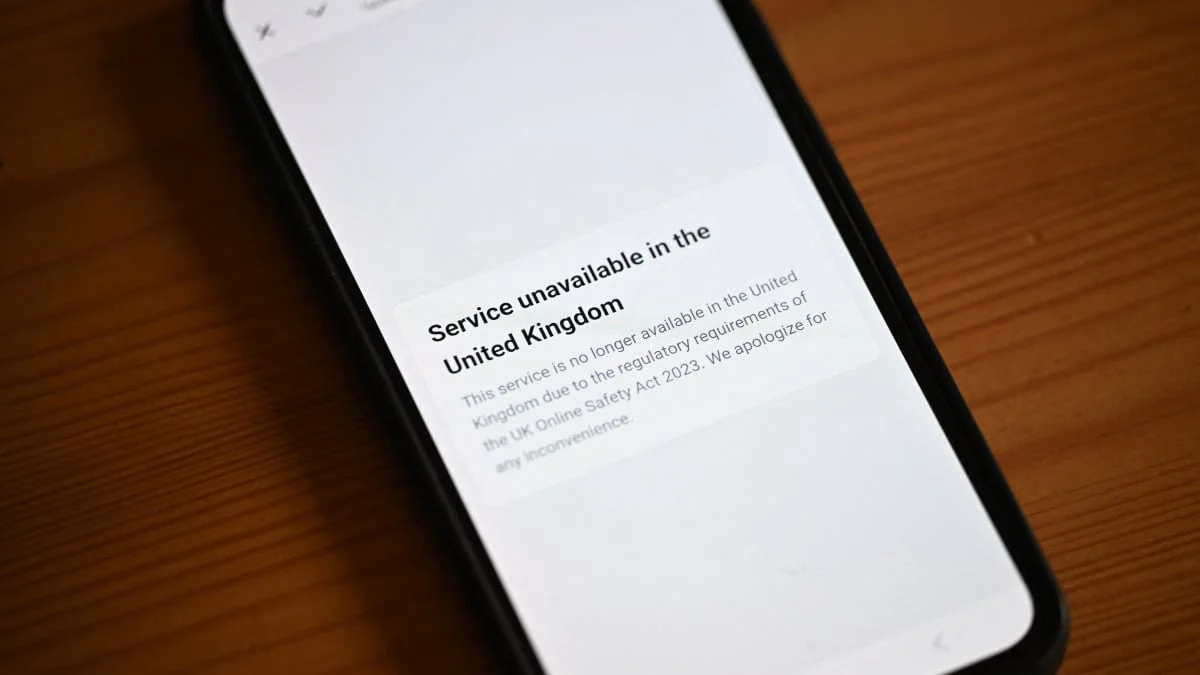
It has been nearly a year since the United Kingdom’s ambitious and controversial Online Safety Act (OSA) fundamentally altered the landscape of the British internet. Designed to shield minors from harmful content, the legislation mandated robust age assurance protocols for a wide spectrum of digital platforms, ranging from explicit pornography sites to niche social media communities. As the dust settles on the first year of enforcement, Ofcom—the UK’s communications regulator—has released a comprehensive progress report that paints a picture of a digital ecosystem in flux: marked by rapid technological adoption, significant regulatory friction, and persistent, systemic loopholes.
The Mandate: A Broad Net for Digital Protection
The Online Safety Act was conceived as a landmark effort to make the UK the "safest place to be online." Its core requirement is simple in theory but complex in practice: platforms hosting "restricted to adults" content must implement rigorous age-verification systems to prevent minors from accessing material deemed inappropriate.
While the primary focus is often associated with the pornography industry, the scope of the act is remarkably broad. It encompasses social media networks, dating platforms, and even non-explicit digital spaces—such as certain forums or subreddits—that may host content restricted by age. The objective is to move beyond simple "click-to-confirm" prompts, which have historically been easy for minors to bypass, toward "highly effective" age assurance methods that verify a user’s maturity before granting access.
A Chronology of Implementation
The implementation of the OSA has been a phased, high-pressure operation. Since the law went into effect in July 2025, the digital landscape has undergone a forced evolution.
- July 2025: The Online Safety Act officially becomes enforceable, triggering a massive scramble among digital providers to integrate age-verification software.
- August–December 2025: A period of intense monitoring. During these six months alone, Ofcom recorded 69 million age checks across a sample of 32 monitored services—a staggering 23-fold increase compared to the first half of the year.
- January 2026: The current reporting window concludes, with Ofcom publishing its assessment of the law’s first major milestone.
- October 2026 (Forthcoming): Ofcom is scheduled to deliver a formal assessment to Parliament regarding the standards for "highly effective age checks" specifically targeting users over the age of 16.
- January 2027 (Forthcoming): The regulator is set to publish a critical report on the feasibility and implementation of app-store-level age verification, shifting the burden of compliance closer to the gatekeepers of digital distribution.
Supporting Data: The Scale of Compliance and Gaps
Ofcom’s data reveals a contradictory reality. On one hand, the adoption of age-verification tools has reached an "unprecedented scale." Between July 2025 and January 2026, the percentage of children who encountered "highly effective" age checks when attempting to access restricted content climbed from 25 percent to 43 percent.
However, the efficacy of these tools varies wildly. Ofcom’s "Children’s Passive Online Monitoring" study provided a sobering look at how children interact with the modern web. The study found that roughly eight percent of children aged 8 to 14 accessed pornographic content during the study period. While half of these users were stopped by age-verification systems, the other half navigated around them with relative ease.
Furthermore, the data suggests that most of these interactions are transient: 87 percent of visits to pornographic sites by minors lasted under 30 seconds, and 65 percent were over in less than 10 seconds. While the duration is short, the frequency and ease of access remain a primary concern for the regulator.
The Search Engine Dilemma
Perhaps the most glaring weakness identified in the report is the role of search engines. Despite the mandates on site owners, the "discoverability" of age-restricted content remains high. Ofcom found that one-third (33 percent) of the first-page results on Google for certain queries were pornographic sites lacking age verification. For Bing, that number jumped to 54 percent.
While the Online Safety Act does not currently mandate that search engines employ age-verification technologies to prevent minors from viewing search results, Ofcom is now actively engaging with these tech giants. The goal is to reduce the visibility of non-compliant sites in search rankings, effectively "de-indexing" those that fail to protect children.
Official Responses and Regulatory Pressure
Ofcom has adopted a stern tone with industry stakeholders. Recognizing that some of the largest pornographic providers are still failing to implement basic safeguards, the regulator has launched 23 formal investigations into 88 separate adult services. As of last month, while all of the UK’s top 10 porn sites and 64 of the top 100 have installed some form of age assurance, many remain non-compliant with the standard of "highly effective" checks.
The regulator is particularly critical of "age-inference" models—algorithms that estimate a user’s age based on their behavioral patterns. Ofcom’s message to social media companies was unequivocal: "Those which use age inference models to comply with their child protection duties should switch to other methods listed in our guidance as highly effective without delay." The regulator views these models as unreliable and prone to error, leaving them insufficient for the rigorous demands of the new law.
Implications: The Road to a Total Ban
The debate over age verification is set to intensify as the UK moves toward even more restrictive policies. The government is currently preparing to implement a nationwide ban on social media for children under 16, a move that will require even more stringent age-assurance protocols.
There is significant skepticism surrounding this path. A recent study of a similar social media ban in Australia found the policy to be largely ineffective, primarily because existing age-estimation technologies are easily spoofed or circumvented by tech-savvy teenagers. By failing to require concrete proof of age, such bans often result in a "security theater" that does little to protect children while creating massive privacy concerns for adult users.
Furthermore, the UK has recently announced a "social media curfew" for teenagers aged 16 and 17, adding another layer of complexity to the digital lives of young Britons. As the government and Ofcom tighten the screws, the technological burden on companies—and the privacy implications for citizens—will continue to grow.
Conclusion: The Evolving Frontier
One year into the Online Safety Act, the verdict is mixed. The UK has successfully forced a mass migration toward age-verification technology, and the sheer volume of checks being performed is proof of a significant shift in corporate behavior. Yet, as the data shows, a system is only as strong as its weakest link.
Whether it is the failure of search engines to hide restricted content, the reliance on flawed inference models, or the persistent ability of minors to access restricted sites within seconds, the Online Safety Act is currently struggling to bridge the gap between legislative intent and digital reality. As Ofcom moves into its second year of enforcement, the challenge will be to prove that these "highly effective" checks can actually withstand the test of a real-world internet, rather than simply becoming another hurdle that the tech-savvy generation will eventually learn to jump over.











