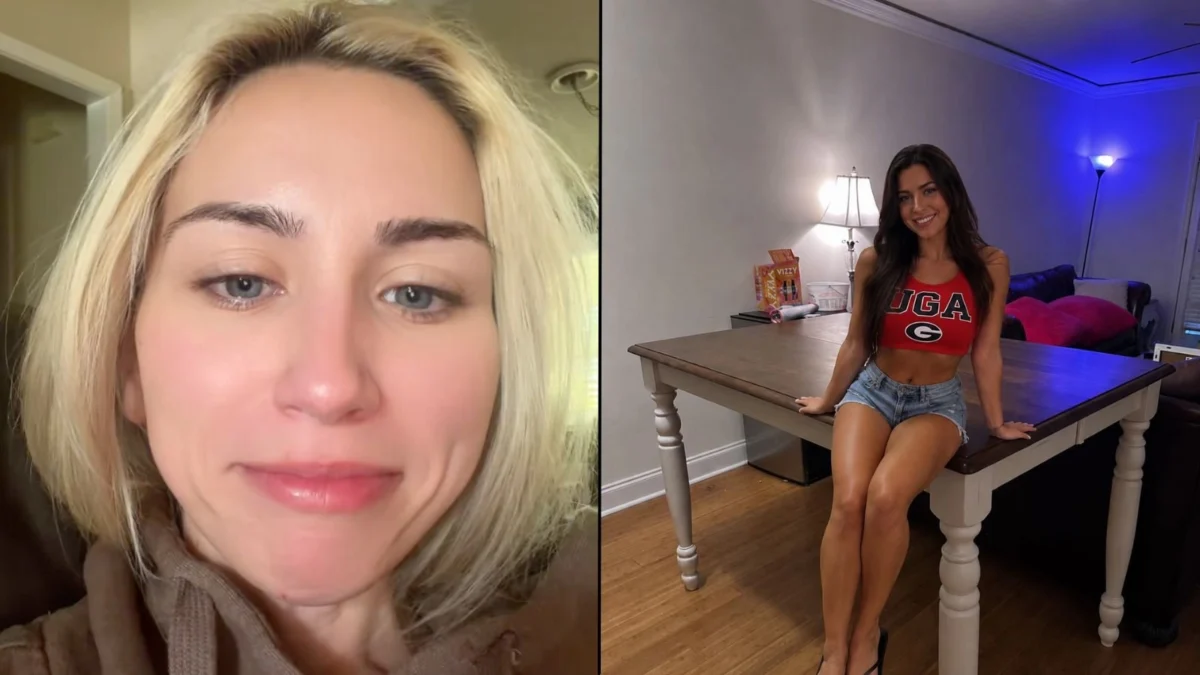
In an era where the lines between physical reality and digital fabrication are increasingly blurred, a bizarre domestic dispute has captured the attention of millions. Savannah, an Atlanta-based TikTok creator known by her handle @savsilby, has found herself at the center of a viral firestorm after revealing that her relationship of some duration ended abruptly—not because of infidelity with another human, but because of an artificial intelligence-generated image she created for a mundane household task.
What began as a clever marketing hack for a Facebook Marketplace listing—using AI to generate a "model" to help sell a piece of furniture—devolved into a psychological unraveling that culminated in her partner initiating a breakup. The incident serves as a surreal case study into the evolving dynamics of modern relationships, the psychological impact of hyper-realistic AI, and the fragility of trust in the digital age.
The Genesis: A Marketing Experiment Gone Wrong
The incident began with the mundane chore of clearing out an apartment. Savannah, seeking to assist her sister in selling a table on Facebook Marketplace, turned to generative AI to create a visual aid. In recent months, a trend has emerged among online sellers where AI-generated models are used to stage products, theoretically attracting more clicks and inquiries by providing a "lifestyle" context for items that would otherwise look stagnant or unappealing in a photo.
Savannah’s initial video, posted in early July, was intended as a lighthearted showcase of this modern sales strategy. The post quickly gained traction, garnering nearly 900,000 views as viewers marveled at the effectiveness of the AI-generated imagery. However, the tone of her social media presence shifted rapidly when she released a follow-up video detailing the unintended, catastrophic consequences the experiment had on her personal life.
A Chronology of the Disintegration
According to Savannah’s account, the process was initially innocent. "I didn’t think anything of it," she explained to her followers. "I sent it to my then-boyfriend like, ‘Oh my god, look how funny this is, we’re getting so many clicks, it’s going to sell.’"
The shift in her partner’s behavior was immediate and disturbing. By that evening, the conversation had veered from the success of the table sale to an uncomfortable confession regarding the digital model.
"He’s talking to me about it, he’s like, ‘That girl, that picture, it’s giving me lustful thoughts,’" Savannah recounted. "He was like, ‘Yeah, she’s just so conventionally attractive.’"
What followed was a weekend of silence—a period of emotional withdrawal that left Savannah bewildered. The isolation, triggered by the existence of a non-existent woman, created a chasm between the couple. By the following week, the relationship had officially terminated. The boyfriend, in a move that has sparked widespread disbelief, essentially prioritized the aesthetic appeal of a collection of pixels over his real-world partner. Savannah noted with a touch of irony that while the breakup was jarring, it was likely "a matter of time" regardless, joking that her standards for her next partner would now include basic requirements like "having a car and a full-time job."
The Psychology of AI-Driven Attraction
To understand why a person would jeopardize a real relationship over an AI image, one must look at the increasing sophistication of generative models. AI-generated images are no longer the uncanny, glitchy portraits they once were; they are now capable of rendering "conventionally attractive" figures that tap into specific, curated preferences.
Dr. Aris Thorne, a researcher in digital sociology, notes that this phenomenon is not necessarily about the AI itself, but about the human capacity to project intimacy onto non-human entities. "We are seeing a rise in what we call ‘parasocial projection,’" Thorne explains. "When an AI is designed to look ‘perfect’—devoid of the complexities, flaws, and baggage of a real-life partner—it becomes a blank canvas for human desire. For someone already struggling with the pressures of a real-world relationship, these images can act as a dangerous, frictionless distraction."
The trend of "AI companions" is growing, as evidenced by recent shifts in how Gen Alpha and Millennials interact with technology. Whether through chatbots or image generators, the ability to create a "customized" partner who never argues, never ages, and conforms to specific beauty standards is creating a new, synthetic competition for human intimacy.
Supporting Data: The Rising Influence of Artificial Intimacy
The incident involving Savannah is not an isolated anecdote but part of a broader shift in human-computer interaction. Recent data suggests that the integration of AI into our romantic lives is accelerating:
- Marketplace Optimization: Sellers are reporting a 40% increase in clicks on listings that feature "lifestyle" imagery, even when those images are AI-generated.
- The AI Companion Market: Platforms dedicated to AI girlfriends and boyfriends have seen a 300% increase in user engagement over the last 18 months, with a significant demographic of users reporting that they prefer these interactions over traditional dating.
- Relationship Satisfaction: Surveys conducted by digital wellness groups indicate that roughly 15% of respondents have experienced "digital jealousy," where they felt threatened by their partner’s engagement with virtual characters or influencers.
This data underscores a growing concern: as AI becomes more proficient at mimicking human attractiveness, the threshold for what constitutes "cheating" or "emotional betrayal" is becoming increasingly ambiguous.
The Implications for Modern Dating
The fallout from Savannah’s video has ignited a fierce debate in the comments sections of TikTok and X (formerly Twitter). Supporters of Savannah have rallied around her, expressing relief that she escaped a relationship with a partner who was clearly prone to such irrational instability. "This is nuts, dude. I’m so sorry," one commenter wrote. Another added, "This cannot be real; that’s insane."
However, the implications of this story go deeper than a single breakup. It raises fundamental questions about the role of technology in our romantic lives:
- The "Uncanny" Threshold: As AI imagery becomes more indistinguishable from reality, how will couples navigate the boundary between appreciating digital art and emotional infidelity?
- The Fragility of the Real: In a world where we can generate a "perfect" version of a person, does the effort required to maintain a real-world relationship feel increasingly like a burden?
- The Erosion of Shared Reality: When one partner begins to perceive digital fabrications as objects of desire, the shared reality that forms the bedrock of a relationship begins to crack.
Expert Perspectives: A Growing Crisis of Perception
Clinical psychologist Dr. Elena Vance argues that this incident is a symptom of a larger, systemic issue. "We are currently living through a ‘perception crisis,’" says Vance. "Social media has already conditioned us to compare our lives to the curated, edited versions of others. Now, we are moving into a phase where we are comparing our partners to entities that are literally designed to be perfect. When a person lacks the emotional maturity to distinguish between a marketing tool and a romantic prospect, the relationship is doomed to fail."
Vance further notes that the boyfriend’s behavior—the silent treatment and the eventual abandonment—points to an underlying avoidant attachment style. "He used the AI as a catalyst to leave, perhaps using it as an excuse to avoid dealing with the actual issues in the relationship. It is a form of displacement."
Conclusion: Looking Ahead
Savannah’s story has become a viral cautionary tale, but it is also a mirror held up to our own digital habits. As we continue to integrate AI into our work, our art, and our daily routines, the challenge will be to ensure that these tools do not replace the nuanced, messy, and essential nature of human connection.
For Savannah, the table was eventually sold, but the cost was a fundamental shift in her perspective on trust and technology. While she is now single, she remains vocal about the absurdity of the situation, using her platform to highlight the bizarre reality of a world where a computer-generated model can break up a home.
As AI continues to evolve, the question remains: are we ready to navigate a world where the most attractive people we know might not actually exist? And more importantly, can we keep our relationships grounded in reality when the digital world offers such a compelling, albeit hollow, alternative? Only time will tell, but for now, the incident stands as a stark reminder that in the age of AI, the most important thing to guard is not our data, but our hearts.