

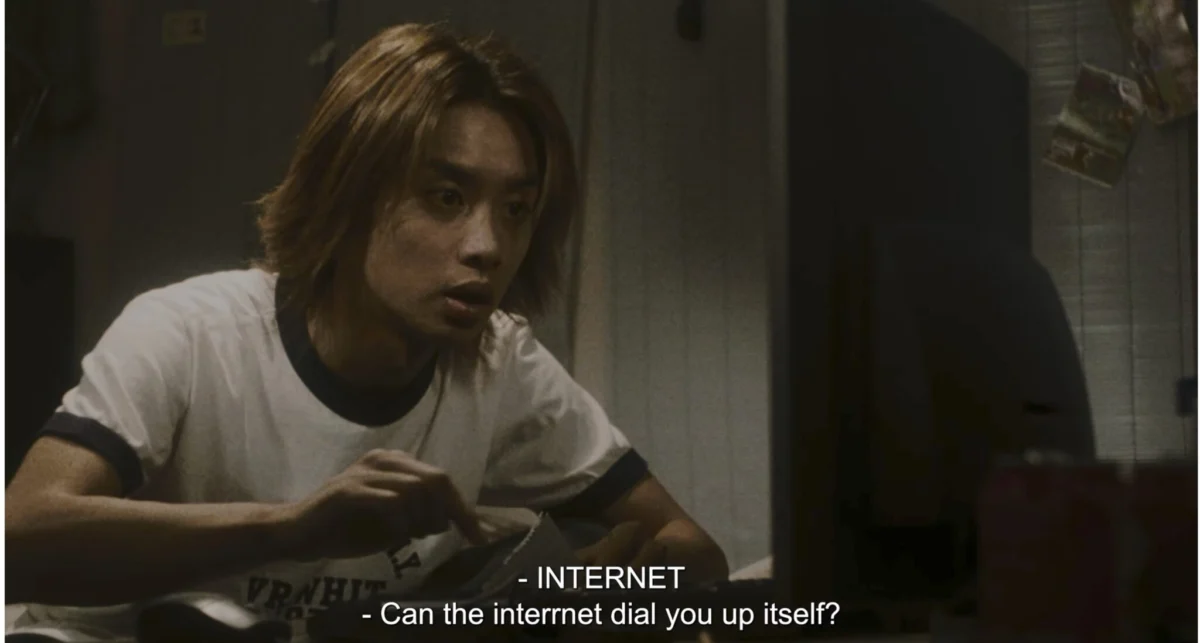
In the early 2000s, the internet was a frontier—a place of dial-up connections, nascent social media, and a growing, collective anxiety about what lurked behind the glowing screens of our desktop computers. It was in this atmosphere of nascent digital dread that Japanese filmmaker Kiyoshi Kurosawa released his 2001 masterpiece, Kairo (released internationally as Pulse). At the time, the film’s haunting premise—that the ghosts of the dead could migrate into our world through the internet—was so potent that a Washington Post critic famously warned readers, “You may go home and throw out your computer and lock the doors.”
More than two decades later, that “techno-alarm” has not only persisted; it has metastasized. As our lives have become inextricably tethered to the digital realm, the fears Kurosawa tapped into have shifted from the fringes of speculative fiction to the center of our daily reality. Recognizing this shift, Hollywood has officially confirmed that Pulse is being “reimagined” for a contemporary audience. Filmmaker Dave Boyle, known for his nuanced work in Japanese-language narratives, has been tapped to direct the project for Screen Gems and Spyglass, with a screenplay penned by Luke Piotrowski.
A Chronology of Digital Dread: From Tokyo to the Global Stage
The journey of Pulse is a fascinating study in the evolution of horror cinema. The original 2001 film followed a group of young people in Tokyo who discover that their social circles are disintegrating. Co-workers go missing, friends begin to exhibit catatonic behavior, and a mysterious, increasingly malevolent website begins to appear on their monitors, promising to show them "the ghosts" of the afterlife.
The Original Vision (2001)
Kiyoshi Kurosawa’s Pulse was never just a ghost story; it was a meditation on urban loneliness. By utilizing the internet as a conduit for the metaphysical, Kurosawa tapped into the fear that technology, rather than connecting us, was actually isolating us to the point of existential erasure. The film’s slow-burn aesthetic and oppressive atmosphere of doom set a benchmark for the genre.
The 2006 American Remake
In 2006, Hollywood attempted to translate this specific brand of Japanese existential dread for Western audiences. Directed by Jim Sonzero and co-written by the legendary Wes Craven, the remake starred Kristen Bell, Ian Somerhalder, and Christina Milian. While the film managed to secure a theatrical release and generated two direct-to-video sequels in 2008—starring the likes of Jamie Bamber and Rider Strong—it failed to capture the critical acclaim or the haunting, ethereal quality of the original. Critics often pointed to a disconnect between the film’s glossy, mid-2000s aesthetic and the bleak, nihilistic core of the story.
The Upcoming Reimagining
The new project represents a departure from the 2006 attempt. By moving the setting to the present day, the production team aims to leverage the hyper-connected, AI-driven, and surveillance-heavy reality of 2026. While character details remain under wraps, the narrative is expected to diverge significantly from both the 2001 and 2006 iterations, focusing on how modern digital infrastructure—rather than just the "World Wide Web"—can serve as a bridge for terror.
Supporting Data: Why Now?
The decision to revisit Pulse is not merely an act of studio nostalgia; it is a calculated response to the cultural zeitgeist. To understand the necessity of this project, one must look at the data surrounding modern digital consumption and psychological health.
The Rise of Digital Isolation
Recent sociological studies have shown a direct correlation between high levels of social media consumption and increased feelings of loneliness. Much like the characters in the original Pulse, who found their physical connections severed by an encroaching digital shadow, modern populations are grappling with the paradox of being "hyper-connected" while feeling increasingly alienated.
The "Techno-Horror" Resurgence
Horror as a genre has seen a massive shift toward "analog horror" and "screen-life" narratives. Films like Searching, Host, and Deadstream have proven that audiences are eager for stories that utilize the interfaces they use every day to tell tales of terror. By re-adapting Pulse, the studio is tapping into a well-established appetite for stories that treat our devices as active, potentially sentient participants in our demise.
Behind the Lens: The Selection of Dave Boyle
The hiring of Dave Boyle has been met with significant enthusiasm from industry insiders. Boyle is not a newcomer to Japanese culture or the complexities of cross-cultural storytelling. His filmography, which includes House of Ninjas and Tokyo Cowboy, demonstrates a profound respect for the nuances of Japanese settings and character dynamics.
Furthermore, Boyle is currently riding a wave of critical momentum. His upcoming horror film, Never After Dark, has already garnered high-profile praise, most notably from the master of horror himself, Stephen King, who described the film as "amazing and haunting." This endorsement suggests that Boyle possesses the rare ability to balance psychological depth with genuine, visceral terror—an essential combination for a Pulse reboot to succeed.
Official Responses and Industry Implications
While major studios are typically tight-lipped regarding projects in early development, the announcement via Deadline underscores the industry’s confidence in the IP. The collaboration between Screen Gems and Spyglass suggests a mid-to-high budget approach, signaling that this is not intended to be a low-effort cash grab, but a serious attempt at revitalizing the franchise.
The implications of this move are twofold:
- The "Prestige Horror" Trend: Following the success of elevated horror films over the last decade, studios are increasingly looking to intellectual properties that offer both scares and subtext. Pulse is an ideal candidate for this, as it allows for a "smart" horror film that explores the fragility of our digital reality.
- The Globalization of Horror: The success of international horror—from South Korea’s Parasite to Japan’s original J-horror wave—has permanently altered how Hollywood views foreign IP. The reimagining of Pulse confirms that studios are no longer interested in "Americanizing" foreign films by stripping them of their cultural identity, but rather in using the core, universal themes of the source material to create something resonant for a global audience.
Implications for the Future of Horror
As we wait for further details on the release date and casting, the anticipation surrounding Pulse serves as a reminder of our collective vulnerability. In 2001, we feared the computer. In 2026, we fear the algorithm, the cloud, and the silent, data-mining processes that operate in the background of our lives.
The brilliance of the original Pulse was its ability to turn a simple blinking cursor into a symbol of death. If the new team can capture even a fraction of that feeling—the sense that our digital footprint is becoming a tomb—they will have succeeded in creating a truly contemporary nightmare.
Until more news breaks, the irony remains: the best way to prepare for a film about the dangers of the internet is to spend even more time online, scouring the web for scraps of information. As you do so, you might find yourself looking at your own browser tabs with a newfound sense of hesitation. After all, if the ghosts of the past are truly looking for a way into our world, they have more portals than ever before.
Project Overview:
- Director: Dave Boyle
- Screenplay: Luke Piotrowski
- Studios: Screen Gems, Spyglass
- Status: In Development
- Tone: Contemporary Techno-Horror










