

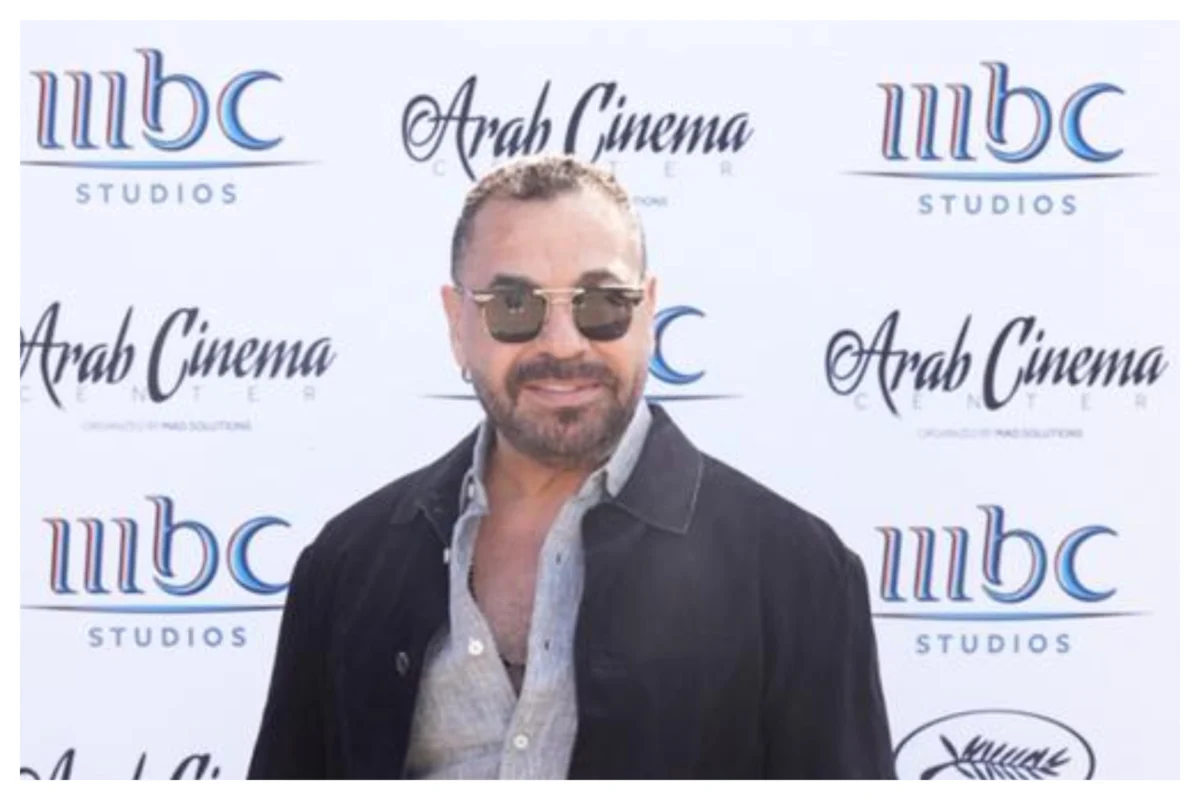
CANNES — Tarek Al Arian, a titan of contemporary Middle Eastern cinema and the creative force behind the juggernaut Sons of Rizk franchise, is embarking on his most ambitious international endeavor to date. Speaking from the bustling corridors of the Cannes Film Festival—his first appearance at the event in several years—Al Arian unveiled plans for a prestige drama centered on the life and crimes of Marguerite Alibert, a figure whose 20th-century trajectory remains one of Europe’s most scandalous enigmas.
This project represents a seismic shift for the Palestinian-Egyptian filmmaker. Having spent his career building the infrastructure of high-end Egyptian cinema through his production house, Framework for Film Production, Al Arian is now pivoting toward a Western-facing narrative that promises to bridge the cultural divide between the Middle East and the annals of European history.
The Enigma of Marguerite Alibert: A Life of Luxury and Lethality
The planned drama explores the life of Alibert, a French courtesan whose name was once whispered in the highest echelons of British society. Her story is a quintessential blend of glamour, political intrigue, and brutal violence.
In 1917, while the world was engulfed in the First World War, Alibert captured the attention of the Prince of Wales, the man who would eventually abdicate the British throne as King Edward VIII. Their affair, conducted while the future monarch was stationed in Paris, solidified Alibert’s place in the Parisian demi-monde. However, it was her subsequent marriage to Ali Kamel Fahmy Bey, one of the wealthiest Egyptian aristocrats of the era, that would lead to her historic downfall.
On July 10, 1923, the couple’s toxic relationship reached a violent crescendo at The Savoy Hotel in London. Alibert shot and killed her husband in what would become one of the most sensational murder trials of the decade.
"I have always been drawn to character-driven stories," Al Arian noted during our discussion in Cannes. "Marguerite’s is an incredibly intriguing narrative. At the trial, she claimed self-defense. Against all odds, she was acquitted, effectively inheriting a vast fortune from a man who was, by all accounts, one of the wealthiest figures in Egypt at that time."
The director intends to utilize a global canvas for the production, with plans to film across France, the United Kingdom, and Egypt. "The language of the film is a deliberate creative choice," Al Arian added. "Since Marguerite did not speak Arabic, their communication was conducted in English. It is a story about a very complex, often toxic relationship set against a backdrop of colonial privilege and class divide."
A Career Defined by Range and Resilience
While the Alibert project marks his first foray into Western historical drama, Al Arian’s reputation is firmly cemented in the high-octane world of Arabic-language cinema. Under the Framework for Film Production banner, he has spearheaded a series of hits that have redefined the commercial viability of Egyptian genre films.
His career is characterized by an ability to oscillate between gritty, street-level crime dramas and intimate, psychological studies. This versatility is currently on display as he balances the development of the Alibert biopic with several high-profile Arabic projects. Among these is Altahwida (Lullaby), a psychological horror film that delves into the fractured psyche of a university professor. The narrative follows a man struggling with the denial of his daughter’s death following a tragic car accident, highlighting Al Arian’s talent for infusing genre tropes with profound emotional stakes.
The Sons of Rizk Phenomenon: Expanding a Cinematic Universe
Despite his foray into international waters, Al Arian remains deeply committed to his most successful intellectual property: the Sons of Rizk franchise. The series, which began in 2015, has evolved into a cultural phenomenon in the Arab world, blending high-stakes crime with razor-sharp social commentary and ensemble chemistry.
The franchise currently consists of:
- Sons of Rizk (2015): The introduction to the four brothers and their life of crime in Cairo.
- Sons of Rizk 2: Return of the Lions of The Land (2019): A deeper dive into the power dynamics of the Cairo underworld.
- Sons of Rizk 3: The Verdict (2024): The latest installment, which has pushed the technical and narrative boundaries of the series.
Al Arian is now in active development on a prequel, a strategic move aimed at providing historical context to the brothers’ rise to infamy. "The primary attraction of Sons of Rizk has always been the interplay between the brothers," Al Arian explained. "There is a unique blend of humor, tragedy, and brotherhood that resonates with audiences. For the fourth installment, we are traveling back 25 years to witness their criminal beginnings. It’s an origin story that centers on a highly sophisticated, intricate heist."
The prequel is set to introduce a new generation of talent to the franchise, with rising star Ahmed Malek leading the cast. Al Arian views this as a vital bridge between his established fanbase and a younger, more global audience. "The goal is to maintain the loyalty of those who have followed the brothers for nearly a decade while inviting new spectators into the fold," he said.
Implications for the Global Film Market
The dual nature of Al Arian’s current slate—the international historical drama and the localized crime epic—signals a broader trend in the Middle Eastern film industry. As streaming platforms and global distribution networks seek more diverse, high-quality content, filmmakers like Al Arian are uniquely positioned to act as cultural conduits.
His transition into English-language historical drama is not merely a geographic pivot but a thematic one. By exploring the life of Marguerite Alibert, Al Arian is engaging with a piece of history that intersects with both European and Middle Eastern interests, effectively highlighting the historical entanglement between the two regions.
Furthermore, the scale of his production operations suggests that Egypt is increasingly becoming a hub for high-end, exportable content. By utilizing international co-production models, Al Arian is demonstrating that regional stories—whether they are modern crime sagas or period pieces—can command global attention if executed with the right blend of artistry and commercial savvy.
Looking Ahead: A Director at the Crossroads
As the Cannes festival continues, Al Arian’s presence serves as a reminder of the shifting geography of cinema. With a slate that includes a psychological thriller, a blockbuster prequel, and an ambitious period drama, he is operating at a level of productivity that few directors can maintain.
The Marguerite Alibert project, in particular, will be watched closely by industry insiders. It is a test of whether a director who has dominated his home market can successfully translate his distinct aesthetic to a Western audience. Given his track record of balancing complex character arcs with audience-pleasing spectacle, the outlook for his international transition remains positive.
"Cinema is a universal language," Al Arian concluded. "Whether I am directing a heist in the streets of Cairo or the trial of a courtesan in London, the core objective remains the same: to find the truth within the character and to tell that story in a way that feels essential."
For now, the industry waits to see how these ambitious projects evolve. But one thing is clear: Tarek Al Arian is no longer just a titan of the Middle East—he is a filmmaker with his eyes firmly set on the world stage.










No comments yet. Be the first to join the conversation!