

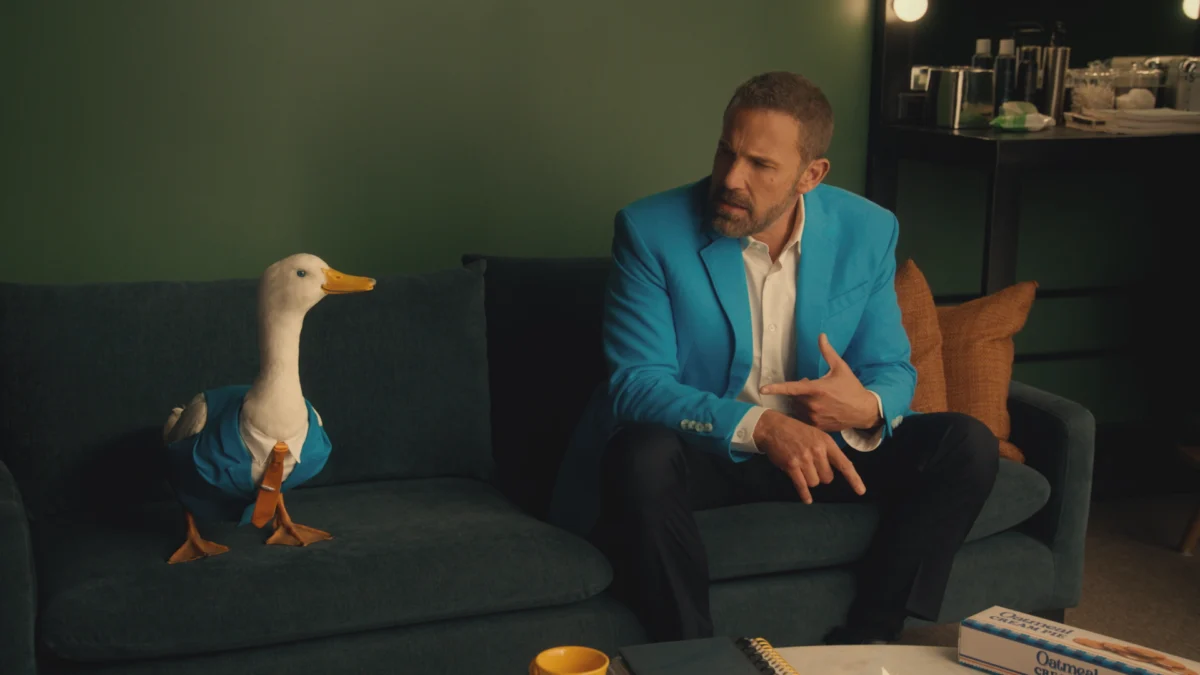
In the world of advertising, some pairings feel like destiny, even if they begin as a punchline. For years, the linguistic similarity between the supplemental insurance giant Aflac and the Academy Award-winning actor and director Ben Affleck has been a recurring joke in marketing circles and online forums. Now, the joke has evolved into a multi-year, high-profile strategic partnership.
Aflac, the insurer synonymous with its iconic, squawking anthropomorphic duck, has officially joined forces with Artists Equity, the production studio co-founded by Affleck, Matt Damon, and financier Gerry Cardinale. This collaboration, which aims to bridge the gap between niche supplemental insurance and mainstream pop-culture relevance, marks a pivotal moment in the company’s marketing history.
The Genesis of a "Cosmic" Collaboration
The idea of bringing the "Aflac" brand and "Affleck" together is, by all accounts, an inevitable one. Garth Knutson, Aflac’s senior vice president and chief marketing officer, acknowledges that the concept has been circulating for decades.
"This has probably been tens of thousands of people’s idea," Knutson says during an interview. "It’s one of those things that people just make as a joke. Even Ben has been joking about it for a long time—maybe he has been a little bit more annoyed in the past."
The journey to actualizing this partnership began with a simple, albeit bold, cold email. After discussing the potential with Aflac president Virgil Miller, Knutson reached out to the team at Artists Equity. To his surprise, the response was immediate and deeply engaged. Far from being a mere face for the brand, Affleck inserted himself into the creative process from the very first day.
"If we had twelve creative reviews with them, Ben was in all of the first six of them," Knutson notes, highlighting that many celebrity brand ambassadors rarely engage until the final stages of production. "To have an agency founder who also happens to be a celebrity asking smart questions about supplemental health insurance? It really blew me over."
A Chronology of the Duck and the Brand
To understand why this partnership is so significant, one must look at the historical trajectory of Aflac’s advertising.
- 1999: The Aflac Duck is introduced, created by the Kaplan Thaler Group. The campaign is an instant success, humanizing the complex, often dry world of supplemental insurance.
- Early 2000s: The Duck becomes a pop-culture fixture, appearing in dozens of spots and solidifying Aflac as a household name.
- The Insurance Wars: Over the next two decades, the advertising landscape for insurance becomes saturated with "mascot-driven" marketing. Competitors like Geico (the Gecko), State Farm (Jake), and Progressive (Flo) turn the industry into a battleground for consumer attention.
- 2024-2025: Aflac begins exploring a shift in strategy. Recognizing that simple mascot recognition is no longer enough to cut through the noise of billion-dollar ad budgets, the company seeks a narrative-driven partner.
- 2026: The partnership with Artists Equity is finalized. The first collaborative work is scheduled to debut on ESPN’s College GameDay and Monday Night Football.
Supporting Data: The David vs. Goliath Ad War
Aflac enters this partnership facing a monumental challenge: the "Insurance Advertising Arms Race." The industry is dominated by massive corporations that treat television and digital advertising as a foundational cost of doing business.
According to data from S&P Global and Dowling & Partners, the scale of spending is staggering:
- Progressive: Annual ad spend exceeds $4 billion.
- Industry Competitors: Many major insurers spend $1 billion or more annually to maintain their market position.
- Aflac: By contrast, Aflac’s annual U.S. advertising expenditure typically sits under $100 million, according to tracking firm MediaRadar.
This disparity in capital creates a structural disadvantage. Aflac is a specialist—it provides supplemental coverage that pays out cash benefits for out-of-pocket costs not covered by primary insurance. Because they aren’t competing for the primary health insurance market, their message is nuanced.
"I think about it all the time," Knutson admits when asked about the pressure to compete with multi-billion-dollar budgets. "The answer is, ‘Absolutely, yes.’"
The strategy, therefore, is not to outspend the giants, but to "punch above our weight." The Duck remains the company’s most efficient asset—a character that, as Knutson quips, "is extremely cheap for a celebrity, at least from a payment standpoint. He works for bread, a different kind of bread than what you or I work for."
Official Responses and Creative Vision
The first installment of the new campaign features Affleck receiving a "coaching session" from three titans of the sports world: Nick Saban, Deion "Coach Prime" Sanders, and Dawn Staley. The spot serves as a masterclass in breaking down complex insurance concepts into digestible, entertaining segments.
Artists Equity, meanwhile, is bringing the same high-production-value aesthetic that characterized their previous hits, such as the star-studded Dunkin’ Super Bowl commercials featuring Affleck and his famous associates, and the Stella Artois campaign pairing Matt Damon with David Beckham.
For Aflac, the partnership is a long-term investment. Knutson confirms that ads will continue to roll out through 2027, with specific "flights" designed to align with consumer behavior. A second wave of content is planned for Thanksgiving—a time when employees are actively reviewing their benefits packages during open enrollment—and a major push is scheduled for March 2027, coinciding with significant entertainment events.
Implications for the Future of Insurance Marketing
The collaboration between Aflac and Artists Equity signals a broader shift in how "boring" industries are attempting to reclaim their narrative.
1. The Death of the Traditional Celebrity Endorsement
The "celebrity as a spokesperson" model is dying. Modern audiences are increasingly cynical toward actors who simply read lines from a teleprompter. By bringing Affleck in as a creative partner—someone who is effectively "in the trenches" of the production—Aflac is attempting to generate authenticity.
2. The Power of "Cultural Context"
By choosing College GameDay and Monday Night Football as the primary launchpads, Aflac is positioning itself in high-engagement, live-viewing environments where ad-skipping is minimized. By pairing this with the star power of coaches like Saban and Sanders, they are tapping into existing fan loyalties to drive interest in a category that most consumers would rather avoid thinking about.
3. Efficiency Over Volume
Aflac is proving that for a niche provider, frequency is less important than impact. By creating "must-watch" creative, the company hopes to build a brand that is remembered rather than just seen. As Knutson notes, "People who do see them are more inclined to remember the message and, hopefully, act on it."
Conclusion: A New Chapter
The partnership between Aflac and Ben Affleck is more than a clever play on words. It is a calculated response to an increasingly cluttered media landscape. By marrying the long-standing, recognizable brand equity of the Aflac Duck with the creative pedigree of Artists Equity, the insurer is attempting to transform the way consumers view supplemental health coverage.
While the "David vs. Goliath" dynamic remains, Aflac’s strategy is clear: if you cannot spend your way to the top of the conversation, you must instead make the conversation impossible to ignore. Whether this creative synergy will translate into long-term market growth remains to be seen, but for now, the insurance industry is watching—and for the first time in a long time, they are waiting to see what the Duck and the Director do next.










