Introduction: A Vernal Threshold
On the occasion of the vernal equinox—a rare celestial alignment where the scales of light and shadow hold in perfect, fleeting equilibrium—the New York art scene welcomes a profound new voice. Los Angeles-based painter Molly Bounds has unveiled her debut solo exhibition at Mrs. gallery, titled The Light That Loses, The Night That Wins.
Located at the gallery’s 6040 56th Drive space, the exhibition serves as a poignant meditation on the passage of time, the architecture of solitude, and the psychological weight of light. This presentation marks a significant milestone in Bounds’ career, following her highly acclaimed introduction to the gallery’s roster at The Armory Show in September 2025. The exhibition, which opened with the spring season, will remain on public view through May 2, 2026, offering a sustained look at an artist who treats the canvas not merely as a surface, but as a vessel for existential inquiry.
Main Facts: Anatomy of an Exhibition
The Light That Loses, The Night That Wins is a curated journey through the dualities that define human experience. Bounds’ work is characterized by a masterful command of chiaroscuro, utilizing light as both a formal element and a narrative protagonist.
The exhibition is structured around the tension between interior stagnation and exterior momentum. Whether capturing a figure slumped in the quiet repose of an armchair or navigating the vibrant, rolling hills of an imagined landscape, Bounds is preoccupied with "liminal moments"—those pockets of time where the past has receded but the future has yet to fully solidify. Her figures are rarely in motion in the traditional sense; rather, they are caught in the "threshold of a transformative shift," reflecting the very transition the world undergoes during the change of seasons.
Chronology of a Rising Talent
Molly Bounds’ trajectory toward this New York solo debut has been marked by a deliberate, measured evolution of style and thematic depth.
- Pre-2025: Bounds established a reputation within the Los Angeles art circuit for her evocative, psychological portraiture, often focusing on the intersection of domesticity and internal unrest.
- September 2025: A breakout moment occurred at The Armory Show, where her initial presentation with Mrs. gallery garnered significant attention from critics and collectors alike. The positive reception of her work at the fair solidified the gallery’s decision to grant her a full-scale solo exhibition.
- March 20, 2026: The vernal equinox opening. The timing was intentional, serving as a conceptual framework for the exhibition’s themes of rebirth and the inevitable cycle of darkness and light.
- March 2026 – May 2, 2026: The exhibition window. This period allows the viewer to experience the work in conversation with the actual lengthening of days in New York, mirroring the themes of spring and renewal present in her landscape paintings.
Supporting Data: Psychological Portraiture and Technical Mastery
To understand the gravity of Bounds’ work, one must examine the specific technical approaches she employs to evoke "the psychology of the dormant."
The Interior as a Theater of Tension
In pieces such as The Armchair, Bounds masterfully juxtaposes the warmth of an interior—a fireplace’s glow, the tactile richness of upholstery—against the encroaching "early evening blue" of the sky outside the window. This is not a static portrait; it is a narrative of unease. As the viewer lingers, the composition begins to unravel. The woman’s vacant stare suggests a mind engaged in intense, perhaps even scheming, thought. The literal unraveling of the upholstery seams mirrors the internal unraveling of the subject, suggesting that even in moments of perceived rest, the mind is a site of frantic labor.
The Influence of the Old Masters
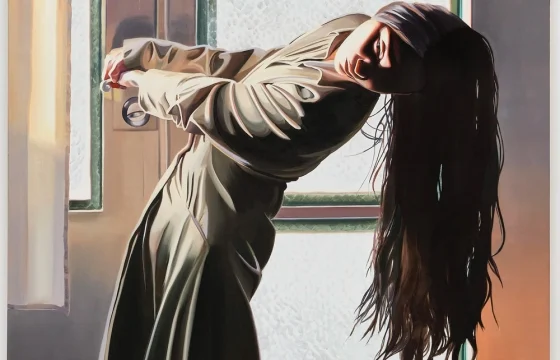
Bounds’ preoccupation with light sources—the way a beam of light can both reveal and obscure—invites comparisons to the Baroque masters, most notably Georges De La Tour. In her painting Privacy Glass, this influence is palpable. The work uses a diffusion of light to frame the subject, creating a "vanitas" effect. The light is not just a source of illumination; it is a tool of mortality, emphasizing the fleeting nature of the present moment. By obscuring the face while highlighting the drapery of clothing, Bounds forces the viewer to confront the subject’s anonymity, effectively universalizing the experience of solitude.
Landscapes of Optimism
While the interiors lean into the heavy, psychological weight of twilight, the exterior landscapes represent a necessary counterpoint. In It Sings in Me and Among of Green, Again, Bounds shifts from the claustrophobia of the interior to the expansive, rolling hills of the outdoors. These scenes are saturated with a sense of "overly" bucolic perfection. Whether these vistas are real or imagined is immaterial to the artist; their function is to provide a sense of renewal. They serve as a visual manifesto for the exhibition’s title—the affirmation that after the long, dark winter, spring eventually wins.
Official Responses and Curatorial Context
The gallery’s decision to present Bounds’ work during the spring is a testament to the thematic cohesion they see in her current body of work. By placing the exhibition in the 6040 56th Drive space, Mrs. gallery has created a controlled environment where the dialogue between the paintings can flourish.
Critics have noted that Bounds possesses a rare ability to bridge the gap between figurative painting and abstract psychological states. "Bounds doesn’t just paint people," noted one early attendee during the opening week. "She paints the air around them—the pressure of their thoughts, the temperature of their isolation, and the slow creep of time."
The artist herself has spoken of the importance of "belief in renewal." For Bounds, the act of painting is a constructive process. Even when the subject matter is somber, the act of applying paint—of building light from shadow—is an inherently optimistic gesture. It is an acknowledgment that while darkness is inevitable, it is also a prerequisite for the arrival of light.
Implications: The Legacy of "The Night That Wins"
The implications of this exhibition extend beyond the walls of Mrs. gallery. The Light That Loses, The Night That Wins positions Molly Bounds as a central figure in the contemporary conversation regarding the "new figurative" movement.
- The Shift in Portraiture: Bounds signals a move away from the hyper-saturated, pop-influenced portraiture of the early 2020s, returning instead to a more introspective, moody, and technically demanding style.
- The Role of the Environment: By emphasizing the "liminality" of the space between day and night, Bounds invites viewers to consider their own relationship with the passage of time. Her work serves as a reminder that the most significant events of our lives often occur in the quiet, unobserved moments of transition.
- The Commercial and Critical Trajectory: Following her successful showing at The Armory and this comprehensive solo debut, Bounds is poised to see her works become highly sought after in institutional collections. Her ability to synthesize classical technique with contemporary existential themes provides a rare longevity to her work, ensuring it will be studied and discussed long after the exhibition closes in May.
Conclusion: A Sustained Invitation
As the exhibition progresses through the spring, it acts as a mirror to the city outside. Visitors entering the gallery are invited to step out of the frantic pace of New York City and into the deliberate, slowed-down tempo of Bounds’ world.
Whether it is the tension of the armchair or the breezy promise of the green hills, The Light That Loses, The Night That Wins is a testament to the enduring power of painting to capture the unseen. It is a show about the resilience of the spirit, the inevitability of change, and the beautiful, terrifying, and necessary cycle of light and shadow.
For those who wish to experience this intersection of art and celestial timing, the exhibition remains open until May 2, 2026. It is a vital, necessary viewing for anyone interested in the future of figurative painting and the depth of the human condition. In the work of Molly Bounds, we find that the night may win, but it is only because it sets the stage for the light to return with even greater intensity.