

Introduction: The Virtual Frontier
The digital landscape has undergone a seismic shift over the past decade, driven by the meteoric rise of Virtual YouTubers (VTubers). These digital performers, who utilize motion-capture technology and 3D avatars to entertain audiences, have evolved from a niche subculture into a global phenomenon. As of April 2025, the academic and sociological discourse surrounding VTubers has reached a new maturity, moving beyond mere technological curiosity to deep-seated inquiries into identity, parasocial relationships, and the blurring lines between physical and virtual existence.
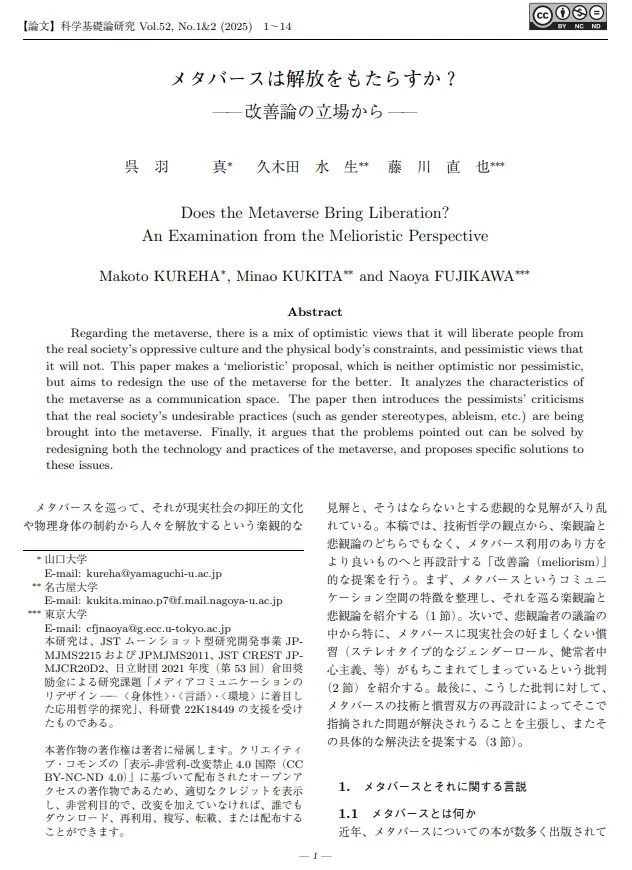
Recent publications, notably in the Journal of Fundamental Theory (Vol. 52, 2025), have begun to codify the significance of these performers, examining how the "melioristic" nature of digital avatars allows for a unique form of human expression that is both liberating and complex.
Main Facts: Defining the VTuber Phenomenon
At its core, a VTuber is a creator who uses a computer-generated avatar to represent themselves during live streams or recorded video content. Unlike traditional content creators who rely on their physical appearance, VTubers leverage high-fidelity 3D models or 2D "Live2D" assets to construct a persona.
- Technological Foundation: The industry relies on sophisticated software—such as FaceRig, VRChat, and custom tracking solutions—to map real-world movements onto a virtual character.
- Cultural Reach: What began in Japan has become a worldwide industry. With thousands of active VTubers ranging from independent creators to those backed by major talent agencies, the sector now commands millions of views daily on platforms like YouTube and Twitch.
- The "Digital Mask": A primary subject of study is the "digital mask." By distancing their physical self from their online persona, performers report a heightened sense of freedom, enabling them to explore character arcs, storytelling, and community interaction that might be stifled by traditional celebrity norms.
Chronology: The Trajectory of Virtual Success
The rise of the VTuber is not an overnight success story but a result of cumulative technological advancements and changing social habits.
- 2017 – The Genesis: The term "VTuber" enters the mainstream, popularized by early pioneers who demonstrated that 3D avatars could sustain a dedicated, interactive audience.
- 2020-2021 – The Global Explosion: The global pandemic acted as a catalyst for virtual interaction. With the world confined to homes, platforms like VRChat and YouTube became the primary venues for social connection, accelerating the adoption of virtual personas.
- 2022 – The Professionalization Era: Academic interest begins to surge. Various publications, including VRChat: The Architecture of Virtual Connection and research by Liudmila Bredikhina, start framing the VTuber movement as a significant cultural shift rather than a temporary trend.
- 2025 – Academic Integration: The publication of critical research in Kisoron (Journal of Fundamental Theory) marks the formal acknowledgment of VTuber studies as a legitimate field of sociology and media technology.
Supporting Data: By the Numbers
The scale of the VTuber economy is underscored by significant data points:

- Platform Saturation: Major platforms report that top-tier VTubers consistently maintain concurrent viewership numbers ranging from 3,000 to over 9,000, rivaling traditional gaming and lifestyle influencers.
- Economic Impact: The industry has birthed an ecosystem of hardware providers (motion capture suits, facial tracking software) and character design agencies, contributing to a multi-billion yen market.
- Cross-Generational Appeal: Surveys indicate that while the core demographic remains younger (Gen Z and Millennials), the accessibility of the medium is drawing in diverse age groups, fascinated by the intersection of gaming, anime culture, and social networking.
Official Responses and Academic Perspectives
The academic community has been quick to recognize that VTubers represent a departure from traditional "YouTuber" culture. Experts like Liudmila Bredikhina have highlighted that the "avatar" is not merely a tool for anonymity, but a medium for a new kind of "Prix Genre" or gender-fluid expression.
The "Melioristic" View
In the Kisoron article published in April 2025, researchers argue that the VTuber medium represents a "melioristic" approach to self-presentation—the idea that through technology, we can continuously improve or reframe our identity to better match our internal reality. By removing the constraints of physical appearance, the performer is liberated to focus on the performance itself, leading to a higher quality of creative output.
Sociological Implications
Sociologists point out that the VRChat and VTuber communities facilitate a unique type of "third place"—a social environment separate from home and work. This digital space allows for a level of intimacy that, paradoxically, feels more authentic to many users because it is stripped of the societal expectations placed upon the physical body.
Implications: The Future of Virtual Identity
The implications of this cultural shift are profound. We are witnessing the birth of "Virtual Citizenship," where a person’s digital legacy and social standing are decoupled from their physical location or biological identity.
1. The Death of Distance
As motion-capture technology becomes more affordable and accessible, the barrier to entry will continue to drop. We expect to see a democratization of virtual performance, where teachers, activists, and professionals use avatars to communicate in ways that are more engaging and less prone to the biases associated with physical appearance.

2. Legal and Ethical Challenges
With the rise of virtual identities comes a host of legal questions. Who owns the copyright to an avatar’s personality? What are the protections for a creator if their avatar is misappropriated? As the industry matures, we anticipate a wave of legal precedents that will define the ownership of digital identity.
3. The VR/AR Convergence
The future of the VTuber is inextricably linked to the development of AR/VR hardware. As headsets move from bulky peripherals to lightweight, everyday eyewear, the distinction between the "physical" world and the "virtual" world will blur even further. The VTuber is the first prototype of the "Metaverse Citizen," a person who lives, works, and performs in a hybrid reality.
Conclusion
The rise of the VTuber is a testament to human ingenuity and our innate desire to connect. By synthesizing technology with performance, these creators have forged a new path in the history of media. As we look toward the latter half of the 2020s, it is clear that the virtual persona is no longer a gimmick—it is a vital, evolving facet of human identity. Whether viewed through the lens of sociology, technology, or entertainment, the virtual frontier is expanding, and it is here to stay.
For further reading on the academic developments within this field, refer to the J-STAGE archives and the latest publications from the Institute of Fundamental Theory.








