Evan Lee Salim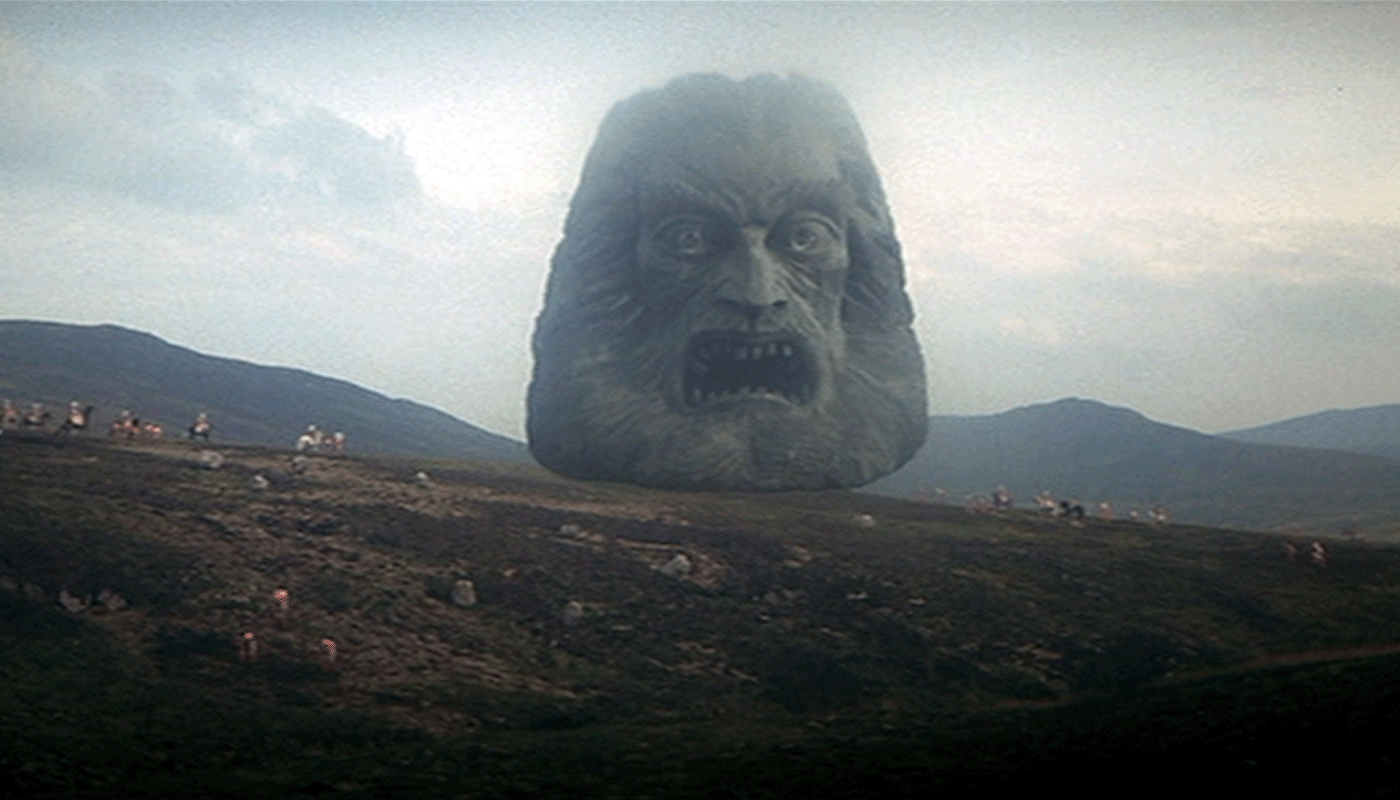
In the pantheon of 1970s cult cinema, few films occupy a space as bizarre, impenetrable, and undeniably fascinating as John Boorman’s Zardoz (1974). Starring a post-James Bond Sean Connery, the film remains a cinematic outlier—a visually arresting, conceptually dense, and often baffling exploration of utopia, immortality, and the decay of human civilization. To understand Zardoz, one must look past its infamous imagery of red loincloths and flying stone heads to appreciate the radical ambition of a director at the height of his creative volatility.
The Path to the Vortex: A Career in Flux
The trajectory leading to Zardoz began in the fertile soil of the "New Hollywood" era. In 1970, Warner Bros. secured the rights to James Dickey’s novel Deliverance. Boorman, a British director who had earned his stripes in BBC and ITV documentary units before finding success with the stylish crime noir Point Blank (1967), was tapped to direct. Despite notorious on-set conflicts—including physical altercations with Dickey—the 1972 release of Deliverance was a landmark moment for Boorman. It was a massive financial and critical success, earning Academy Award nominations and granting the director the rare "carte blanche" typically reserved for the industry’s most bankable auteurs.
Following this triumph, Boorman was hungry for a project of mythic proportions. He initially approached United Artists with a pitch for an Arthurian epic. The studio, however, was hesitant, suggesting instead that he adapt J.R.R. Tolkien’s The Lord of the Rings. Boorman spent considerable time laboring over this monumental task, but the logistical and financial hurdles proved insurmountable. It would be nearly a decade before he finally realized his Arthurian vision with Excalibur (1981). In the interim, trapped between the grounded, visceral violence of his rural thriller and the lush, high-fantasy grandeur of his future epic, Boorman delivered Zardoz.
The Genesis of a Dystopian Vision
Zardoz was never intended to be the film audiences received. In a 1974 interview with Sight and Sound, Boorman articulated that the project began as a sprawling narrative about a California professor investigating "alternative societies" and communes. Having spent time observing these groups in the late 1960s, Boorman found their ideological foundations brittle, noting that "communes based on ideology collapsed at the slightest pressure."
As he refined the script, the narrative migrated from contemporary California to a post-apocalyptic future in County Wicklow, Ireland—a locale chosen as much for its convenience to Boorman’s home as for its atmospheric, rugged beauty. The script evolved to incorporate the mythic resonance of Arthurian legends, the utopian artifice of L. Frank Baum’s The Wonderful Wizard of Oz, and the physical presence of a "virile and hirsute" lead. While Burt Reynolds was originally cast in the role of Zed, health issues forced his withdrawal, leading to the casting of Sean Connery. Connery, famously professional, reportedly stayed at Boorman’s Wicklow home during production, spending his off-hours composing poetry.
Anatomy of a Cult Classic
The film opens with a sequence that has become the stuff of cinema legend: a floating, disembodied head of actor Niall Buggy (playing Arthur Frayn) announcing, "I am Arthur Frayn, and I am Zardoz. I have lived three hundred years, and I long to die." This sets the stage for a world where a giant stone head, Zardoz, serves as a deity to the "Chosen Ones"—brutal, gun-toting warriors who maintain a culling cycle in a world decimated by societal collapse.
The contrast between the "Brutals" (the wasteland dwellers) and the "Eternals" (the immortal inhabitants of the Vortex) forms the film’s central dialectic. The Vortex is a high-tech, sterile paradise where the inhabitants have achieved immortality but suffer from profound, crushing ennui. They are governed by an artificial intelligence known as the Tabernacle, which they have foolishly made indestructible, effectively trapping themselves in a state of stagnant perfection.
The visual execution of this world is striking, largely thanks to cinematographer Geoffrey Unsworth, who brought the same level of mastery he demonstrated on Stanley Kubrick’s 2001: A Space Odyssey. However, the film’s narrative—which includes psychic mind-melding, a rebellion against an omnipotent AI, and a bizarrely earnest exploration of human evolution—often trips over its own ambition.
The Economics of Audacity
The production of Zardoz is a case study in studio maneuvering. Made on a lean budget of $1 million, the film was ushered through the green-light process by the notorious talent agent David Begelman. At the time of its release, hype was astronomical; early industry whispers suggested it might challenge the box-office supremacy of The Exorcist.
This, of course, proved to be one of the most significant miscalculations in Hollywood history. While The Exorcist became a global phenomenon, Zardoz faltered, struggling to find an audience that could reconcile its high-minded philosophy with its campy, surreal aesthetic. The film’s failure at the box office, however, did not dampen its long-term cultural footprint. It has remained a touchstone for those interested in the limits of auteur-driven science fiction.
Implications: A Mirror to Human Hubris
Beyond the surface-level absurdity of thigh-high boots and banality of the Eternals’ lifestyle, Zardoz presents a poignant, if messy, critique of human ambition. The Eternals, in their quest to preserve the best of humanity, inadvertently stripped life of its meaning. By removing death, they removed growth; by removing struggle, they removed vitality.
The character of Friend, who spends his immortal life mindlessly cataloging historical artifacts without engaging with them, serves as a cautionary tale against the passivity of technological reliance. The film posits that a life governed entirely by an external, indestructible system—be it a "god" like Zardoz or a machine like the Tabernacle—is not a utopia, but a prison.
Conclusion: The Unknowable Mind
Critics like Pauline Kael famously panned Zardoz upon its release, and even Boorman has acknowledged in later years that certain elements of the film lean into the realm of the "silly." Yet, the film possesses an undeniable, singular quality. It is a work of pure, unfiltered imagination that refuses to conform to genre expectations or audience comfort.
Watching Zardoz is an exercise in experiencing the uninhibited creative output of a director who, at the peak of his power, chose to swing for the fences with a story that was perhaps too strange, too personal, and too grand to ever be fully contained. Whether one views it as a masterpiece of speculative fiction or a cautionary example of runaway self-indulgence, the film remains an essential viewing experience. It reminds us that in the world of cinema, the most interesting art is often found in the most uncomfortable, unclassifiable spaces. As we prepare for the next wave of dystopian narratives—such as the upcoming re-examinations of The Terminator—it is worth looking back at the floating, stone head of Zardoz, a testament to a time when filmmakers were willing to risk everything to bring their most surreal visions to life.

 Raul Delapena Setiawan
 Nila Kartika Wati