

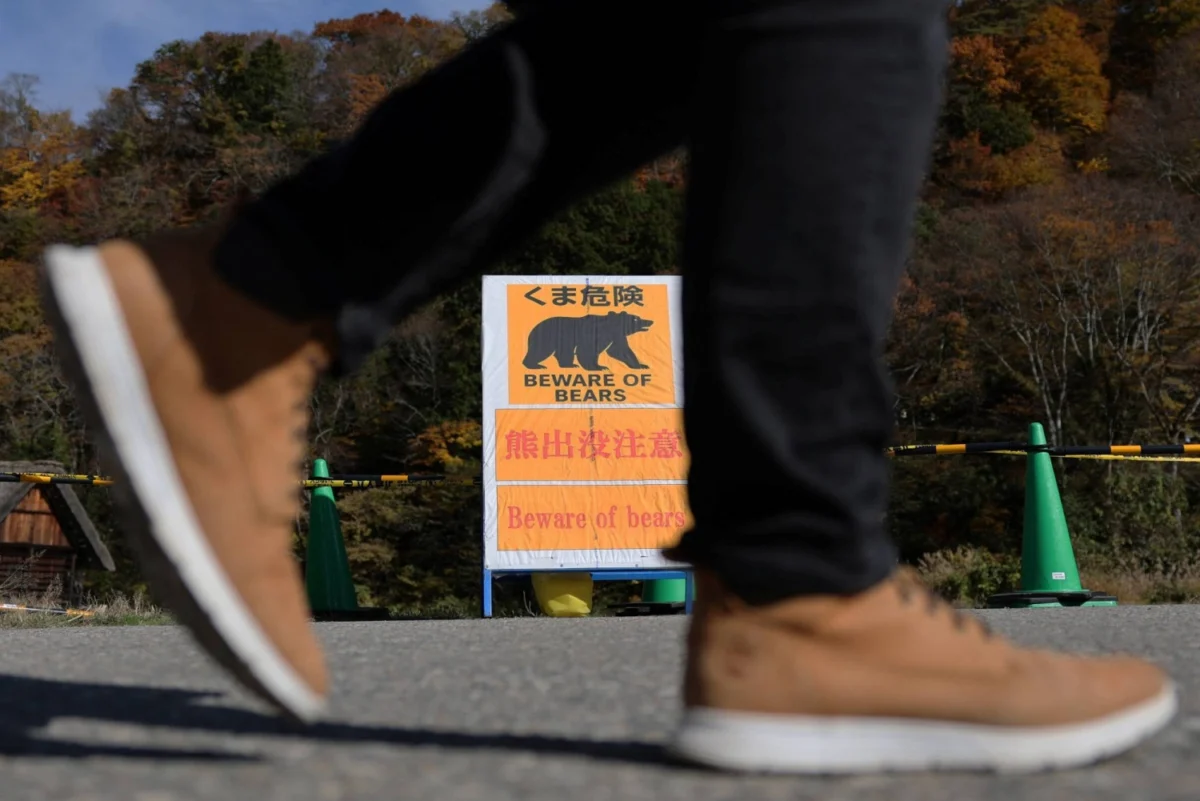
FUKUSHIMA, Japan — The tranquil streets of Fukushima were shattered on Tuesday morning when a bear launched a series of violent attacks across multiple locations, leaving four people injured and sparking a massive emergency response. The incident, which spanned a car parts factory, an electronics facility, and a nearby residential neighborhood, serves as a harrowing reminder of the escalating conflict between Japan’s expanding bear population and its human inhabitants.
As the animal wreaked havoc, local authorities scrambled to contain the threat, marking yet another chapter in what has become a nationwide crisis. With bear sightings reaching all-time highs and human casualties mounting, the Japanese government is facing mounting pressure to address a phenomenon that experts warn is far from a seasonal anomaly.
The Chronology of the Attack
The chaos began in the early hours of Tuesday, catching residents and workers off guard. According to reports from the Fukushima Prefectural Police and local fire departments, the first distress call was placed from a car parts factory. Employees reported that a bear had breached the facility, initiating a violent encounter that left workers bitten and clawed.
"A bear-related human injury incident occurred in Fukushima City, injuring four people," the prefectural police stated in an official release.
As the bear moved through the industrial area, the situation rapidly escalated. After its initial strike at the car parts factory, the animal proceeded to roam into a neighboring residential area, where it struck a pedestrian. Its rampage continued onto the grounds of an electronic equipment manufacturer nearby, where a fourth individual was attacked.
By the time authorities arrived on the scene, the bear had taken refuge inside the electronics factory. Law enforcement officials and emergency services maintained a perimeter, warning locals to remain indoors while efforts to neutralize the animal or safely relocate it were considered. Of the four victims, one individual reportedly sustained serious injuries, requiring urgent hospitalization, while the other three suffered from milder lacerations and trauma.
Supporting Data: A Nation Under Siege
The attack in Fukushima is not an isolated event; it is the most recent symptom of a systemic ecological shift. According to data provided by the Japanese Ministry of the Environment, the fiscal year ending in March saw bear sightings nationwide exceed 50,000. This figure is more than double the previous record set just two years prior, illustrating a staggering upward trend in human-wildlife proximity.
The Statistical Context
- Fatalities: Last year, a record 13 people were killed by bears across Japan, the highest number since the government began tracking such statistics.
- The "Hunger" Factor: Experts suggest that a lack of natural food sources, such as acorns and beech nuts in the mountains, is forcing bears to venture closer to human settlements. As they emerge from hibernation, their desperation drives them into suburban and urban environments.
- Geographic Spread: Sightings are no longer confined to rural, mountainous regions. Bears have been spotted in schoolyards, supermarket parking lots, and even the outskirts of the Tokyo metropolitan area.
The increase in incidents is being described by biologists as an "existential collision." As Japan’s rural population ages and depopulation continues, vast tracts of land are returning to nature, creating corridors that bring bears into closer contact with the remaining residents.
Official Responses and Public Safety Measures
The frequency of these attacks has triggered an urgent review of wildlife management policies. The Japanese government has historically attempted to balance conservation with public safety, but the sheer volume of sightings has rendered traditional deterrents—such as warning sirens and basic fencing—largely ineffective.
In April alone, official reports confirmed that one person was killed and five others were injured by bears, a grim start to the post-hibernation season. The Ministry of the Environment has issued renewed warnings to residents, urging them to carry bear bells, avoid walking at dawn or dusk, and refrain from leaving trash outside, which acts as a primary attractant for hungry animals.
"We are witnessing a change in behavior," noted a wildlife specialist familiar with the situation. "These animals are learning that human settlements provide easy access to calories. Once a bear identifies a residential area or a factory as a food source, the likelihood of an aggressive encounter increases exponentially."
Local municipalities are now coordinating with hunters and specialized capture teams to manage the risk. However, the ethics of culling bears vs. relocating them remain a point of heated debate in Japanese society, with animal welfare advocates arguing that human encroachment into the bears’ natural habitats is the root cause of the conflict.
Implications: The New Normal for Japan
The implications of this surge in bear activity are profound. For the residents of Fukushima and other prefectures, the fear of a wildlife encounter is altering daily life.
Economic and Social Impact
The economic cost of these incidents is also climbing. Factories, schools, and even hot spring resorts are being forced to invest in reinforced infrastructure and private security to protect their premises. The psychological toll on rural communities, already struggling with economic stagnation, is significant. The "fear factor" may accelerate the migration of younger families to safer, more urbanized centers, further exacerbating the rural depopulation crisis.
The Tokyo Factor
Perhaps most alarming is the encroachment into the Tokyo periphery. With over a dozen sightings reported on the outskirts of the capital this year, the issue has moved from a "rural problem" to a national concern. The incident last month, where a Russian man in his 30s was mauled while hiking near the city, served as a stark warning that even the most populated regions of the country are not immune to the growing threat.
Ecological Management
The long-term solution requires more than reactive hunting or emergency sirens. It requires a sophisticated approach to ecosystem management. This includes:
- Reforestation and Food Management: Restoring the natural mountain food chain to keep bears away from populated centers.
- Infrastructure Design: Creating "wildlife buffers" around industrial zones and residential developments.
- Community Education: Training citizens on how to react during an encounter, as the instinct to run—which often triggers a predator’s chase reflex—can be fatal.
Conclusion: A Delicate Balance
The Fukushima bear attack is a chilling reflection of the fragile harmony between Japan’s modernization and its wild landscape. As the country moves into the warmer months, the pressure on local authorities to ensure public safety will only intensify.
The tragedy is that both the victims of these attacks and the bears themselves are casualties of a changing landscape. As Japan grapples with a record-breaking year for bear activity, the incident in Fukushima serves as a clarion call for a more integrated, data-driven approach to wildlife coexistence. Until such a strategy is realized, residents in high-risk areas must remain on high alert, navigating a world where the boundaries between the urban and the wild are increasingly, and dangerously, blurred.
For now, the four victims of Tuesday’s attack are in the thoughts of the nation, as local police continue to patrol the factory grounds, waiting for the bear to be located and the threat to be neutralized. It is a scene that, unfortunately, feels like it may be repeated before the year is out.












No comments yet. Be the first to join the conversation!