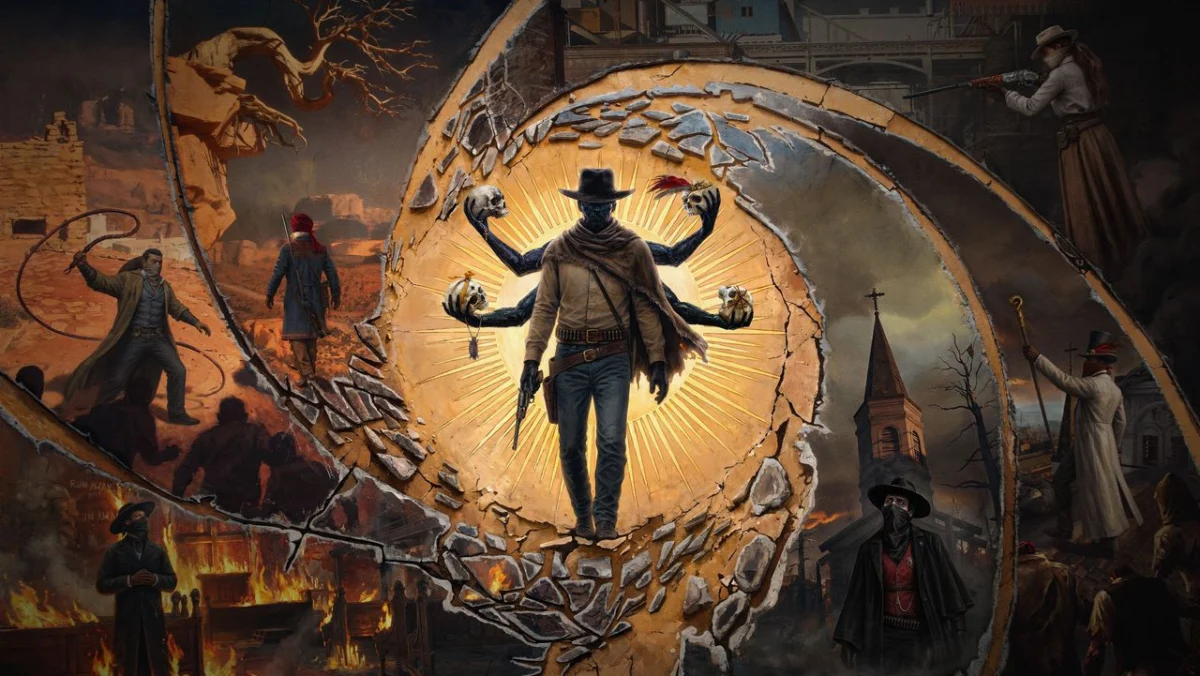
In the annals of game development, few names carry the same weight of atmospheric mastery as Viktor Antonov. As the visionary art director behind the oppressive, industrial dystopia of Half-Life 2 and the gaslamp-fantasy elegance of Dishonored, Antonov defined the "environmental storytelling" gold standard. His passing in early 2025 marked a profound loss for the medium, but he left behind a final, haunting parting gift: Guns of Eschaton.
Developed by Eschatology Entertainment, this title serves as a swan song for a master of world-building. At first glance, it masquerades as a standard first-person shooter set against the backdrop of an apocalyptic American West. However, beneath its rugged, dusty exterior lies a punishing, methodical "Soulslike" shooter that challenges every convention the genre has held for decades.
A Legacy Etched in Shadow
To understand Guns of Eschaton, one must first appreciate the lineage of its creator. Viktor Antonov was not merely an artist; he was an architect of atmosphere. His work on Half-Life 2 created City 17—a setting so palpable it felt like a living character. His influence has rippled through the industry, evident in recent hits like Thick as Thieves, which leverages modern engines to capture the "magic-punk" sensibilities he helped pioneer.
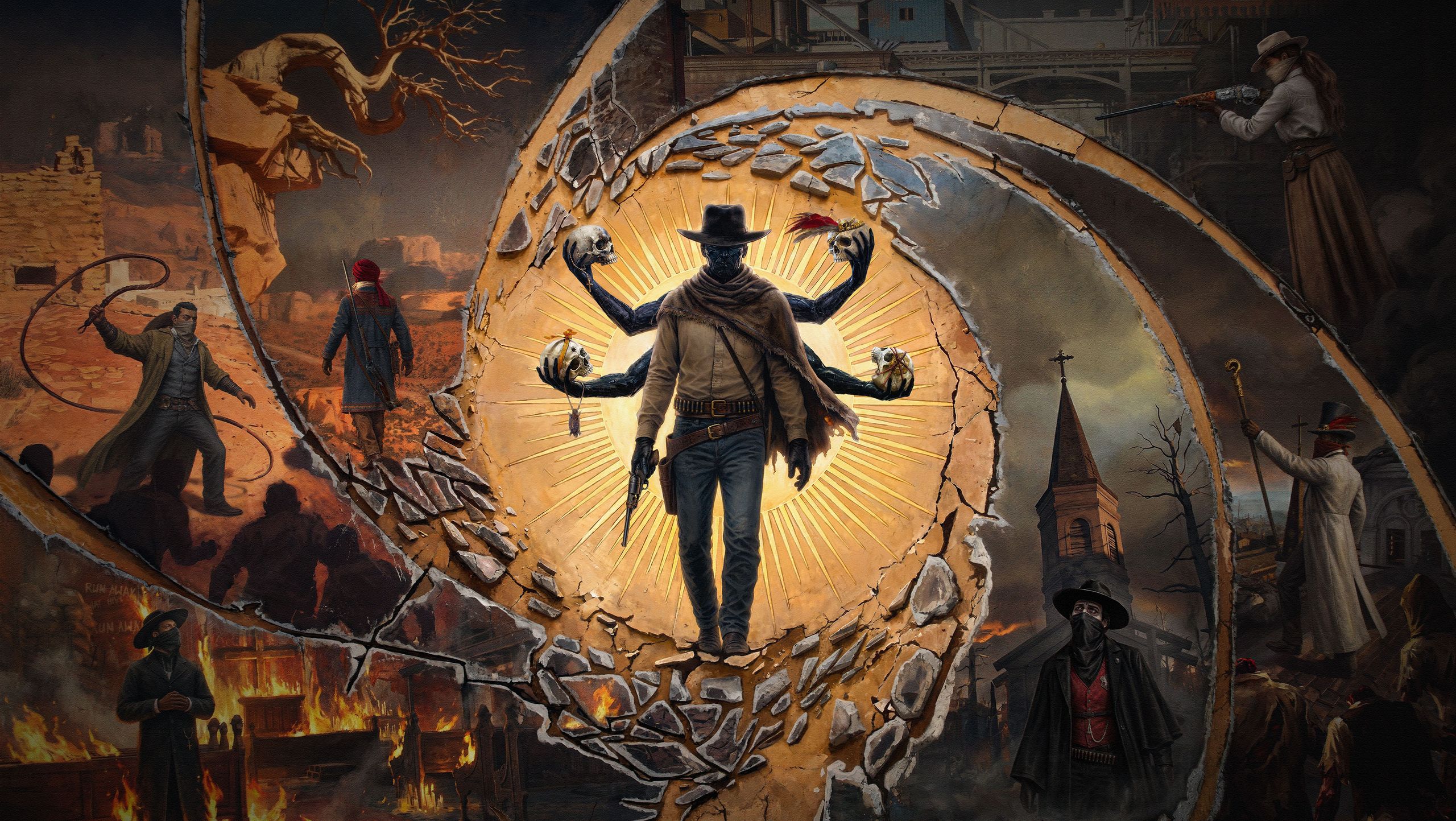
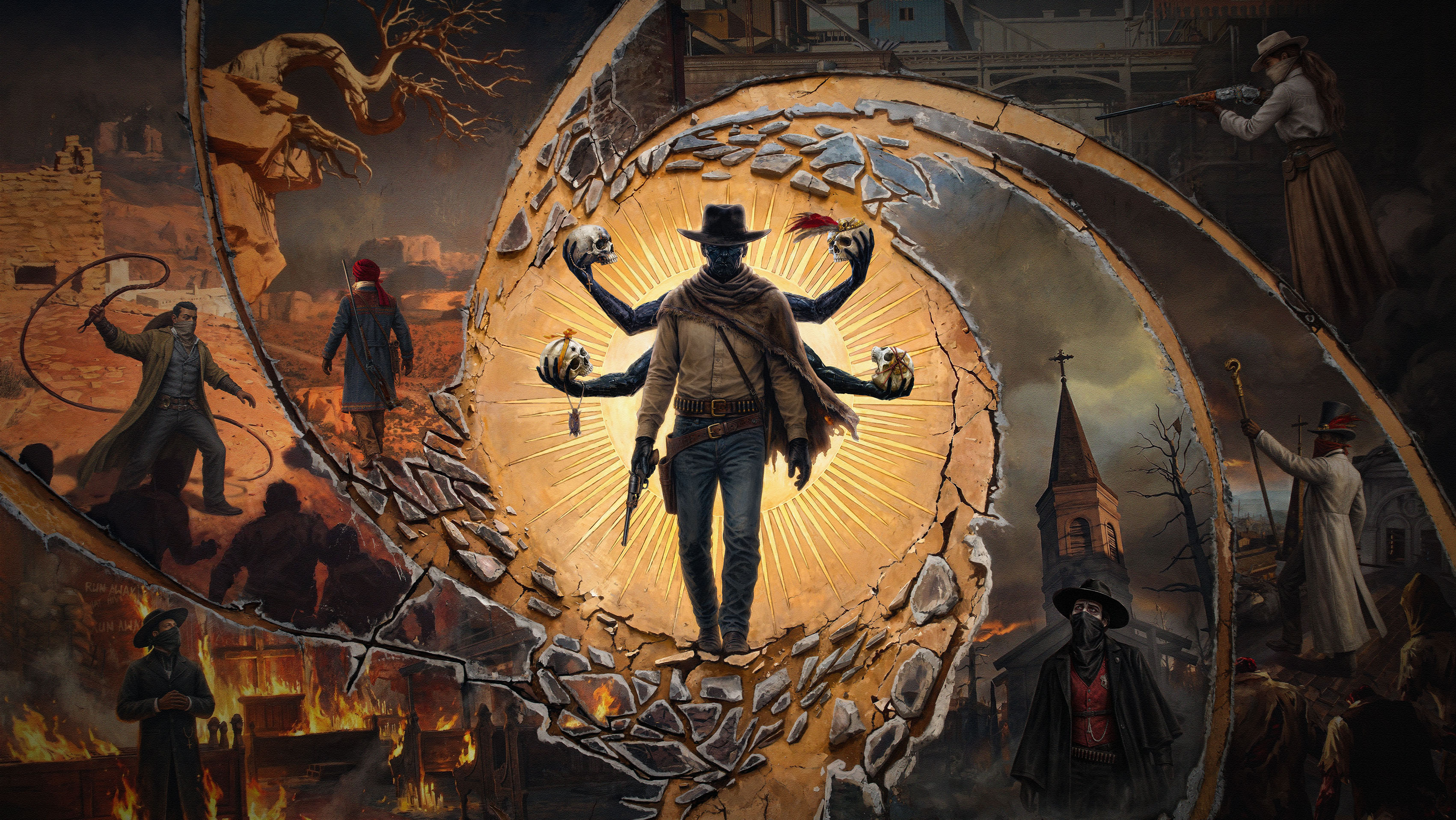
Guns of Eschaton represents a departure from the linear, narrative-heavy experiences of his past. It is an exercise in restraint. While the visual language—muted, sepia-toned landscapes, looming architectural monoliths, and a sense of encroaching decay—is unmistakably Antonov, the gameplay loop is entirely alien to his previous portfolio. It is a game that demands not just dexterity, but a cold, calculated patience.
The Mechanics of the Weird West
Eschatology Entertainment describes the game as a "first-person Soulslike shooter," a term that feels contradictory until one experiences the sheer weight of the combat. In most shooters, the player is a kinetic force of nature, sprinting through corridors and reloading on the fly. In Guns of Eschaton, you are a survivor in a dying land.
The mechanics are intentionally archaic. Your primary sidearm, an iconic six-shooter, is not a simple "point-and-click" tool. Players must manually cycle the hammer and chamber each round, with the UI reflecting the mechanical reality of the firearm. Every bullet represents a resource that, if squandered, leaves you vulnerable to the encroaching terrors of this occult frontier.
The "Soulslike" DNA is pervasive:
- Checkpoint Camps: Safety is found only at designated campfires, reminiscent of the Dark Souls bonfire system.
- Persistent Threats: Enemies respawn upon death or rest, forcing the player to master specific encounters rather than brute-forcing through attrition.
- The Cost of Failure: Death is not a minor setback; it results in the loss of precious resources, punishing recklessness and forcing a more tactical approach to every skirmish.
Decoding the Apocalypse: The Role of the Codex
One of the most innovative features in Guns of Eschaton is the integration of the "Codex." In traditional gaming, a bestiary or codex is a passive menu screen. Here, it is a physical object held by the protagonist.
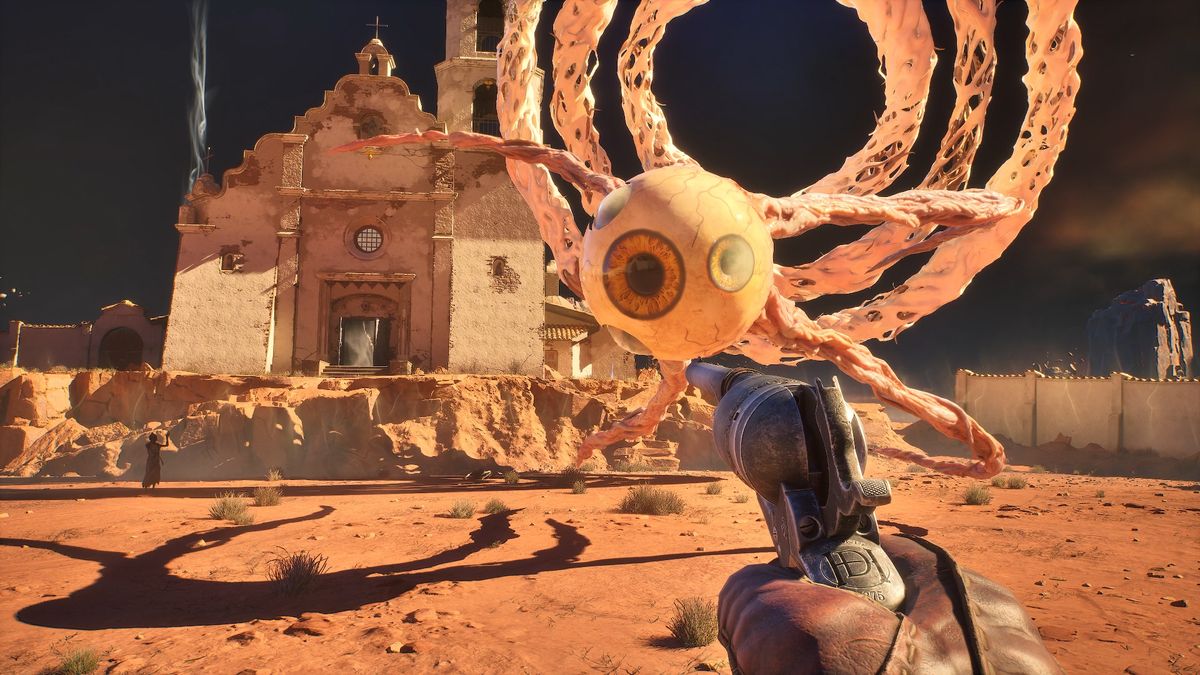
When encountering the nightmarish inhabitants of this world—ranging from corrupted undead lawmen to floating, eldritch eyeballs—the player must pull out the Codex in real-time. The illustrations within the book are annotated with numbers, dictating the specific, strategic order in which body parts must be targeted.
For instance, the "Doomed Lawman" requires a precision shot to the right leg before a follow-up to the head is even effective. However, the "Severed Lawman," despite a visual similarity, demands an entirely different sequence: left leg, left arm, then head. This creates a high-tension scenario where the player is forced to juggle the act of holding a book, identifying the enemy type, and maintaining aim—all while being hunted.
The Art of the Parry: A Tactical Revolution
Perhaps the most "ludicrous" inclusion, as noted in early playtests, is the parry mechanic. How does one parry a bullet in a shooter? The answer lies in the game’s occult lore. The protagonist is host to a pair of spectral, demonic arms that emerge to deflect incoming fire.
Successfully parrying a shot grants the player a brief window of "bullet time," providing the only reliable opening to secure a kill. This turns every one-on-one showdown into a tense, rhythmic dance. It is not about who draws first, but who has the nerves to wait for the exact millisecond of impact to deflect, stun, and retaliate.
Chronology of the Struggle: A First Impression
Spending an hour in the opening town of the "Forgotten Desert" is a humbling experience. The environment is breathtaking—floating rocks break the horizon line of a classic western town—but the difficulty curve is steep.
During early sessions, the most common experience is the abrupt realization that the player is being outmatched. The sound of a hammer cocking in the distance is often the only warning before a lethal shot finds its mark. Dynamite is thrown with silent, devastating accuracy, and the player is frequently met with the screen-filling reminder: “No Rest. No Peace.”
This early difficulty is intentional. It evokes the feeling of playing Demon’s Souls for the first time—a mix of confusion, frustration, and the eventual, intoxicating rush of success. It is a game that refuses to coddle the user, demanding that they learn the language of its world or perish within it.
Official Stance and Development Philosophy
The team at Eschatology Entertainment has been transparent about the game’s difficulty, positioning it as an "anti-shooter" in many respects. By stripping away the power fantasy of modern FPS titles, they aim to emphasize the vulnerability of the individual in a world where the laws of nature—and reality—have been rewritten.
"We wanted to capture the feeling of the end of the world," a representative from the studio noted. "In the apocalypse, speed isn’t your friend. Precision, observation, and the willingness to accept your own fragility are what keep you alive."
Implications for the Genre
Guns of Eschaton is destined to be a divisive title. It will likely alienate players looking for a traditional, high-octane shooter experience. However, for those willing to lean into its punishing design, it offers a depth rarely seen in the genre.
By blending the aesthetic sensibilities of a master like Viktor Antonov with the rigorous, uncompromising gameplay of the Soulslike sub-genre, the developers have created something truly unique. It is a slow-burn experience that demands patience, observation, and respect for the mechanics.
As the industry continues to chase faster, more accessible titles, Guns of Eschaton stands as a reminder of the power of "deliberate design." It is a testament to the fact that when a game forces you to slow down, pay attention, and master your tools, the resulting satisfaction is all the more potent.
Looking Ahead: The Road to Release
The game is currently slated for release on PC, PlayStation 5, and Xbox Series X/S. With the community already beginning to wishlist the title on Steam, anticipation is building for what could be one of the most intellectually and mechanically demanding shooters of the decade.
Guns of Eschaton serves as a poignant, final chapter in the career of Viktor Antonov. It is a challenging, occult, and undeniably beautiful work that forces us to reconsider what a "shooter" can actually be. While the world may have lost one of its greatest visual storytellers, his final vision is one that will continue to challenge, frustrate, and reward players long after they’ve finally mastered that first, impossible shootout.
Whether it becomes a cult classic or a divisive outlier remains to be seen, but one thing is certain: in the landscape of the Weird West, Guns of Eschaton is poised to make a massive impact.