

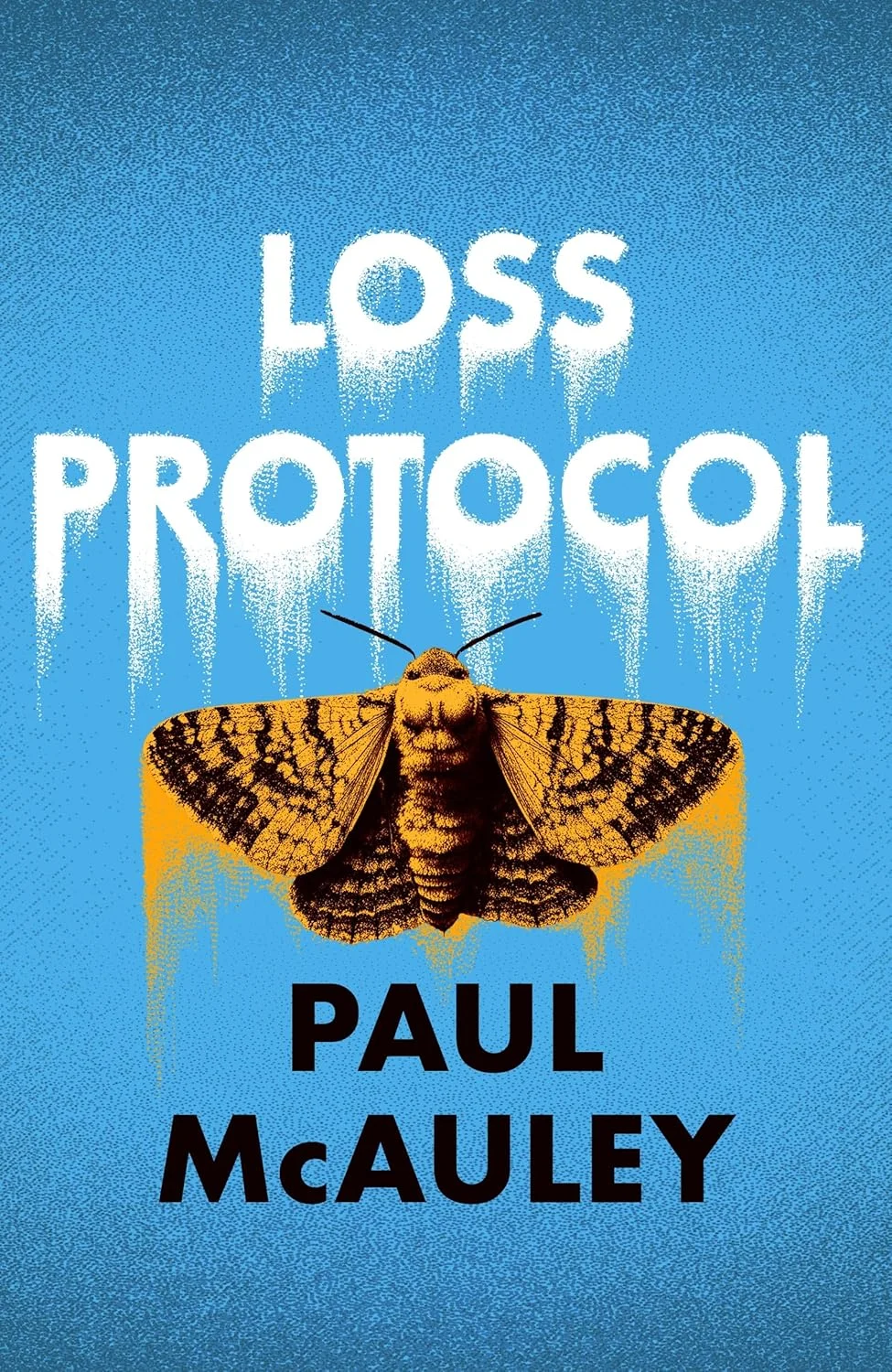
In the landscape of contemporary speculative fiction, few authors capture the intersection of ecological anxiety and human fragility with the surgical precision of Paul McAuley. His latest novel, Loss Protocol, is not merely a thriller set against the backdrop of a warming world; it is an evocative meditation on the nature of memory, the limits of human agency, and the profound, aching sense of "solastalgia"—the distress caused by environmental change. Set in a sweltering 2078 England, the novel follows Marc Winters, a man attempting to outrun a past defined by a tragic commune siege, only to discover that his very existence might be the byproduct of a radical, hallucinogenic reimagining of reality.
The Architecture of a Fragile Future
Main Facts: The World of 2078
Loss Protocol presents a future that feels hauntingly plausible. Global heating is no longer a distant threat but an atmospheric constant. The setting is a world of thinning biodiversity, where the act of replacing a dead native tree with a non-native Spanish oak is a heroic, if insufficient, victory.
Marc Winters, the novel’s protagonist, is a ranger stationed on Cynsea Island in the Blackwater Estuary of Essex. His daily life is a testament to the "maintenance mode" of humanity: working with volunteers, utilizing swarms of drones, and accessing information through AI-integrated mobile devices. In this version of the future, AI has vanished as a distinct technological entity, having "melded into the background" of existence. It is a world of quiet resignation, where birders share stories of "endlings"—the last of a species, like the wood warbler, singing for a mate that will never arrive.
The Catalyst: Wakestone Farm
The narrative engine of the book is the "siege at Wakestone Farm," an event occurring eight years prior to the story’s start. Wakestone was a commune led by the charismatic Kasey Motte, who preached that humanity could "dream" a better world into existence through the use of specific, potent hallucinogenic mushrooms. While the public record suggests a tragic end for the commune, the arrival of new information forces Winters to confront the possibility that his sister, Izzy—long thought dead—is still alive. As he pulls on the threads of this mystery, he is pursued by survivors of the commune who believe Izzy possesses the key to their world-altering vision.
Chronology of a Displaced Life
The narrative structure of Loss Protocol is as fragmented as the memories it explores. McAuley utilizes a non-linear approach to weave together the events of the present with the traumatic history of the Wakestone commune.
- Pre-2070s: The era of environmental decline, leading to the formation of radical groups like the Wakestone commune.
- Eight Years Prior: The "siege at Wakestone Farm." A catastrophic event involving mass self-immolation and, presumably, the death of Izzy Winters.
- The Present (Summer 2078): Marc Winters lives as a ranger on Cynsea Island. He believes he has successfully moved on from his trauma.
- The Re-emergence: Winters is approached by the police and figures like the private investigator Bailey and her employer, Lady Armstrong. They reveal that several members of the Wakestone inner circle survived.
- The Quest: Winters is drawn into a cross-country chase across a dying England, pursued by "deep dreamers" who view him as a potential vessel for their ideology.
Supporting Data: Nature Writing as Narrative Core
One of the most striking elements of Loss Protocol is the intensity of its nature writing. McAuley eschews the sterile, clinical descriptions common in post-apocalyptic fiction, opting instead for a visceral, sensory-rich prose. His use of "phrases with full stops"—an stylistic technique that creates a sense of immediate, fragmented engagement—forces the reader to experience the world as Winters does: in rapid, overwhelming bursts.
The Concept of Solastalgia
McAuley masterfully utilizes the term solastalgia to ground the book’s emotional stakes. Defined in the novel as "knowing everything’s changing in all kinds of bad ways you can’t control, and also knowing that it’s only going to get worse," this concept transforms the book from a standard thriller into a psychological study. The characters are not just mourning the loss of the natural world; they are mourning the loss of the possibility of a stable future.
The contrast between the "Old Birders," who remember thousands of starlings in murmuration, and Winters, who can only dream of such abundance, underscores the "shifting baseline" syndrome. The novel argues that we are creating a nostalgia for the present, knowing that even our current, depleted world will one day be viewed as a "golden age."
Official Perspectives and Thematic Implications
The Question of Agency
A central thematic concern in Loss Protocol is the nature of agency. Winters is frequently depicted as a "non-player character" in his own life. He is constantly manipulated by outside forces—Lady Armstrong’s wealth, the "deep dreamers’" obsession, or the mysterious aid of a drifter named S.
The most unsettling implication arises from the "deep dreamers’" belief that Winters is a, literally, "dreamed" entity. They suggest that in the original, more catastrophic timeline, Izzy was an only child. By "dreaming" a better world into being, she effectively created her younger brother. This raises profound philosophical questions: Does a created being have the right to claim a life that is merely a side-effect of another’s vision?
The Resilience of Hope
Despite the grim premise, Loss Protocol is surprisingly optimistic. McAuley suggests that the resilience of the natural world—and the people who dedicate their lives to its protection—is greater than the prevailing doom-laden forecasts might suggest. The act of "living lightly upon the earth" and the continued dedication of those who monitor the dwindling species provide a counter-narrative to the "end-times" mentality.
Conclusion: A Call to Witness
Loss Protocol is a significant addition to the genre of climate fiction. It succeeds not by offering solutions to global heating, but by accurately documenting the internal state of those living through the transition. McAuley’s ability to blend high-stakes action with deep, reflective prose ensures that the reader is not merely a passive observer of the collapse, but a participant in the struggle to define what remains.
As we look toward our own 2078, the novel serves as both a warning and a template. It reminds us that while the "great extinction" and resource wars may shape the physical landscape, the human capacity for memory, repair, and wonder remains our most essential, if fragile, resource. Whether we are "dreaming" our future or simply trying to survive the present, Loss Protocol insists that we continue to pay attention to the song of the wood warbler—even if it is the last one we ever hear.










No comments yet. Be the first to join the conversation!