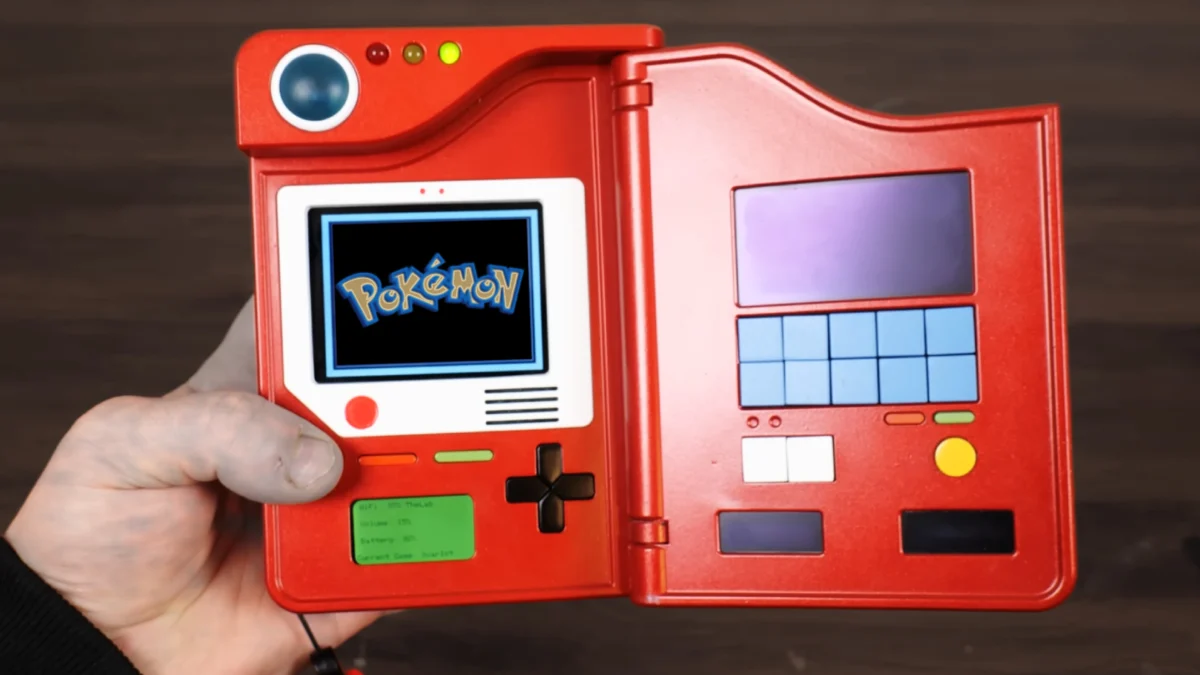
For decades, the Pokémon franchise has invited fans to lose themselves in a world where miniature, pocket-sized monsters roam the wilderness, waiting to be cataloged by the iconic red-and-white electronic device known as the Pokédex. While the games and the anime have provided an immersive escape for millions, the barrier between fiction and reality has always been a screen. That boundary finally crumbled in San Francisco this week.
During the 2026 Pokémon World Championships, held from August 28 to 30, the fan experience—dubbed "Pokémon XP"—witnessed a moment of genuine technological magic. A functional, real-life Pokédex, capable of identifying Pokémon plushies, cards, and even crude sketches in real-time, went viral, captivating the hearts of attendees and digital spectators alike.
The Viral Moment: A Dream Realized at Pokémon Worlds
The device was unveiled by prominent content creator BigRig Creates, who arrived at the San Francisco event with a bold declaration: "Pokémon Worlds isn’t ready for me." He was proven right.
In footage captured by Pokémon YouTuber JPR, the device was shown in action: a user points the handheld scanner at a Heatmor plush. Within seconds, the device processes the visual data, locks onto the subject, and displays the Pokémon’s image on its main screen. Almost simultaneously, the unit begins reciting the specific Pokédex entry for Heatmor in a crisp, synthesized voice, while supplementary screens provide technical data such as type, moves, and evolutionary history.
The video has since exploded in popularity, garnering over 290,000 views in its first 24 hours. The comment sections are flooded with the inevitable refrain of the modern consumer: "Shut up and take my money."
Chronology: From Lab Bench to Main Stage
The road to the 2026 World Championships was not an overnight endeavor. The project represents a sophisticated collaboration between two creative forces in the DIY tech space: BigRig Creates, who handled the software architecture, and fellow YouTuber Mr. Volt, the mastermind behind the hardware engineering.
The Inception (Late 2025)
The device was first revealed to the public in November 2025 through a feature video titled "I Programmed the World’s Smartest Pokedex." At the time, the project was presented as a passion-driven engineering challenge. It wasn’t until the 2026 Worlds that the device was truly put to the test in a high-traffic public environment, where it was forced to contend with varied lighting, moving crowds, and a wide array of Pokémon merchandise.
The Hardware Breakdown
The device is a marvel of modern miniaturization. According to technical documentation provided by the creators, the device is anchored by a Raspberry Pi Compute Module 4, which handles the heavy lifting of image processing. An ESP32 development board and a Raspberry Pi Pico work in tandem to manage the user interface, secondary displays, and the tactile buttons that give the device its "authentic" feel.
Mr. Volt’s contribution was essential in crafting the aesthetic. Rather than settling for a 3D-printed box, the team created an anime-accurate shell that feels like an artifact pulled straight from the screen. The ergonomic design and the physical feedback of the buttons are key to why the device feels less like a science project and more like a consumer product from the Pokémon universe.
Supporting Data: How the Tech Works
Many viewers assumed the device utilized complex generative AI models, but the reality is a testament to clever, efficient engineering.
The Recognition Engine
Instead of relying on LLMs or cloud-based generative image models, the Pokédex uses a practical, robust pipeline. When a user captures an image, the device triggers a reverse image search via Google’s API to cross-reference the subject with the vast visual index of the internet. Once the Pokémon is identified, the system pulls metadata directly from the Pokémon Database.
This approach ensures high accuracy across various media, including:
- Trading Cards: The software successfully recognizes the artwork printed on TCG cards.
- Plushies and Figures: Despite the distortion inherent in soft toys, the device’s object recognition remains remarkably precise.
- Fan Art and Sketches: Perhaps most impressively, the device can identify Pokémon even when depicted in rough, hand-drawn charcoal or pencil sketches, provided the defining features of the creature are recognizable.
The Sonic Identity
One of the most frequently praised features is the "robotic" voice that recites the Pokédex entries. BigRig Creates confirmed on Reddit that this was not a sound file ripped from the anime, but rather his own voice processed through three distinct audio filters. This decision gives the device a unique, bespoke personality that honors the source material without infringing on copyrighted audio assets.
Official Responses and Market Implications
As of the conclusion of the 2026 World Championships, the Pokémon Company has not issued an official statement regarding the device. It remains, firmly, an unofficial, one-of-a-kind fan project.
The question of commercialization remains the elephant in the room. Historically, the Pokémon Company has been fiercely protective of its intellectual property. While they have encouraged fan art and community events, the production of a high-end, functional Pokédex would likely run into massive regulatory, licensing, and manufacturing hurdles.
However, the viral success of the device highlights a glaring gap in the market. For three decades, fans have been promised a "real-life" experience, yet most toys have been limited to static plastic casings or simple LCD screens with pre-programmed animations. BigRig and Mr. Volt have demonstrated that the technology to provide an interactive, educational, and genuinely "magical" experience already exists.
The Implications: What This Means for Fan-Led Innovation
The success of the "Smartest Pokedex" signals a shift in the fan-creator economy. We are entering an era where "fan-made" no longer implies "low quality." By combining open-source hardware (Raspberry Pi) with accessible APIs (Google Search/Pokémon Database), creators are effectively out-innovating official merchandise.
1. The Death of the "Static Toy"
The modern fan, raised on high-speed internet and interactive gaming, is no longer satisfied with toys that simply beep or light up. The demand for "smart" collectibles is rising. If the Pokémon Company, or other massive franchises like Digimon or Yo-Kai Watch, do not begin integrating image recognition or AI-assisted interaction into their toy lines, they risk falling behind the capabilities of independent tinkerers.
2. The Rise of the "Maker" Community in Pop Culture
The collaboration between BigRig and Mr. Volt shows how the "Maker" community—a subset of engineers, coders, and artists—is becoming a dominant force in pop culture marketing. By showcasing their work at events like Worlds, these creators are setting the standard for what the community expects from future products.
3. A New Pedagogical Tool?
Beyond the novelty, there is an educational component. The device essentially acts as a localized, offline encyclopedia. It encourages engagement with the source material, forcing the user to observe the details of a plush or a card to get the device to "scan" correctly. It turns the act of collecting into an act of inquiry.
Conclusion: The Future is in Our Pockets
While you cannot currently walk into a local electronics store and purchase a functioning Pokédex, the dream of becoming a "real-life Pokémon Trainer" has never been closer to fruition. BigRig Creates and Mr. Volt have provided a blueprint for the future of interactive fandom.
As the San Francisco World Championships come to a close, the lasting legacy of the event may not be the winners of the VGC or the Trading Card Game finals, but the small, handheld device that turned every plushie at the convention into a living, breathing subject of study. The technology is here, the interest is global, and the bar has been set. The only question remaining is whether the titans of the gaming industry will pick up the challenge, or leave it to the fans to build the world they’ve always dreamed of.