

Welcome back to TechCrunch Mobility, your definitive source for the evolution of transportation, the integration of artificial intelligence, and the policy shifts defining how we move. As we look toward a future dominated by autonomous systems, the industry finds itself at a critical juncture where technological ambition is increasingly clashing with federal oversight and commercial reality.
Note: In observance of the July 4th holiday, there will be no issue published next week. We will return with full coverage the following week.
The Main Facts: Tesla Under the Microscope
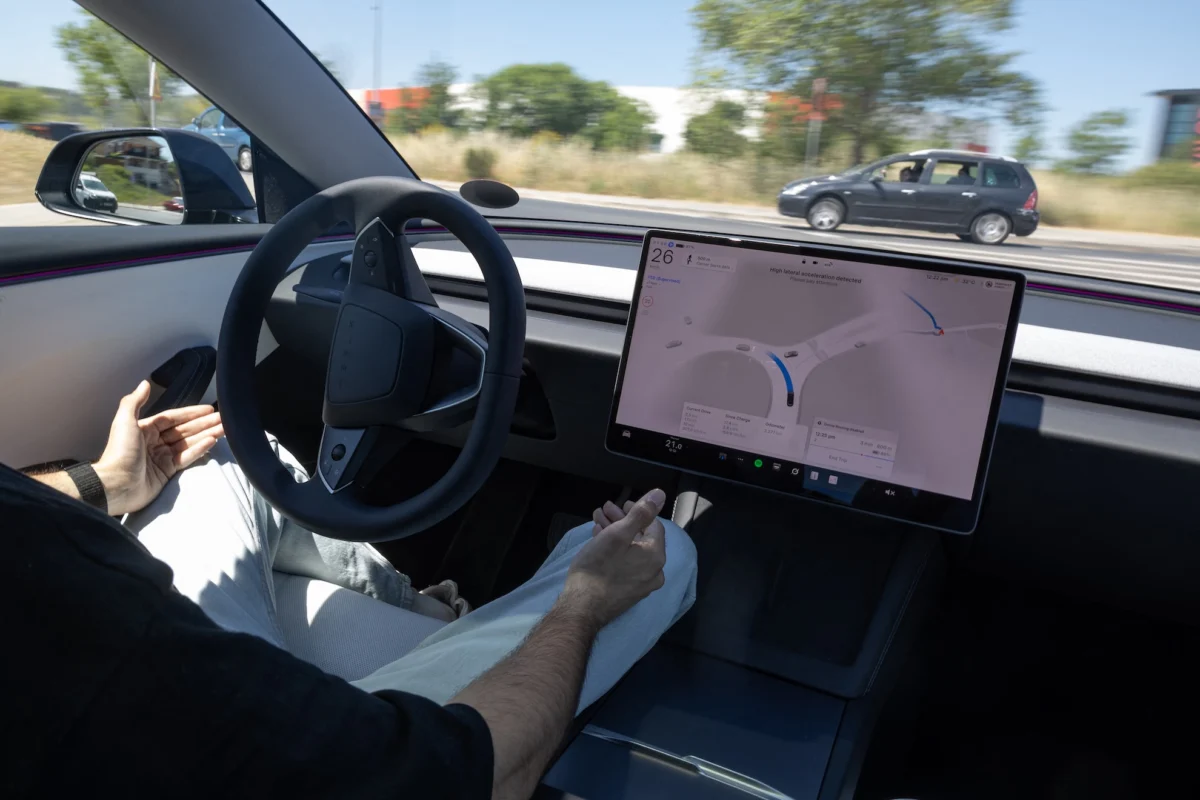
The current narrative surrounding automated driving is defined by intense, arguably unprecedented, scrutiny of Tesla’s Full Self-Driving (FSD) (Supervised) system. This week, the spotlight shifted back to a tragic, fatal crash in Texas, where a 76-year-old woman lost her life after a Tesla vehicle struck her home.
Initial reports gained national traction when the driver alleged that Autopilot—Tesla’s foundational driver-assistance suite—was engaged at the time of the collision. This has prompted immediate federal intervention, with both the National Highway Traffic Safety Administration (NHTSA) and the National Transportation Safety Board (NTSB) launching formal investigations into the incident.
The Conflict of Narratives
The situation remains complex due to conflicting accounts. Ashok Elluswamy, Tesla’s VP of AI software, took to the social platform X to contest the driver’s claims. Elluswamy asserted that the vehicle was not on Autopilot, but rather under the control of FSD (Supervised), and that the driver manually overrode the system by depressing the accelerator pedal to 100% capacity in a residential zone.

This disagreement highlights a recurring tension in the autonomous vehicle (AV) space: the "black box" of data. While Tesla claims internal telemetry supports its narrative, the lack of an independent, transparent forensic investigation leaves the public and regulators in a state of uncertainty. As Tesla positions itself less as an automaker and more as a robotics and AI powerhouse, the performance of FSD (Supervised)—its most visible revenue-generating asset—will continue to be the primary battleground for its reputation.
Chronology of Regulatory and Legal Friction
The Texas incident is not an isolated event; it is part of a broader, months-long trend of legal and regulatory pressure.
- 2023–2026 (Ongoing): The NHTSA continues a wide-ranging investigation into Tesla’s FSD, specifically focusing on the system’s ability to handle low-visibility environments, such as sun glare, fog, or airborne dust—conditions that have historically challenged camera-based perception systems.
- Late June 2026: Tesla settled a high-profile lawsuit regarding a fatal 2023 crash involving a vehicle operating under FSD (Supervised).
- June 24, 2026: The NTSB officially launched its investigation into the recent Texas crash, signaling that the federal government is prioritizing the oversight of AI-driven driver assistance.
- June 25, 2026: The U.S. Department of Transportation proposed a landmark regulatory shift that would allow for the removal of brake pedals in vehicles designed exclusively for automated driving systems. This move is widely viewed as a major boon for companies like Tesla and Zoox, which are pushing for "pedal-less" cabin designs.
Supporting Data: The Waymo Scale-Up
While Tesla faces regulatory headwinds, Waymo is aggressively executing its strategy to dominate the robotaxi sector. Insights from the New York-based research firm MoffettNathanson provide a rare look into the scale of Waymo’s "Ojai" robotaxi program.
The Zeekr Connection
Waymo’s collaboration with Zeekr—the EV brand owned by China’s Geely Holding Group—is a strategic masterstroke in hardware supply. The Ojai minivan-like vehicle is designed in Sweden, manufactured in China, and finalized in the U.S. by Waymo. Crucially, these vehicles comply with U.S. policy by excluding any Chinese-connected vehicle communication modules, opting instead for Waymo’s proprietary sixth-generation autonomous stack.
Import Velocity
According to an analysis of Bills of Lading, Waymo is rapidly building its fleet. MoffettNathanson reports that Waymo is currently importing approximately 300 vehicles per month, putting the company on track to introduce over 3,100 Zeekr-based robotaxis into the U.S. market this year alone. This high-volume deployment suggests that the "Ojai" program is moving well beyond the pilot phase and into serious commercial operations.

Official Responses and Industry Implications
The mobility ecosystem is reacting to these developments with a mix of technological pivots and safety-standard posturing.
Lyft’s Multi-Sensor Mandate
In a move that has significant implications for Tesla’s robotaxi ambitions, Lyft CEO David Risher announced a new "multi-sensor safety standard" for all autonomous rides on its network. The core requirement? Vehicles must utilize more than one type of sensor (e.g., Lidar, Radar, and Cameras).
This rule effectively disqualifies camera-only systems, such as Tesla’s FSD (Unsupervised) platform, from participating in the Lyft network. While this does not impact human-driven Teslas, it creates a massive barrier to entry for Tesla’s future Cybercab and robotaxi fleet, should they continue to rely exclusively on optical sensors.
The EV Industry Shakeout
Beyond the autonomous space, the broader electric vehicle market is experiencing a period of "simplification" and correction:
- Lucid Motors: The company is undergoing a significant restructuring, laying off 18% of its staff (approximately 1,500 employees) and cutting a production shift at its Arizona facility. CEO Silvio Napoli cited a need to "sharpen execution" as the firm struggles to navigate a competitive, capital-intensive environment.
- Polestar: The Swedish automaker has been barred from selling new vehicles in the U.S. market, a direct result of federal laws prohibiting the use of Chinese-connected technology in the automotive supply chain.
- Slate Auto: In a move toward radical affordability, Slate has introduced a $24,950 electric truck. Eschewing infotainment and luxury finishes, the truck emphasizes utility, signaling a potential niche for "no-frills" fleet vehicles.
Implications: The Road Ahead
The current state of the industry reveals three distinct trajectories:

- AI-Driven Safety Standards: The battle between camera-only systems (Tesla) and multi-sensor fusion (Waymo/Zoox) is no longer just a technical debate—it is becoming a regulatory and marketplace standard. As companies like Lyft codify sensor requirements, the "camera-only" approach faces an uphill climb to mainstream commercial acceptance.
- Infrastructure as a Moat: The recent $300 million credit facility secured by Terawatt Infrastructure and the $10 million seed round raised by Aseon Labs (which builds "pitstops" to clean and charge robotaxis) underscore that the autonomous future requires a massive physical footprint. Investors are increasingly betting on the support ecosystem as much as the vehicle platforms themselves.
- Global Geopolitical Realities: From the restriction of Polestar to the scrutiny of Waymo’s Zeekr supply chain, the mobility sector is increasingly caught in the crosshairs of U.S.-China trade policy. Future success will depend as much on supply chain geography as it will on software superiority.
As we pause for the holiday, the industry remains at a boiling point. Whether it is Tesla’s struggle to clear the name of its FSD software, or Waymo’s rapid, quiet scaling of its Ojai fleet, the message is clear: the era of "move fast and break things" in the mobility sector is being replaced by an era of "move carefully and prove safety."
Got a tip for us? Email Kirsten Korosec at [email protected] or reach out via Signal at kkorosec.07. You can also contact Sean O’Kane at [email protected].











