

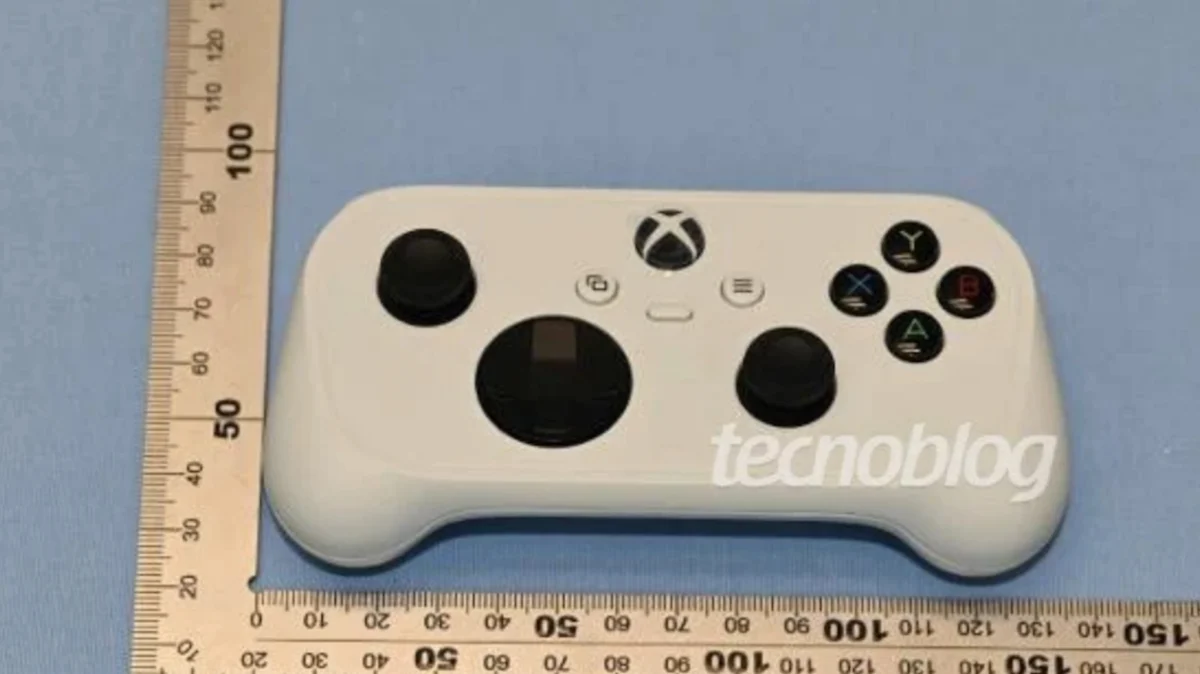
In a revelation that has sent shockwaves through the gaming hardware community, images of a previously unannounced Microsoft Xbox controller have surfaced, suggesting a strategic pivot toward dedicated cloud gaming peripherals. The leak, first reported by the Brazilian tech outlet Tecnoblog, showcases a device that breaks significantly from the traditional Xbox controller design language, signaling Microsoft’s intent to dominate the portable and cloud-based gaming market.
While Microsoft has long leaned on third-party partners like 8BitDo or Razer to provide mobile-friendly gaming solutions, this new hardware appears to be an internal project designed to lower the barriers to entry for Xbox Cloud Gaming.
Main Facts: The Anatomy of the New Controller
The leaked images reveal a compact, rectangular chassis that feels distinctively different from the ergonomic, full-sized controllers traditionally bundled with the Xbox Series X|S. Despite its diminutive stature, the device retains the essential input architecture that Xbox players have come to expect.
Key Hardware Specifications
- Form Factor: A sleek, rectangular body with shortened grips, prioritizing portability over the deep palm-filling curves of standard controllers.
- Connectivity: The standout feature is its reported ability to connect via Wi-Fi directly to Microsoft’s cloud servers. This bypasses the traditional latency pitfalls of Bluetooth, aiming to provide a "local-feel" experience while streaming. The device also retains Bluetooth functionality for secondary, non-cloud use cases.
- Internal Architecture: Analysis by Digital Foundry has identified that the controller is powered by a Realtek chipset featuring a dual-core ARM Cortex A7 processor. This suggests the controller is more of a "thin client" than a standard gamepad, capable of handling network traffic and input processing independently.
- Battery Power: Perhaps the most surprising feature is the inclusion of an internal, rechargeable battery. For decades, Microsoft has famously stuck to AA battery compartments for its primary controllers, a choice that has drawn both loyalty and ire from fans. The shift to a built-in power source suggests a modern, mobile-first design philosophy.
- Aesthetics: The device will launch in at least two colorways: classic black and a sleek, minimalist white.
Chronology: The Road to the Leak
The emergence of this hardware did not happen in a vacuum. It represents the culmination of years of experimentation by Microsoft to expand the Xbox ecosystem beyond the living room console.
- 2020-2021: With the official launch of Xbox Cloud Gaming (Project xCloud), Microsoft began aggressive partnerships with peripheral manufacturers. Products like the Razer Kishi and Backbone One became the industry standard for mobile gaming.
- 2022-2023: Microsoft internal teams began researching ways to reduce "input lag," the primary enemy of cloud gaming. Early reports indicated that connecting directly to a Wi-Fi router rather than a smartphone handset could shave milliseconds off the response time.
- May 2026 (The Leak Window): Following persistent rumors of a "handheld Xbox project," Tecnoblog published the first high-resolution images of the proprietary controller. The leak was quickly corroborated by The Verge and technically analyzed by Digital Foundry, lending significant weight to the legitimacy of the hardware.
- Current Status: As of now, the device remains in the "unannounced" phase. The leak is currently being treated as a product that has passed internal prototyping and is likely in the final stages of regulatory approval or manufacturing readiness.
Supporting Data: Why Wi-Fi Connectivity Matters
To understand the necessity of this controller, one must look at the technical limitations of current mobile gaming.
The Latency Bottleneck
In a standard cloud gaming scenario, a player’s controller connects to a smartphone via Bluetooth. The smartphone then processes the input, sends it over Wi-Fi/5G to the cloud server, which then sends the video stream back to the device. This "daisy chain" of connections is where latency is introduced.
By allowing the controller to communicate directly with the Wi-Fi router, the controller bypasses the smartphone’s own Bluetooth stack. This architecture, similar to what Google attempted with its Stadia controller, significantly stabilizes the connection. For competitive shooters or fighting games, this reduction in latency—even if only by 10–20 milliseconds—is the difference between a playable experience and a frustrating one.
The ARM Advantage
The inclusion of a dual-core ARM Cortex A7 processor confirms that this controller is essentially a computer in its own right. It handles the handshake with the cloud server, meaning the device isn’t just sending "button presses," but is actively managing a network stream. This is a massive departure from the "dumb" controllers of the past.
Official Responses and Corporate Silence
As is standard for unreleased hardware, Microsoft has maintained a position of strategic silence. Requests for comment from major tech outlets have been met with the standard "we do not comment on rumors or speculation" response.
However, industry analysts note that Microsoft’s leadership, including CEO Satya Nadella and Gaming CEO Phil Spencer, have frequently spoken about "Xbox everywhere." In recent shareholder meetings, the company has emphasized that their goal is not just to sell consoles, but to ensure that the Xbox service is available on every screen. This leaked controller serves as the "missing link" in that mission statement, bridging the gap between the high-fidelity experience of a console and the portability of a smartphone.
Implications: What This Means for the Gaming Industry
The leak of this controller carries significant weight for the future of the video game market.
1. The Death of the AA Battery?
If Microsoft adopts an internal rechargeable battery for this device, it may signal a shift in their broader controller strategy. While the Xbox Series X controller continues to use AA batteries, the market sentiment has overwhelmingly moved toward internal lithium-ion power. This controller could be the test bed for a new generation of standard Xbox controllers that finally embrace modern battery standards.
2. A Threat to Dedicated Handhelds
With a low-latency controller, the need for a $500-plus dedicated handheld console (like a Steam Deck or ROG Ally) diminishes for the casual gamer. If a user can connect this controller to their tablet or smartphone and achieve a near-console experience, the "Xbox Cloud Gaming" app becomes the most powerful console in the room.
3. The "Platform Agnostic" Strategy
Microsoft is clearly pivoting away from the idea that a gamer needs a $500 box under their TV. By creating hardware that enhances the cloud experience, they are inviting players to subscribe to Xbox Game Pass Ultimate regardless of their hardware preference. This controller is essentially a subscription-retention tool.
4. Competitive Pressure
Sony, Nintendo, and Valve will be watching this development closely. While the PlayStation Portal relies on Remote Play (streaming from a PS5), Microsoft’s approach is purely cloud-based. If Microsoft can successfully market a high-performance, Wi-Fi-enabled controller, it could force their competitors to iterate on their own peripheral offerings, potentially leading to a new era of "Cloud-Native" hardware.
Conclusion: The Path Forward
The leaked images of the new Xbox Cloud Gaming controller offer a glimpse into a future where the console is no longer a physical object, but a service delivered via the cloud. By focusing on technical hurdles like latency—through Wi-Fi connectivity—and user experience, through a portable and rechargeable design, Microsoft is positioning itself to capture a demographic that values convenience without sacrificing performance.
Whether this device will be sold as a standalone accessory or bundled with a new tier of Game Pass remains to be seen. However, one thing is clear: the hardware landscape is shifting. As we await an official announcement, the gaming world is left to wonder if this is the final piece of the puzzle that will finally make cloud gaming a true, mainstream alternative to local hardware. For now, the "Xbox everywhere" vision seems more tangible than ever before, resting in the palm of our hands—or at least, it will be, once this controller hits the shelves.












No comments yet. Be the first to join the conversation!