

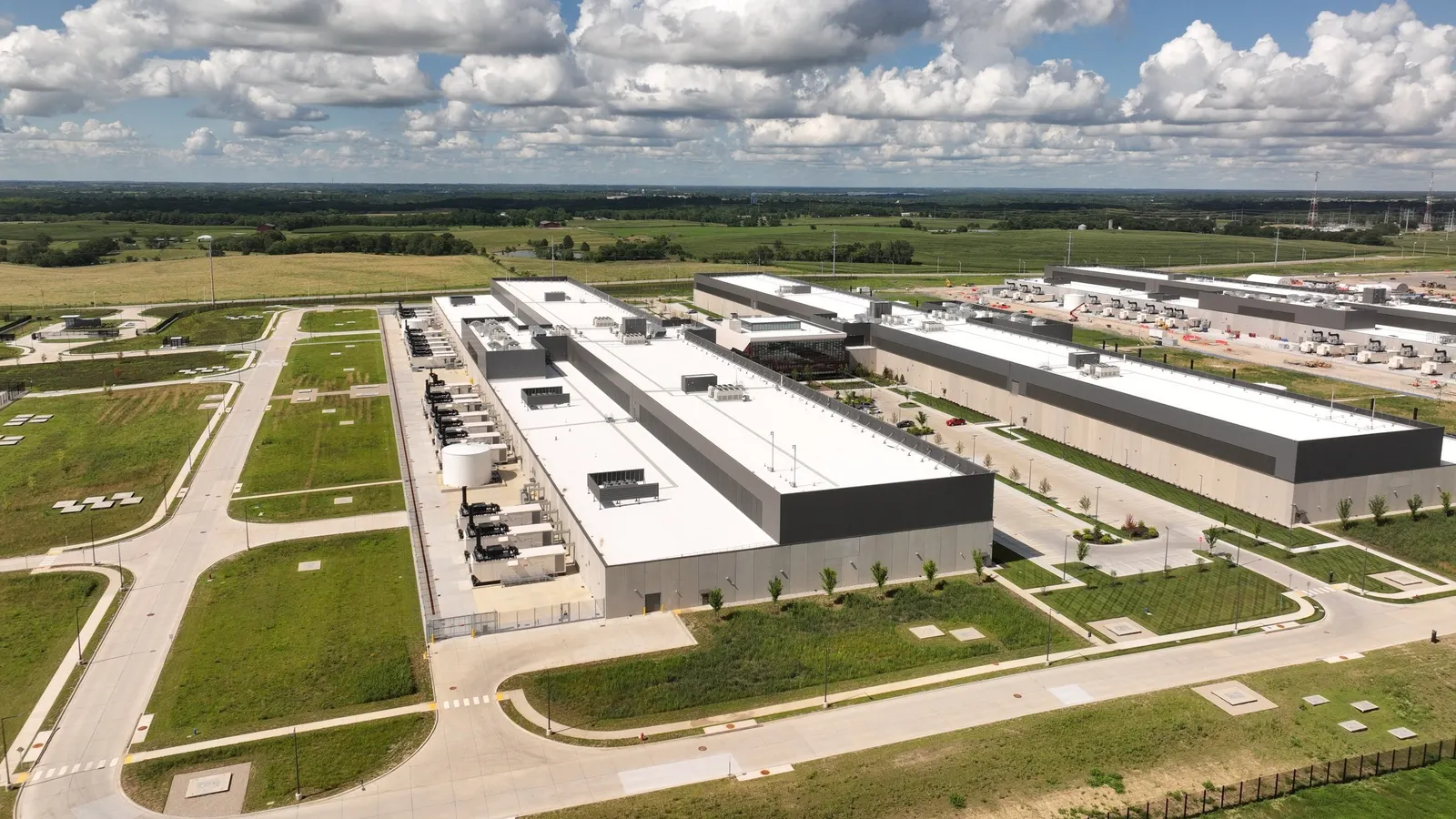
The artificial intelligence sector, once defined by unbridled optimism and rapid-fire innovation, is entering a period of sobering reflection. As the capital expenditure required to maintain massive AI infrastructure reaches the trillion-dollar mark, the industry is shifting its focus from raw capability to cold, hard monetization. Following years of "growth at all costs," tech giants and startups alike are now facing a daunting reality: the market’s appetite for expensive AI solutions is not keeping pace with the astronomical costs of training and deploying them.
This pivot is characterized by a growing disconnect between the "developer-class" enthusiasm for AI and the lukewarm reception from corporate executives and everyday consumers. As the initial luster of generative AI begins to fade, the industry is grappling with a central, existential question: Is the current AI boom a foundational shift in the global economy, or is it a classic bubble fueled by hype that fails to deliver tangible returns?
The Anatomy of the Value Gap
The current apprehension surrounding the AI market is rooted in a fundamental misalignment of expectations. For the software engineering community, AI has been nothing short of a revolution. By automating boilerplate code, debugging complex systems, and enabling the rapid prototyping of applications, AI has granted developers unprecedented "personal agency."
However, this utility has not translated effectively to the broader economy. According to a landmark study published by the National Bureau of Economic Research (NBER) earlier this year, the operational impact of AI remains negligible for the vast majority of firms. Surveying nearly 6,000 executives—including CEOs and CFOs—the NBER found that nine out of ten respondents reported zero impact on employment or productivity over the last three years.
Even more telling are the long-term forecasts. While these executives expect AI to drive a modest 1.4% increase in productivity over the next three years, these gains are increasingly viewed as insufficient to justify the skyrocketing operational costs of LLM (Large Language Model) integration. When matched against the capital intensity of data centers, the math for many enterprises simply does not add up.
Chronology: From Euphoria to Fiscal Scrutiny
The transition from the "AI Hype Cycle" to the "AI Accountability Cycle" has unfolded rapidly over the last several months:
- Early 2024: The industry reaches a fever pitch of investment, with companies prioritizing token usage and model parameters above all else.
- Mid-2024: First signs of friction appear. Corporations begin to question the "Return on Investment" (ROI) for enterprise AI subscriptions, noting that increased token consumption does not lead to a proportional rise in feature functionality.
- Late 2024 to Early 2025: High-profile admissions of inefficiency emerge. Leaders like Uber’s COO, Andrew Macdonald, publicly note the difficulty of justifying AI token spending, signaling a shift in corporate budgeting priorities.
- Current Period (2026): Infrastructure sharing and monetization become the primary strategies. Meta and xAI begin formalizing data center capacity rental deals, moving away from purely proprietary models to utility-based business models.
The Infrastructure Pivot: Turning Costs into Revenue
As the cost of sustaining AI infrastructure threatens profit margins, the tech giants are beginning to act more like utility companies than software developers.
In a surprising development, xAI recently finalized a deal with Anthropic to rent out a portion of its data center capacity for $15 billion annually. This move highlights a pragmatic shift: when the cost of building your own "super-intelligence" becomes a liability, renting out the physical infrastructure to a rival becomes a strategy for survival.
Meta is similarly diversifying its revenue streams. Beyond merely providing AI models, Meta is now embedding technical staff within corporate partner organizations to facilitate integration—a "consulting-as-a-service" model designed to prove the value of its tools. Furthermore, reports suggest that Meta is exploring the viability of a cloud-based infrastructure business, positioning itself to lease excess data center space to third parties should internal demand fail to fill the capacity.
Data-Driven Skepticism
The skepticism is not merely anecdotal; it is reflected in the financial strain being placed on major corporations. The Uber case study is particularly illustrative. When a company with the operational scale and data sophistication of Uber struggles to reconcile its AI budget with its output, it serves as a warning for the rest of the market.
The NBER data underscores this friction:
- No Impact Reported: 90% of executives claim no change in productivity.
- Modest Expectations: Future projections (1.4% productivity boost, 0.7% employment reduction) are dwarfed by the multi-billion-dollar investments required to maintain current systems.
- The "Token Trap": The realization that higher token usage—the primary metric of AI consumption—is decoupled from user value, creating a scenario where businesses are effectively "burning money" for marginal performance improvements.
Official Responses and the "Human" Element
Industry leaders are beginning to acknowledge the "backlash." Alexandr Wang, head of AI Superintelligence at Meta, offered a candid assessment during a recent appearance on The Core Memory podcast. Wang admitted that the industry has struggled to demonstrate how AI acts as a tool for "personal empowerment."
"We haven’t yet demonstrated, in a very real way, how this is actually a tool for personal agency," Wang noted. He contrasted the developer experience—where AI is a clear, transformative force—with the general user experience, which he characterized as "not overwhelmingly better." This acknowledgment from an industry insider serves as a rare admission that the "magic" promised by generative AI has yet to reach the average user.
Implications for the Future: A Market Rationalization
The current state of the AI sector suggests that a "rationalization" is imminent. Several factors are driving this:
1. Competitive Pressure from Low-Cost Models
The monopolistic grip of U.S.-based AI giants is being challenged. As reported by CNBC, developers in China are successfully deploying less expensive, high-performing models. This creates a "price floor" that could potentially derail the IPO plans of major U.S. startups like OpenAI and Anthropic, who rely on high-margin enterprise contracts to sustain their massive R&D spending.
2. The "Utility" Reality Check
Businesses are moving away from the "AI-first" buzzword phase and into a "results-first" phase. If an AI tool does not directly contribute to revenue generation or significant cost reduction, it is being sunsetted. This will likely lead to a consolidation of the market, where only those models that provide extreme, niche, or highly measurable value will survive.
3. Structural Misalignment
The fundamental issue remains the nature of AI itself. AI excels at tasks defined by systematic, replicable patterns—the very bread and butter of software development. However, the world of commerce is often messy, non-linear, and relationship-driven. For the small-to-medium business (SMB) owner, current AI tools often fall short of helping them "sell more stuff." Until AI can bridge the gap between pattern matching and practical, bottom-line business outcomes, the current spending trajectory will remain unsustainable.
Conclusion: The Path Ahead
The AI industry is currently navigating its first "winter of reality." The initial phase of hyper-growth, fueled by venture capital and unchecked infrastructure spending, is hitting a wall of practical utility.
The next 18 to 24 months will be decisive. If developers can transition from "hype-driven" features to "utility-driven" solutions, the technology will likely mature into a stable, albeit more modest, part of the digital economy. If they cannot, the "AI bubble" may be remembered as one of the most expensive experiments in technological history. For now, the market is no longer satisfied with the promise of intelligence; it is demanding the proof of impact.












No comments yet. Be the first to join the conversation!