Lina Hope
For decades, the high-fidelity audio world was defined by a simple, non-negotiable standard: heavy copper wires, bulky amplifiers, and a stationary setup. Today, the landscape of home audio has been radically transformed by the convenience of Bluetooth and the ubiquity of Wi-Fi. However, as the lines between "convenient" and "high-quality" blur, many consumers are left wondering if they are sacrificing acoustic integrity for the sake of a clutter-free living room. The truth is that the connection method is merely one variable in a complex equation involving room acoustics, amplification, and source material.
Main Facts: Deconstructing the Signal Chain
To understand the difference between wired and wireless systems, one must first dismantle the common misconception that a physical wire equates to better sound. While a wired connection eliminates the inherent data-compression hurdles of wireless transmission, it does not magically fix a poor-quality recording or an underpowered speaker.
At its core, a sound system consists of three pillars: the source (the music file or stream), the amplification (the power driving the drivers), and the transducer (the speaker itself).
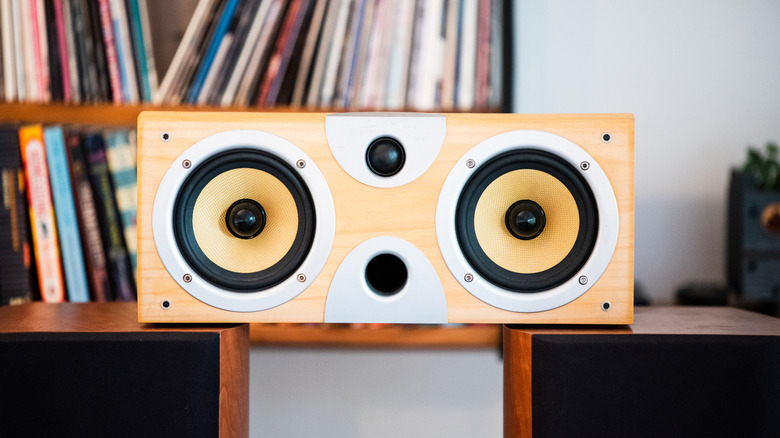
- Passive Wired Systems: These rely on external amplification. The benefit here is modularity. You can upgrade your amplifier to achieve a specific "warmth" or power output without replacing your speakers, and vice versa.
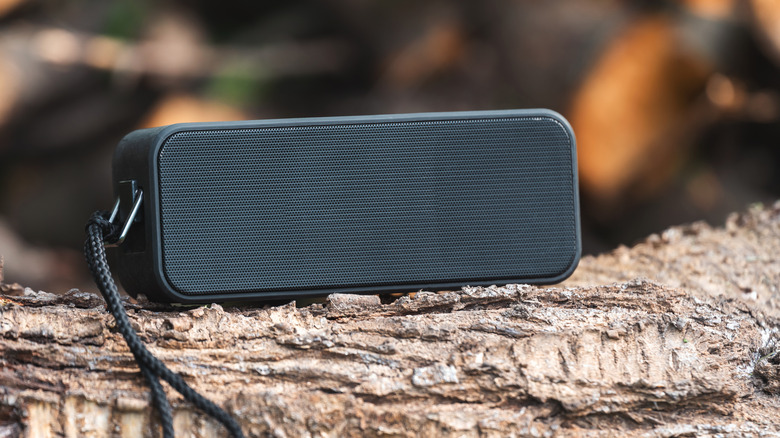
- Active Wireless Systems: These feature internal amplification specifically tuned to the drivers. By controlling the entire signal path—from the digital-to-analog converter (DAC) to the speaker cone—manufacturers can often extract higher performance from smaller cabinets than would be possible with passive designs.
The defining factor is not the cable, but the "ecosystem." Wireless systems, particularly those relying on Wi-Fi, often utilize advanced digital signal processing (DSP) to correct for room reflections or driver limitations, which can sometimes outperform a "pure" analog wired setup in a suboptimal listening environment.

Chronology: The Evolution of Audio Transmission
The history of audio is a timeline of moving from the physical to the ethereal.
- The Golden Age of Wire (1950s–1990s): High-fidelity audio was tethered. The primary focus was on signal purity, minimizing resistance through thick-gauge oxygen-free copper cables.
- The Bluetooth Revolution (Early 2000s): Bluetooth 1.0 was never intended for high-fidelity music. It was a utility for hands-free calling. Early adopters suffered through heavily compressed, artifact-riddled audio.
- The Rise of Wi-Fi and Streaming (2010s): With the introduction of platforms like Sonos and the widespread adoption of high-speed home networks, bandwidth ceased to be a primary constraint. Wi-Fi allowed for "lossless" streaming and multi-room synchronization, effectively closing the gap between wireless convenience and wired fidelity.
- The Modern Era (2020s–Present): We are currently in an era of "hybridization." Modern systems now feature high-resolution wireless codecs (like LDAC, aptX Lossless, and AirPlay 2) that can handle data rates far exceeding the bitrate of standard CD audio.
Supporting Data: Understanding Latency and Bandwidth
A critical technical distinction between wired and wireless is latency—the time it takes for a signal to travel from the source to the speaker.
Bluetooth, while convenient, introduces a latency chain that can be problematic for applications beyond passive music listening. Because Bluetooth relies on buffering to prevent audio drops, it creates a delay that is usually imperceptible during music playback but glaringly obvious when gaming or watching video. While the Bluetooth Special Interest Group (SIG) has introduced LE Audio to mitigate this, wired connections remain the gold standard for zero-latency environments.
Conversely, bandwidth is no longer the bottleneck it once was. A standard stereo CD-quality stream requires roughly 1.4 Mbps. Modern Wi-Fi networks can handle speeds hundreds of times faster, meaning that, provided the streaming service offers a high-resolution file (like FLAC or ALAC), the wireless connection is capable of delivering every bit of detail present in the original master. The "lossy" reputation of wireless audio is a holdover from the early days of Bluetooth, not a reflection of current Wi-Fi capabilities.

Official Responses and Industry Standards
Industry experts and audio engineers remain divided, though the divide is shifting. Manufacturers of high-end, "audiophile-grade" equipment—such as KEF, Bowers & Wilkins, and Naim—have all pivoted toward integrating wireless technologies into their flagship products.
In a recent industry briefing, representatives from the Wireless Audio Council noted that "the goal of modern acoustic engineering is to make the connection method transparent." They argue that the most significant degradation in audio quality today does not occur in the airwaves, but in the room itself. A perfectly wired speaker placed in a room with bare walls and glass windows will sound significantly worse than a well-integrated, DSP-corrected wireless system that accounts for the room’s unique acoustic footprint.
Furthermore, Qualcomm’s development of aptX Lossless demonstrates that the industry is responding to the demand for "wire-like" performance over Bluetooth. By utilizing adaptive bitrates, these new codecs can scale up to near-CD quality, provided the surrounding hardware is capable of decoding the stream without further lossy processing.
Implications: The Future of Your Living Room
So, which path should the modern listener take? The choice is no longer about "quality vs. convenience," but rather "modularity vs. simplicity."
The Case for Wired Systems
If you are building a legacy system—a collection of components that you intend to swap, upgrade, and refine over the next decade—wired remains the superior path. The modularity of a passive setup ensures that you are not locked into a manufacturer’s proprietary app or software ecosystem. If the software supporting a wireless speaker is discontinued by the manufacturer, that speaker may eventually become an expensive, non-functional paperweight. A wired passive speaker, however, will continue to play music as long as you have an amplifier to drive it.
The Case for Wireless Systems
If your priority is a clean, aesthetically pleasing, and multi-functional home, wireless is the clear winner. Wi-Fi-enabled speakers allow for a cohesive, multi-room experience that is virtually impossible to replicate with a traditional wired setup without a professional custom installation. Furthermore, the ability to control your entire home’s soundscape from a single smartphone interface has fundamentally changed the way we interact with music.
The "Hybrid" Middle Ground
The most savvy listeners are opting for a hybrid approach. This involves using high-quality passive speakers connected to a "network streamer" or an integrated amplifier that supports modern wireless protocols. This provides the best of both worlds: the robust, long-term durability of wired connections with the modern, high-resolution streaming capabilities of the digital age.
Conclusion: Reframing the Choice
Ultimately, the "Wired vs. Wireless" debate is a false dichotomy. The quality of your audio experience is dictated far more by the quality of the speaker drivers, the acoustics of your room, and the source of your music than by the two meters of cable connecting a box to an amp.
If you are a tinkerer who enjoys the ritual of upgrading components, stay the course with wired systems. If you are an enthusiast who values seamless integration and modern convenience, the current generation of high-end wireless systems will not leave you wanting for quality. The cables haven’t disappeared; they have simply migrated from your floor to the digital backbone of your home network. In either case, the focus should remain on the music itself—the one constant in an ever-evolving world of audio technology.


 Reynand Wu
 Asro
Asro