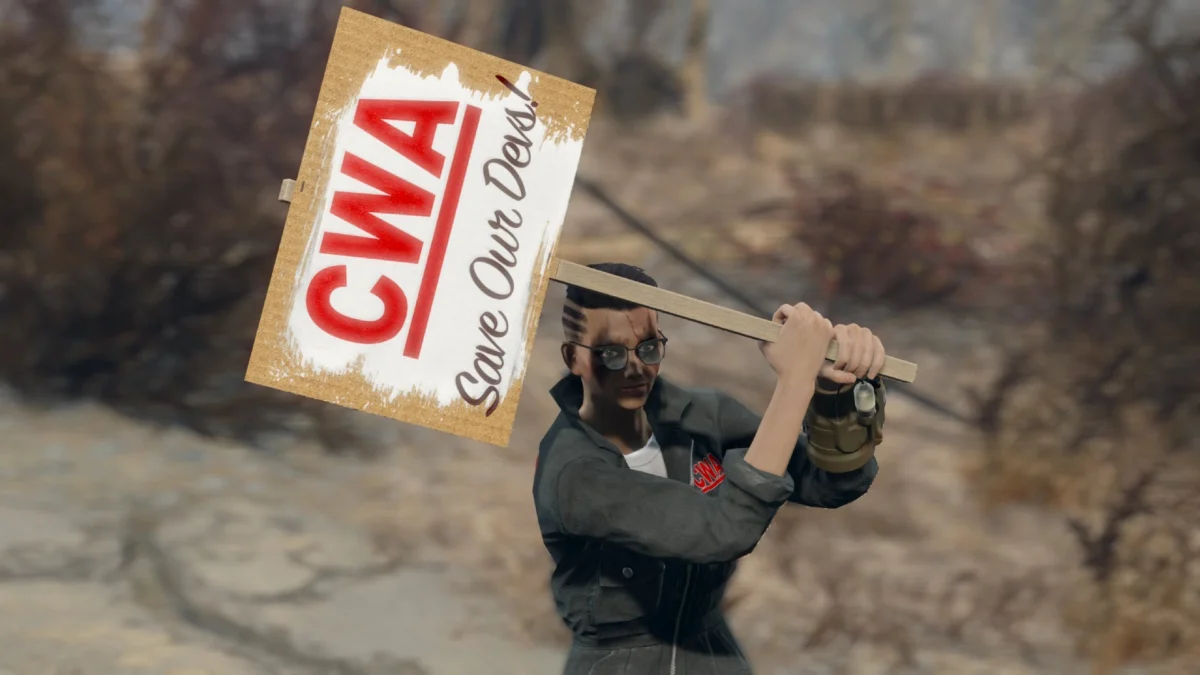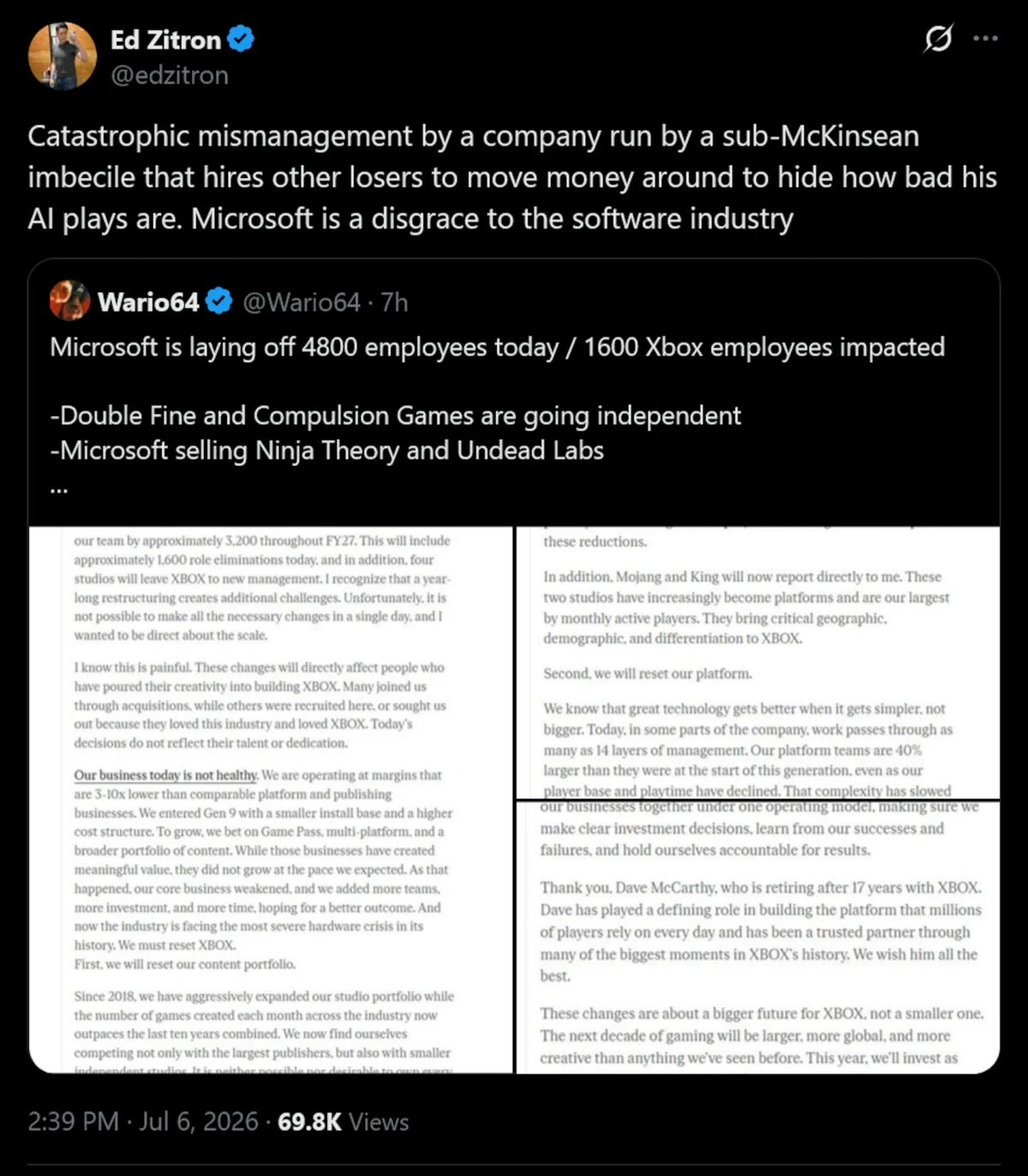
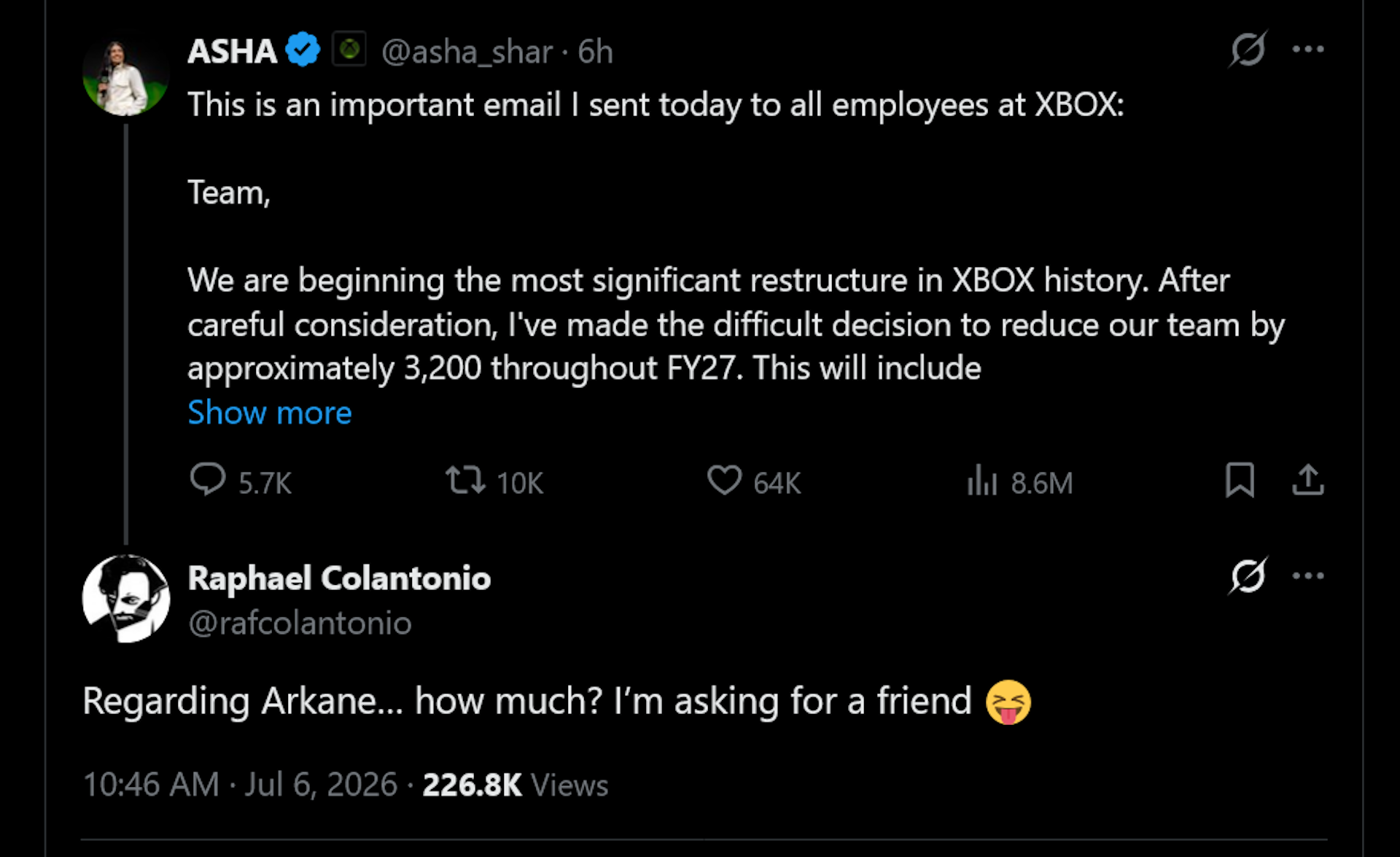
The video game industry is currently weathering a storm of unprecedented proportions. In what has been described by veteran developers as the most turbulent period in their quarter-century careers, Microsoft’s gaming division has announced a staggering reduction in force. The latest wave of mass layoffs at Xbox will see approximately 3,200 employees lose their jobs. This reduction is being rolled out in two phases: 1,600 positions are being eliminated immediately, with an additional 1,600 cuts scheduled to occur over the next fiscal year.
Beyond the sheer scale of the human toll, the move signals a radical restructuring of Microsoft’s internal development house. Four prominent game studios are being "turned loose"—effectively divested from the core Microsoft umbrella. Compulsion Games and Double Fine are set to transition into independent entities, while Ninja Theory and Undead Labs are being moved under new ownership structures.
For many, this news is not merely a financial adjustment; it is a reflection of a perceived disconnect between corporate leadership and the realities of game development. As the industry grapples with these shifts, the atmosphere within the gaming world is one of profound uncertainty, anger, and professional grief.
A Chronology of the Cuts
The announcement has sent shockwaves through the industry, but for those inside the buildings, the reality was far more visceral.

The layoffs arrived with a jarring lack of warning for many. Griffin DeClaire, a developer at Bethesda Game Studios, shared his experience on LinkedIn, noting that his termination came as a total shock—particularly because he had been recently informed that he was slated for a raise. His story is not an outlier. Across the board, employees from long-standing teams, including those at Obsidian Entertainment, found themselves suddenly out of work.
Initially, reports suggested that Obsidian might have been spared, but that hope was short-lived. Kate Dollarhyde, a narrative lead at the studio, confirmed on social media that the studio had "lost many excellent developers and wonderful people." Among those affected was Daniel Alpert, an art director who had been with Obsidian since 2005—just two years after the studio’s founding. Alpert’s departure serves as a grim marker of how deep the cuts go, reaching into the very foundational layers of these historic development teams.
The strategy of announcing layoffs that will span the next fiscal year has also drawn sharp criticism. Employees at Blizzard Entertainment, for instance, have been left in a state of purgatory, told that they must wait for "further communications" to understand if their specific roles will survive the next year. This, as many observers have noted, creates a toxic environment of "survivor’s guilt" and perpetual anxiety, where productivity is stifled by the looming threat of the next round of cuts.
The Industry’s "Turning Point"
The sentiment shared by industry veterans is that this is not a temporary dip in the business cycle, but a fundamental shift in how the industry operates.

"We are clearly at a turning point in the games industry," Daniel Alpert wrote following his departure. "These past months have been difficult for so many talented people, and unfortunately, it seems the challenges aren’t over yet."
This feeling is echoed by Scott Maclean, an Epic Games lead level designer with 25 years of experience. Maclean noted that he has never seen an era as volatile as the last four years. The traditional expectation that the market would eventually "normalize" or "balance out" is no longer the consensus. Instead, many fear that the industry is contracting permanently, losing a generation of institutional knowledge as senior developers are forced out of the sector.
The economic reality is equally stark. Mike Kern, who was laid off after nearly 14 years at ZeniMax Online Studios, pointed to the uncomfortable truth that the industry simply cannot reabsorb thousands of high-level developers in such a short window. The result is a massive, permanent brain drain that will likely affect the quality and scale of future titles.
Official Rhetoric vs. Ground-Level Reality
The disconnect between corporate messaging and the internal reality has become a focal point of public ire. During the Bloomberg Tech conference in San Francisco, leadership discussed a vision for Xbox that aimed to reach "more than a billion people each day."
Critics have labeled these goals as "delusional," noting that such figures are roughly 24 times the peak population of Steam. The absurdity of this goal—set against the backdrop of thousands of layoffs—has led to a sense of profound hopelessness.
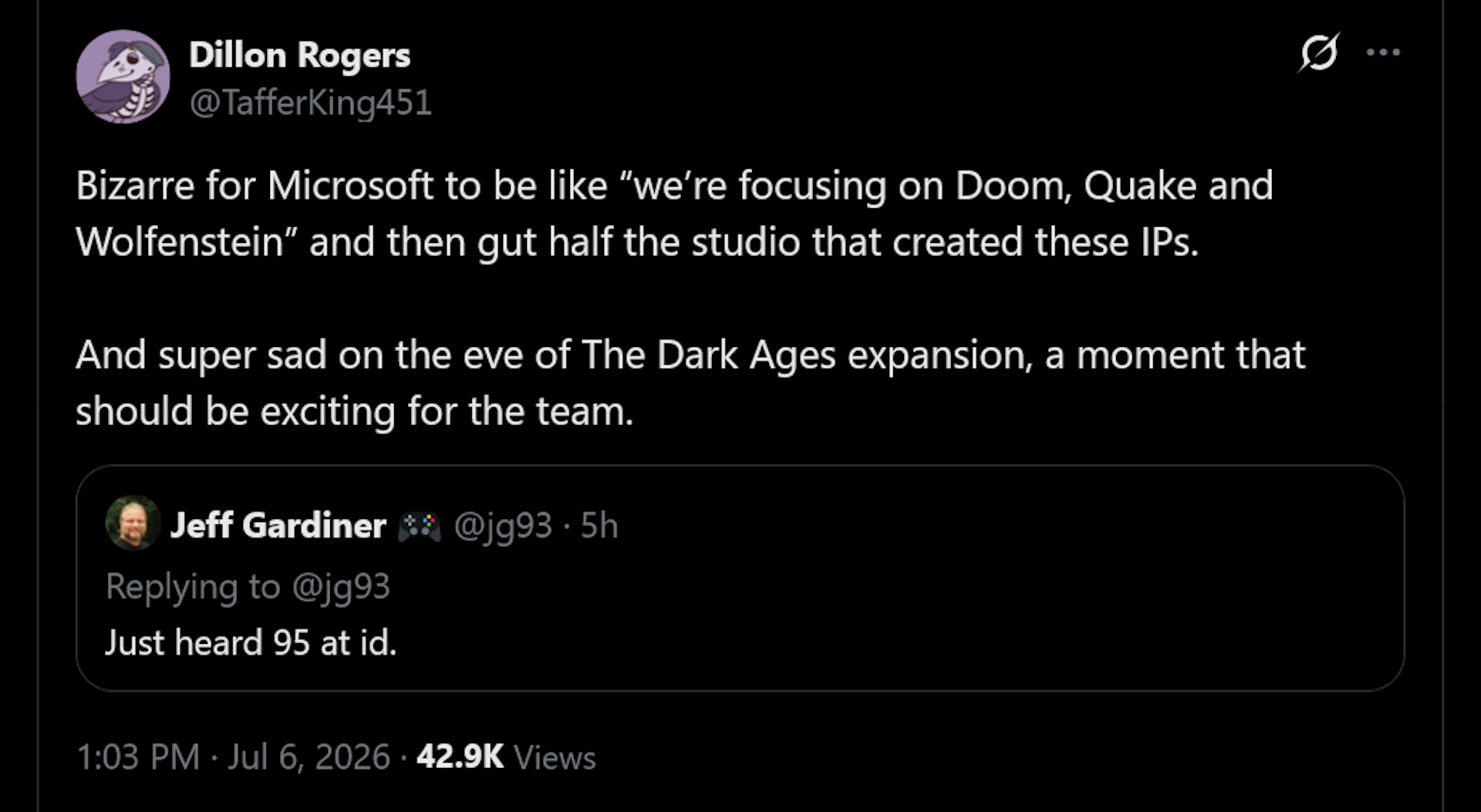
Dillon Rogers, developer of Gloomwood, highlighted the cognitive dissonance within Microsoft’s strategy: "It’s bizarre for Microsoft to be like ‘we’re focusing on Doom, Quake, and Wolfenstein‘ and then gut half the studio that created these IPs." The irony of cutting the teams responsible for these massive franchises while simultaneously claiming they are the "focus" of the future has not been lost on the developer community.
Furthermore, the industry is watching with confusion as Microsoft continues to pour billions into artificial intelligence, a pursuit that many industry analysts, such as Ed Zitron, have described as "catastrophic mismanagement."
The AI Pivot and Future Implications
A recurring theme in the discourse surrounding these layoffs is Microsoft’s aggressive pivot toward AI. While the company claims these layoffs are necessary to maintain a "healthy business," critics point to the massive capital expenditure on AI initiatives—such as the underperforming Copilot—as evidence of misplaced priorities.

"Microsoft is all in on AI," noted writer Robert Cargill. "These folks believe most of us will be out of work in the next five years, drawing from Universal Basic Income. What will we do with all that time? Xbox hopes we’ll spend our time and money with them. It’s dystopian thinking."
Even those directly involved in AI development are not immune. Kevin Flynn, a product manager who boasted about increasing AI adoption within his division, was among those laid off. This serves as a warning that no department, regardless of its alignment with corporate "future-proofing," is safe in the current climate.
Conclusion: A Search for a Better Way
The fallout from the 2024 Activision Blizzard acquisition continues to resonate, with each subsequent layoff cycle feeling more severe than the last. The industry has careened from declarations that their "roadmap has never looked stronger" to assertions that the business is "not healthy"—all within the span of a single year.
As developers, journalists, and fans continue to howl into the social media void, the core question remains: Is there a path forward that values the human element of game development, or are we witnessing the beginning of a long-term erosion of the industry?
For now, the thousands of professionals finding themselves in the job market are left to navigate the wreckage of a sector that seems to have lost its way. The "turning point" has arrived, and for those who have spent their lives building these worlds, the landscape ahead looks significantly colder. The challenge for the industry will be to reconcile its grand, billion-user aspirations with the reality that, without the developers to create the games, there will be no one left to play them.