

Whether you are embarking on a weekend getaway, a grueling expedition across rugged terrain, or simply navigating the daily commute to the gym, the humble duffel bag remains the undisputed workhorse of the travel world. Unlike rigid suitcases that dictate the geometry of your packing, a high-quality duffel offers a unique blend of flexibility, durability, and raw carrying capacity.
However, "the best" duffel is a subjective designation. It depends entirely on your lifestyle: do you need military-grade water resistance, sleek professional aesthetics, or modular compartments that keep your gear organized down to the last cable? After extensive real-world testing—loading them to the brim, subjecting them to travel rigors, and assessing their long-term durability—we have narrowed down the market to the top contenders for 2026.
Main Facts: The Top Contenders
The current market for travel gear is saturated, but a few brands consistently rise to the top through superior material science and ergonomic design. Here is a breakdown of our current top-tier recommendations:
1. The All-Rounder: Eastpak Duffel Pack S Tarp ($115)
For most travelers, the Eastpak Duffel Pack S Tarp represents the "Goldilocks" zone. It balances a rugged, weather-resistant exterior with an intuitive interior layout. It is versatile enough to transition from a weekend bag to a secondary carry-on without looking out of place in a business lounge or a campsite.
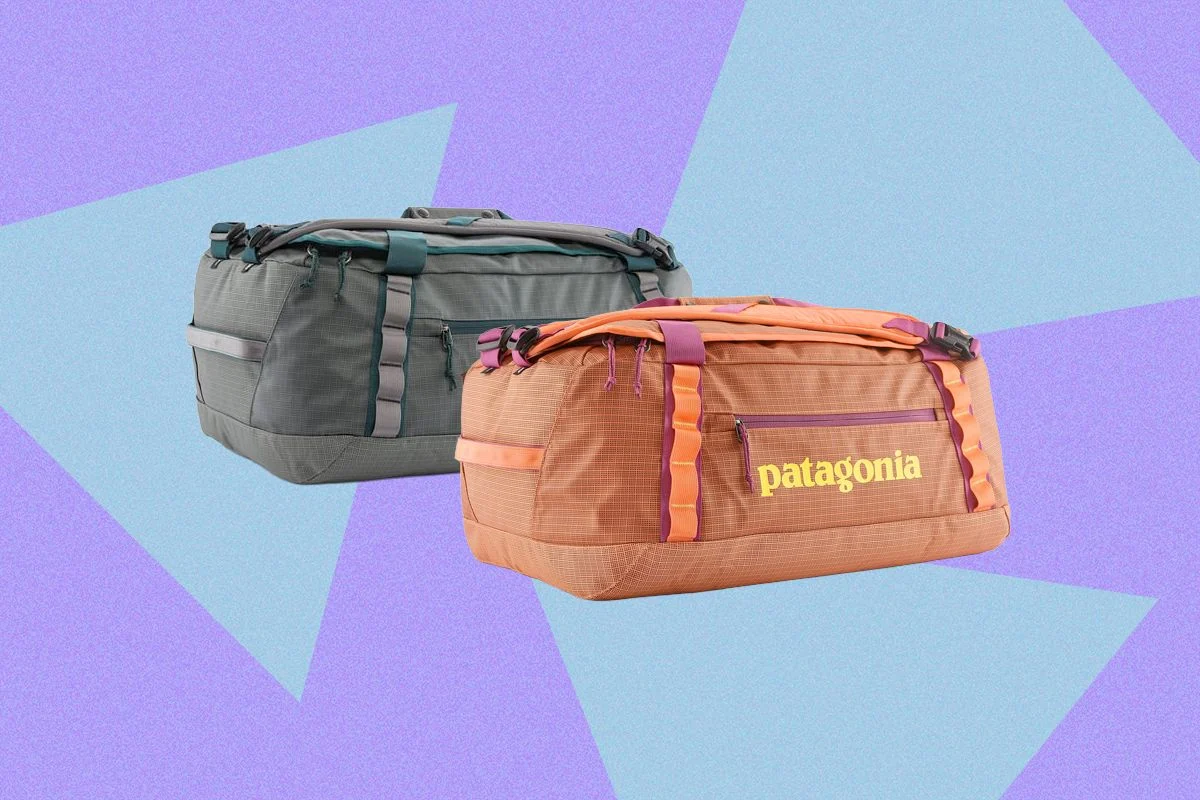
2. The Expedition Standard: Patagonia Black Hole Duffel (40L) ($165)
Beloved by outdoor enthusiasts and WIRED staffers alike, the Patagonia Black Hole is legendary for its durability. Constructed from high-tenacity, weather-resistant fabric, this bag is designed to take a beating. The 40L size is the sweet spot for carry-on compliance, making it the go-to for minimalist travelers who prioritize function over everything else.
3. The Modular Innovator: Rux Duffel Box (55L/75L)
If organization is your primary struggle, the Rux Duffel Box is a game-changer. It operates on a modular ecosystem, allowing you to partition your gear effectively. Currently, you can find significant value, with the 55L model marked down to $180 (from $225) and the 75L version at $216 (from $270). Their mesh packing systems ($126) complete the kit.
4. The Budget Performer: Etronik Gym Bag ($20–$37)
For those who need a reliable bag for the gym or short trips without breaking the bank, the Etronik Gym Bag offers incredible utility for its price point. It features essential compartments that many high-end bags omit, making it a pragmatic choice for the value-conscious consumer.

Chronology of Innovation: From Canvas to Technical Fabrics
The history of the duffel bag is one of rapid evolution. Originally crafted from heavy canvas in the Belgian town of Duffel (from which the bag takes its name), these sacks were designed for soldiers and sailors who needed to carry large amounts of gear without the weight of a wooden trunk.
- 1900s–1950s: The duffel remains largely a military-issued item. Durability was the only metric; aesthetics and ergonomics were nonexistent.
- 1970s–1990s: The rise of recreational travel and the "adventure" movement prompted brands like Patagonia and North Face to introduce technical fabrics. Nylon replaced canvas, and zippers became waterproof.
- 2010s: The "commuter revolution." As more people began traveling with laptops and specialized gear, duffel bags began incorporating internal sleeves, organizational pockets, and refined designs that bridged the gap between outdoorsy and professional.
- 2020s–Present: We are currently in the era of "Hyper-Modularity." Brands like Rux are reimagining the duffel not as a static sack, but as a dynamic storage system that can be expanded, compressed, and partitioned to suit specific packing needs.
Supporting Data: How We Test for Performance
A duffel bag is only as good as its weakest link—usually a zipper or a shoulder strap. To ensure our recommendations are robust, we put our test subjects through a rigorous, multi-stage testing process.
The "Stress-Load" Test
We fill every bag to its maximum stated capacity with a mix of high-density items (like hardback books) and low-density items (like clothing). We then attempt to zip them shut under pressure. A failure in the zipper track or a seam blowout at this stage disqualifies a bag from our top recommendations.
The "Commuter Agility" Test
We take these bags through public transit systems, busy airports, and crowded train stations. We evaluate how they handle on the shoulder, the comfort of the padding, and—crucially—how they interact with other luggage. Does the bag have a pass-through sleeve for a rolling suitcase? Does it slide off the shoulder while walking?
The "Discus" Durability Check
We toss them into the back of trucks, squeeze them into overhead bins, and, yes, we occasionally swing them by their handles to test the integrity of the stitching and the resilience of the hardware. We look for signs of premature abrasion, hardware fatigue, or fabric thinning.
Official Perspectives: The Utility of Carry-On Compliance
One of the most frequent questions we receive is: "Can I take this on the plane?"
The answer is rarely a simple "yes" or "no." Airlines vary wildly in their carry-on policies. Most domestic carriers allow a maximum dimension of 22 x 14 x 9 inches. A duffel bag is inherently flexible, which is a double-edged sword:

- The Benefit: You can compress a soft-sided duffel to fit into a tight bin, whereas a hard-shell suitcase will simply refuse to fit.
- The Risk: If you overpack a duffel until it resembles a giant sausage, the gate agent may force you to check it, regardless of its nominal size.
Expert Tip: Always measure your bag when it is fully packed. If it exceeds the dimensions, look for external compression straps—like those on the Patagonia Black Hole—which can help you cinch down the volume to meet airline requirements.
Implications: The Future of Travel Luggage
As we look toward the remainder of 2026 and beyond, the trend in luggage is moving away from "one-size-fits-all" and toward highly specialized, modular systems. Consumers are becoming more conscious of the environmental impact of their gear, favoring brands that offer lifetime warranties and repair services over those that push disposable, low-cost options.
Sustainability and Durability
Brands that offer repairability—such as Patagonia’s long-standing repair program—are seeing increased loyalty. When you invest $150+ in a duffel, you are essentially purchasing a long-term asset. The shift toward recycled materials (like the Tarp fabric used in the Eastpak series) indicates that performance no longer has to come at the expense of the environment.
The Rise of Smart Organization
The inclusion of modular packing cubes, integrated laptop sleeves, and hidden "passport pockets" is becoming the new standard. The Rux system, for example, signals a move toward bags that act as mobile storage units, allowing users to keep their gear organized whether they are at a hotel, a campsite, or a gym locker.
Conclusion: Choosing Your Path
The perfect duffel is the one that disappears. It should hold your gear securely, withstand the rigors of your specific environment, and not become an obstacle to your travel experience.
- If you are a frequent flyer who needs something reliable and professional, the Eastpak Duffel Pack S Tarp is your best bet.
- If you are a hardcore adventurer heading into the backcountry, stick with the Patagonia Black Hole.
- If you are a gear-head who loves to customize your loadout, the Rux Duffel Box offers unparalleled flexibility.
- If you are simply looking for a reliable gym companion on a budget, the Etronik will serve you well.
Regardless of your choice, remember that the best way to extend the life of your bag is to avoid overstuffing, clean the exterior regularly, and store it in a cool, dry place when not in use. Happy travels!
Updated May 2026: I’ve added a new pick from Baboon to the Moon to our ongoing testing cycle and checked all product links for current accuracy and availability. Stay tuned for our upcoming deep dives on gear from Wolfpak, Yeti, and The North Face.










No comments yet. Be the first to join the conversation!