

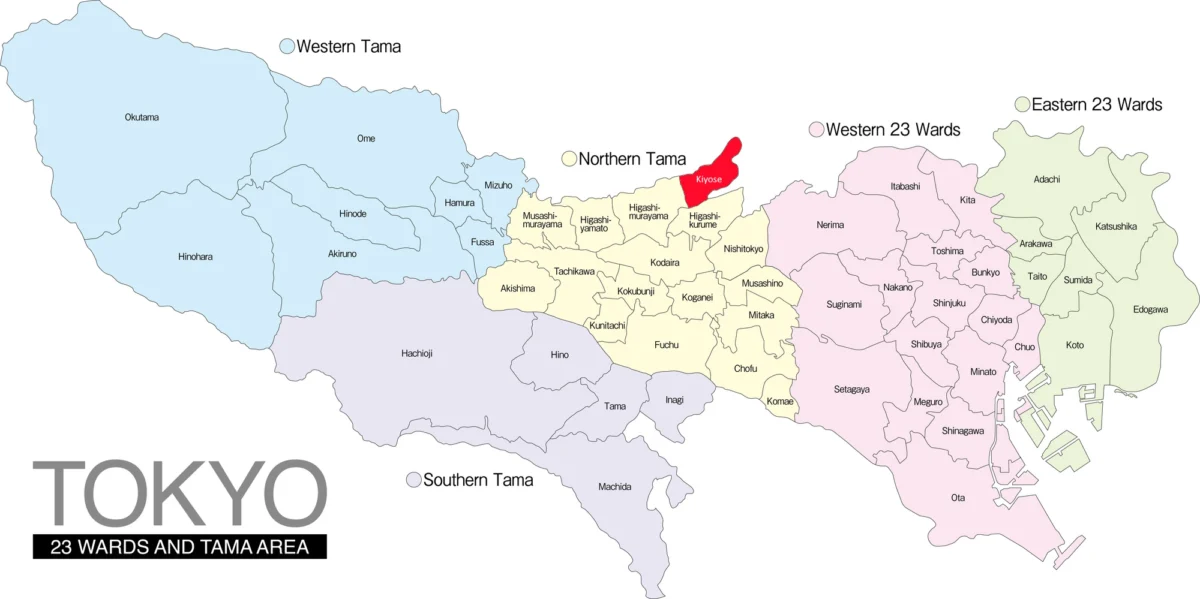
The pervasive stereotype of Japan as a monolith of conservative politics often obscures a more complex, nuanced reality. While the Liberal Democratic Party (LDP) has maintained a near-hegemonic grip on national governance for decades, the Japanese political landscape is peppered with vibrant, albeit localized, leftist movements. From the radical student protests of the 1960s to contemporary feminist advocacy, the spirit of dissent remains alive. Nowhere is this more apparent—or more surprising to international observers—than in the recent municipal election in Kiyose, a city in the northern reaches of the Tokyo Metropolis.
In a stunning political upset, 50-year-old independent Harada Hiromi was elected mayor of the city of 77,000, backed by the Japanese Communist Party (JCP). The victory was not merely a triumph of party machinery; it was a grassroots rebellion sparked by a singular, emotive issue: the municipal government’s proposal to shutter four of the city’s six public libraries.
The Japanese Communist Party: A Study in Resilience
To understand the significance of the Kiyose election, one must first understand the JCP itself. Often misunderstood by Western observers, the JCP is a legitimate, democratically elected force. With approximately 250,000 dues-paying members and over 2,180 elected officials nationwide, it stands as the largest democratically elected Communist party in the G7.
The party has undergone significant internal evolution. For 24 years, from 2000 to 2024, the party was under the steadfast, if increasingly criticized, leadership of Shii Kazuo. Facing internal pressure to modernize and make room for fresh perspectives, Shii stepped down, clearing the way for Tamura Tomoko—the party’s first-ever female leader. This shift is reflective of a broader, long-term commitment to gender parity; currently, 43% of the party’s elected officials are women, the highest ratio of any political party in Japan.
Despite these strides, the JCP faces steep structural challenges. Nationally, its power is marginal. It currently holds only four seats in the 465-seat Lower House and 111 seats in the Upper House. Following a disappointing showing in the February 2026 general election, where the party lost four Lower House seats, the JCP has redoubled its efforts to secure influence at the local level. Before the Kiyose result, the party held only three mayoralties across the entire country. Harada’s victory marks a critical "fourth notch" in its belt, proving that even in a political climate dominated by establishment conservatism, local issues can bypass partisan tribalism.
Chronology of a Crisis: The Library Closure Controversy
The road to Harada’s victory began not in a smoke-filled party room, but in the sterile, administrative offices of the former city government. Under the administration of then-mayor Shibuya Keishi, the city moved to implement a drastic austerity measure: the closure of two-thirds of the municipal library system.
The rationale was ostensibly financial—a common refrain in local Japanese governance as the population ages and the tax base shrinks. However, the proposal triggered an immediate and visceral reaction from the citizens of Kiyose.
- Early 2025: The Shibuya administration announces plans to "streamline" public services, specifically targeting four of the city’s six libraries for closure, citing budget constraints and declining foot traffic in certain sectors.
- Mid-2025: Public outcry begins to coalesce. Local reading groups, parent-teacher associations, and senior citizen organizations form a coalition to lobby the city council. The issue gains traction on social media, framing the libraries as essential "third spaces."
- Late 2025: The library issue dominates city council sessions. Residents begin to view the closure not as a fiscal necessity, but as an attack on the city’s social fabric.
- Early 2026: As the mayoral election approaches, the JCP-backed candidate, Harada Hiromi, adopts the "Save Our Libraries" movement as a central pillar of her campaign.
- May 2026: Election Day. Voters who had historically supported conservative candidates or remained indifferent to local politics turn out in droves, casting ballots for Harada as a referendum on the library closures.
The Socio-Economic Importance of Libraries
The fervor in Kiyose is part of a broader realization across Japan regarding the role of public infrastructure in an aging society. While the global narrative focuses on the decline of reading, in Japan, libraries have evolved into critical hubs of social welfare.
Research from Kyoto University has quantified what local residents intuitively understand: libraries are not just repositories for books; they are health interventions. A comprehensive study found that the presence of an additional library in a city reduced functional impairment among the elderly by nearly 48%. In a country where loneliness and social isolation are identified as major public health crises, the library acts as a vital community anchor, providing physical space for seniors to interact, remain cognitively active, and maintain a sense of purpose.
![[Insider] How a “Library War” Helped Japan’s Communists Elect a New Mayor](https://media.unseen-japan.com/wp-content/uploads/2026/05/Communist-affiliated-mayor-wins-in-Kiyose.jpg)
When the Shibuya administration proposed closing the libraries, they were not merely removing books; they were dismantling a core component of the city’s aging-in-place infrastructure. This miscalculation proved fatal to their political survival.
Official Responses and the "Protest Vote"
The administration’s defense of the closures relied heavily on traditional technocratic language. Officials argued that the "cost-per-visit" metrics were unsustainable and that the space could be better repurposed for digital services. However, this cold, analytical approach failed to resonate with a citizenry that valued the intangible benefits of community access.
Harada Hiromi’s campaign successfully framed the debate as a choice between "bureaucratic efficiency" and "citizen-centric governance." By aligning herself with the library advocates, she moved beyond the traditional JCP voter base. Exit polls and post-election analysis suggest that a significant number of "unaffiliated" voters—those who usually vote for moderate or conservative candidates—voted for Harada specifically because she was the only candidate willing to champion the preservation of the library system.
Implications for Future Japanese Politics
The Kiyose election serves as a case study in the power of "hyper-localism." As the LDP continues to struggle with national-level scandals and a perceived disconnect from the lived experiences of the average citizen, municipal elections are becoming the primary battleground for real-world policy outcomes.
1. The Power of Single-Issue Mobilization
The Kiyose result proves that when a local government threatens a beloved public utility, partisan affiliations often dissolve. The "Save the Library" movement provides a blueprint for activists: by identifying a core piece of social infrastructure that the government intends to cut, they can build a coalition that spans the traditional political spectrum.
2. The JCP’s Strategic Pivot
The JCP’s endorsement of Harada demonstrates a shift in their local strategy. Rather than running on purely ideological grounds, the party is increasingly willing to support independent, community-focused candidates who can bridge the gap between their platform and the broader public’s concerns. This pragmatism may be the key to the party’s survival and future growth in a landscape that has long been hostile to communist rhetoric.
3. The Aging Demographic and Infrastructure
Kiyose is not unique. Across Japan, cities are facing the "2025 problem" (and beyond), as the post-war baby boom generation reaches advanced old age. Municipalities will continue to face immense pressure to cut services. The success of the Kiyose resistance suggests that as more cities attempt to consolidate or cut public services, they may face similar, localized uprisings.
Conclusion
The election of Harada Hiromi in Kiyose is a potent reminder that democracy in Japan is not merely a top-down affair directed by the Diet in Tokyo. It is a living, breathing process that can be fundamentally altered by the concerns of a single neighborhood. By prioritizing the preservation of their libraries, the people of Kiyose have sent a message to the national establishment: infrastructure that supports the human experience is not negotiable. For the Japanese Communist Party, the victory offers a potential path forward—a shift from being a marginalized opposition party to becoming the champion of the local, the essential, and the communal.












No comments yet. Be the first to join the conversation!