
 Raul Delapena Setiawan
The Star Trek franchise has long stood as a beacon of intellectual curiosity in science fiction. Since its inception in 1966, Gene Roddenberry’s vision has prioritized diplomacy, scientific inquiry, and the relentless pursuit of knowledge. While the franchise is famous for its phaser battles and starship dogfights, the true engine of the United Federation of Planets is the sheer, uncompromising intellect of its greatest minds.
To determine the hierarchy of intelligence within the Star Trek canon, we must look beyond mere academic achievement. We are measuring "mental acumen"—a synthesis of computational speed, tactical brilliance, emotional intelligence, and, in some cases, a transcendent cosmic awareness that defies standard biological limitations.
The Chronology of Brilliance: From Genetic Engineering to Omnipotence
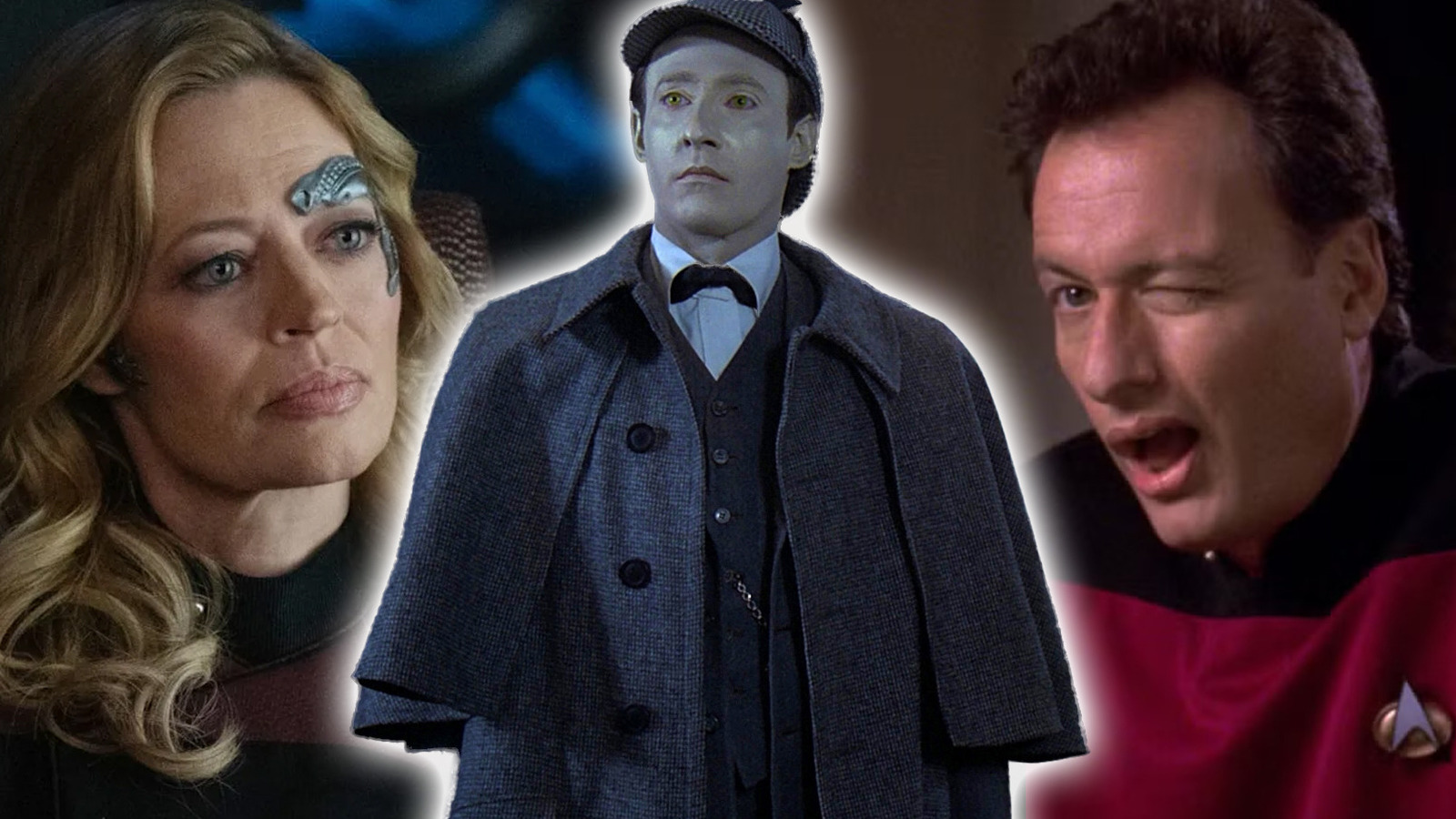
The evolution of intelligence in Star Trek tracks alongside the technological advancement of the universe itself. In the early days of The Original Series, intelligence was defined by human (or Vulcan) logic and the mastery of the physical sciences. By the time of The Next Generation and Deep Space Nine, the discourse shifted toward the ethics of synthetic life and illegal genetic augmentation. Finally, with the introduction of entities like Q and the Borg, the franchise forced viewers to confront the reality that true, infinite intelligence exists far beyond the limitations of carbon-based brains.
The Intellectual Hierarchy: A Top-10 Ranking
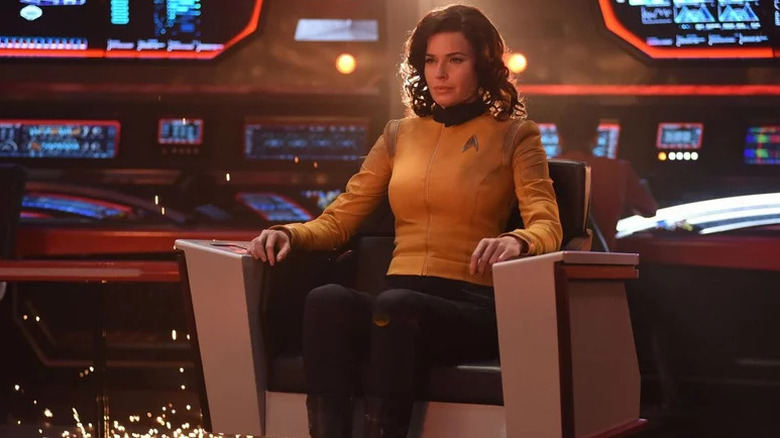
10. Una Chin-Riley (Number One)
As the First Officer of the USS Enterprise under Captain Christopher Pike, Una Chin-Riley represents the peak of Starfleet discipline. As an Illyrian, her heritage—which includes a history of genetic self-modification—has granted her cognitive processing speeds that exceed those of standard humans. Star Trek: Strange New Worlds illustrates that Number One is not merely a tactical asset; she possesses a clinical, calculating mind that rivals Spock’s, balanced by a profound emotional intelligence that allows her to lead her crew with empathy and precision.
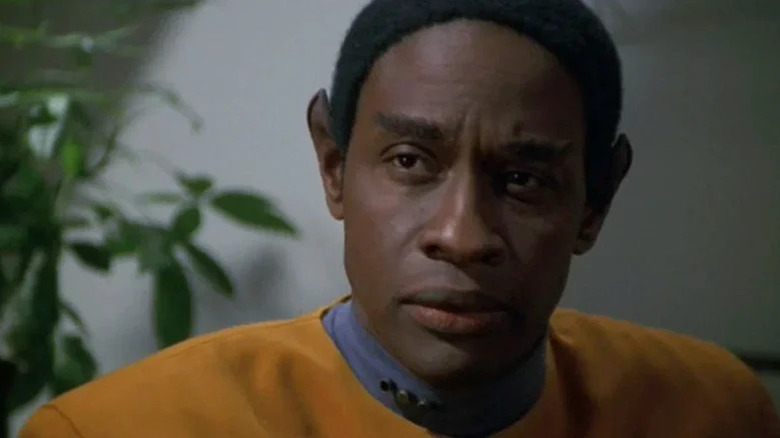
9. Tuvok
The Vulcan Chief of Security on USS Voyager serves as a masterclass in tactical intelligence. Beyond his mastery of Vulcan logic and science, Tuvok’s career as a deep-cover operative within the Maquis demonstrates a level of cunning rarely seen in Starfleet officers. His ability to navigate high-stress environments while maintaining a stoic, analytical front makes him a formidable strategist. Furthermore, his telepathic expertise and his role as a mentor in psionic arts solidify his position as one of the most intellectually well-rounded officers in the fleet.
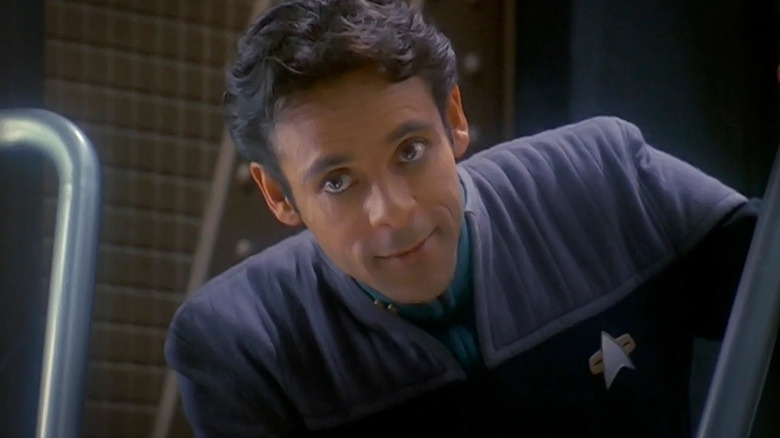
8. Julian Bashir
Dr. Julian Bashir’s intelligence was initially hidden behind the facade of a talented but standard Starfleet physician. However, the revelation of his illegal childhood genetic enhancements changed the perception of his capabilities entirely. His intellect is so vast and so precise that Starfleet’s clandestine organization, Section 31, identified him as a high-value asset. Bashir’s ability to "play dumb" to fit into social norms for years is a testament to his high-level executive function and self-control.
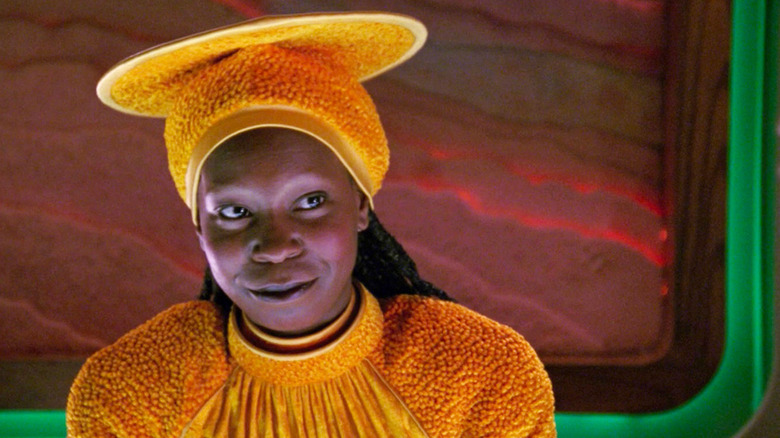
7. Guinan
Guinan, the El-Aurian bartender, occupies a unique space in the franchise. Her intelligence is not defined by math or science, but by a "cosmic awareness" that allows her to perceive temporal anomalies and shifts in reality that others miss. Having lived for centuries, her knowledge base is vast, and her ability to stand toe-to-toe with an omnipotent being like Q suggests a depth of wisdom and insight that transcends traditional measures of IQ.
6. Seven of Nine
As a former member of the Borg Collective, Seven of Nine brings the raw computational power of the Hive Mind to the Voyager crew. Even after her disconnection, she retained the ability to interface with advanced technologies that remain a mystery to even the brightest minds of the Federation. Her rapid development of weaponry to combat the hyper-advanced Species 8472 proved that her intellect is an essential asset in existential survival scenarios.
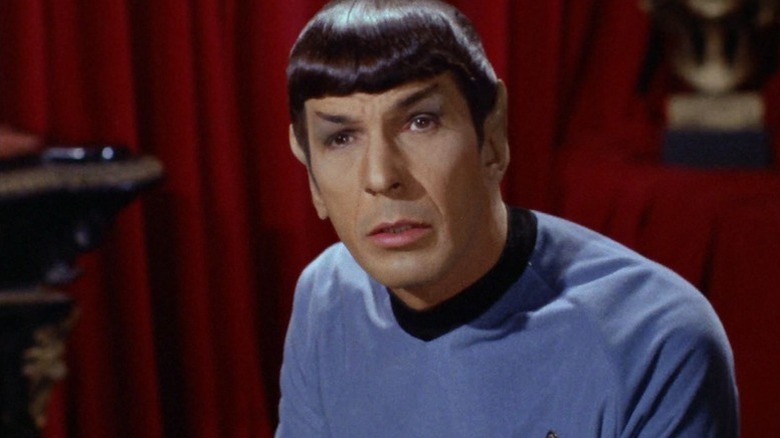
5. Spock
The benchmark by which all others are measured. Spock’s hybrid Vulcan-human nature allows him to synthesize the cold, hard logic of the Vulcan science academies with the intuitive, creative sparks of human ingenuity. Whether playing chess against a ship’s computer or using basic chemistry to defeat a Gorn commander, Spock has spent decades proving that his mind is the most consistent weapon in the Federation’s arsenal.
4. The Borg Queen
The Borg Queen represents the collective consciousness of a civilization that has assimilated thousands of cultures. She is not merely an individual; she is the curator of the Borg’s entire history of knowledge. Her awareness of multiple timelines and her ability to manipulate large-scale galactic events make her an intellectual threat of the highest order. She possesses the "big picture" view that few others can comprehend.
3. Lore
As the older, "flawed" brother of Data, Lore possesses the same high-level positronic architecture but with a lack of ethical inhibitors. His intelligence is defined by his malevolence and his capacity for manipulation. Lore’s ability to organize Borg splinter factions and effectively wage war against the Federation proves that his synthetic mind is capable of creative, strategic, and often devastatingly deceptive thought processes.
2. Data
Data edges out his brother through his evolution. With an operating speed of 60 trillion operations per second, his ability to calculate variables in real-time is unparalleled. However, it is his growth—the acquisition of the emotion chip and his eventual understanding of humanity—that makes his intelligence "complete." Data has consistently outmaneuvered the Borg Queen and his own brother, proving that his analytical prowess, when combined with newfound human insight, is the pinnacle of synthetic achievement.
1. Q
Q is the undisputed master of the intellectual landscape. As a member of the Q Continuum, he is effectively omniscient and omnipresent. His intelligence is not limited by time, space, or physics. While others on this list have to learn things, Q knows everything. His interest in humanity is a reflection of his own boredom with the infinite, and his ability to manipulate the timeline for his own amusement serves as a chilling reminder that in the Star Trek universe, the smartest character is the one who effectively functions as a god.
Supporting Data: The Metrics of Genius
To qualify for this ranking, characters were measured against three core criteria:

- Computational Throughput: The speed and accuracy of information processing. This favors synthetic entities like Data and Lore, as well as the Borg Queen.
- Strategic Acumen: The ability to predict outcomes in complex, adversarial situations. Characters like Spock and Tuvok excel here, relying on probability and tactical logic.
- Adaptive Intelligence: The capacity to evolve, learn, and apply knowledge in novel environments. This is the primary driver for characters like Julian Bashir and Seven of Nine.
| Character | Primary Strength | Intellectual Tier |
|---|---|---|
| Q | Omniscience | Transcendent |
| Data | Computational Speed | Synthetic Superior |
| Borg Queen | Assimilated Knowledge | Collective Superior |
| Spock | Logical Synthesis | High |
Official Perspectives: The Philosophy of Intelligence
The creators of Star Trek have consistently argued that intelligence without morality is a danger. The writers’ room often uses characters like Lore or the Borg Queen to illustrate the "Technological Singularity"—the point at which machine intelligence surpasses human control.
"The tragedy of these characters," noted one franchise writer in a retrospective panel, "is not that they aren’t smart enough. It’s that they often lack the humanity to understand why they are doing what they are doing. Data is the hero of the franchise because he is the only one who learned to temper his genius with a soul."
Implications for the Future of the Federation
The rankings above highlight a recurring theme in the franchise: the constant tension between biological limitation and artificial potential. As the Federation moves into newer eras of technology, the reliance on characters like Seven of Nine and the memory engrams of Data suggests that the future of Starfleet lies in the merging of traditional biological ingenuity with synthetic precision.
Furthermore, the existence of entities like the Q Continuum serves as a "ceiling" for the franchise. It reminds us that no matter how advanced the Federation becomes, there are always mysteries in the universe that defy logic. The ultimate lesson of these brilliant characters is not necessarily the information they possess, but the humility they show when faced with the infinite unknown of the final frontier.

Whether it is Spock solving a logic puzzle or Q testing the mettle of a captain, the intelligence of these characters remains the true "warp drive" of the Star Trek legacy—propelling the story forward and challenging the audience to keep pace with the stars.


 Pevita Pearce
 Asep Darmawan




