


In the rapidly evolving landscape of consumer electronics, few product lines have left as indelible a mark on the creative industry as Panasonic’s Lumix series. As Panasonic marks its 25th anniversary of manufacturing cameras, it is worth looking back at the device that fundamentally altered the trajectory of photography: the Lumix G1. Released 18 years ago, the G1 was not merely another camera; it was the world’s first mirrorless interchangeable lens camera (MILC), a device that effectively sounded the death knell for the bulky DSLR and paved the way for the high-performance, compact tools we rely on today.
For those who have followed the industry, the G1 represents a "year zero" moment. To celebrate this quarter-century milestone, I recently acquired a vintage Lumix G1 to test how the pioneer of the mirrorless era holds up in our modern, AI-driven world.
A Legacy of Innovation: The Birth of the Mirrorless Era
Before 2008, the professional and enthusiast photography markets were binary: you either opted for the massive, mirror-box-heavy DSLRs that offered high performance, or you settled for compact point-and-shoots that were convenient but severely limited in quality. Panasonic, in collaboration with Olympus, shattered this paradigm by introducing the Micro Four Thirds (MFT) system.

By removing the reflex mirror and the optical viewfinder assembly, Panasonic engineers managed to significantly reduce the flange distance and the physical size of the camera body. The Lumix G1 was the manifestation of this concept. It retained the ergonomic benefits of a traditional DSLR—including a deep grip and a dedicated electronic viewfinder (EVF)—but packaged them into a frame that felt remarkably agile.
When it launched, the G1 was a radical departure from the norm. It wasn’t just a technical experiment; it was a consumer-ready product that promised, and largely delivered, a portable alternative to the status quo.
The Search for a Piece of History: A Vintage Bargain
In the spirit of nostalgia, I set out to find a pristine example of the G1. My initial plan was to hunt for the very first Lumix camera ever made—the DMC-LC5 compact—but after failing to find a viable unit, I pivoted to the G1.

The search proved surprisingly fruitful. In the secondary market, one can acquire a Lumix G1 for as little as £40–£50 ($50–$65), with kit-lens bundles rarely exceeding £100 ($130). For a piece of history that predates TechRadar itself, the price of entry is staggeringly low. I opted for a "well-loved" unit that came with its original packaging, a physical manual, and the classic 14-45mm kit lens.
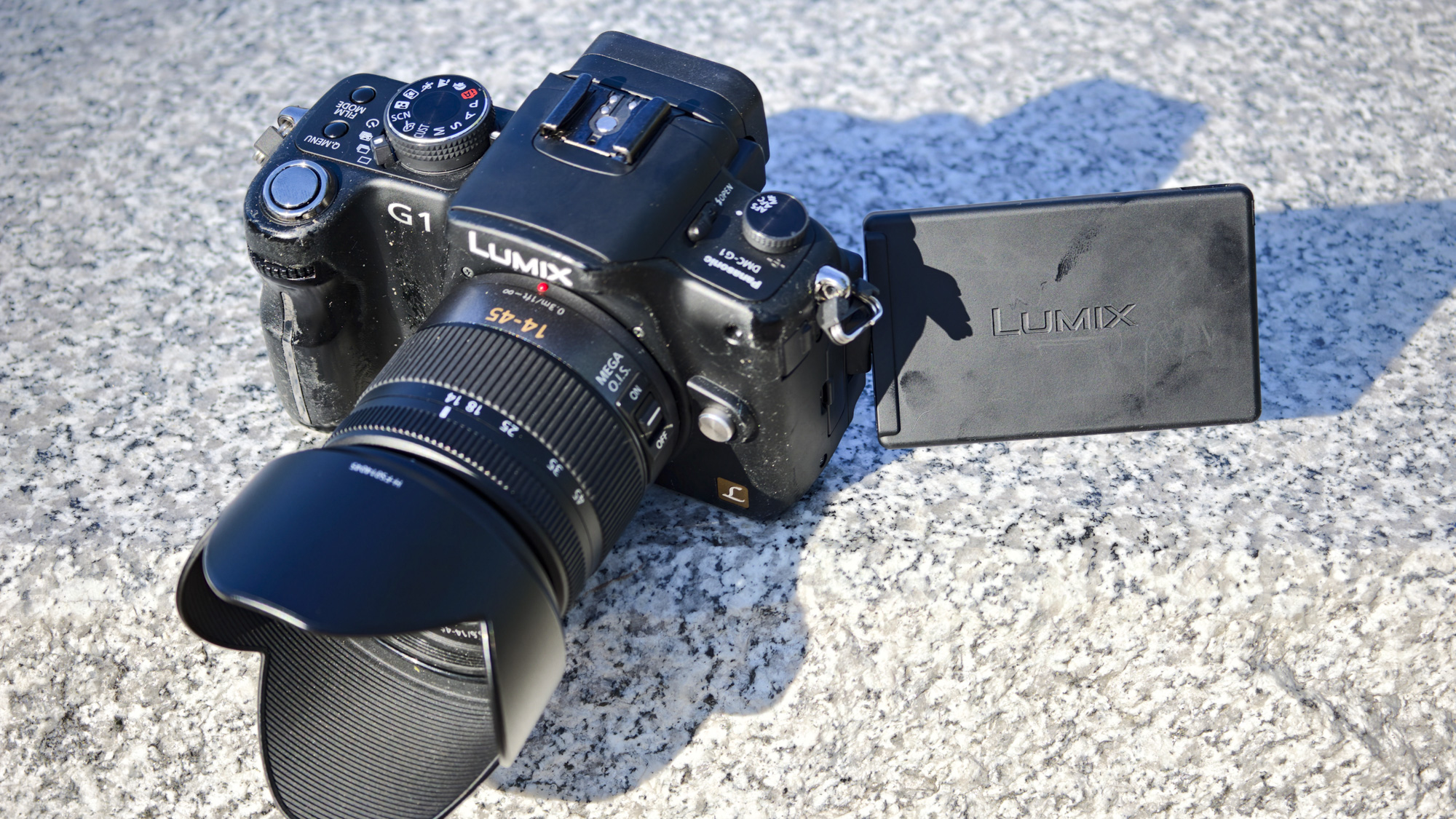
Unboxing the camera felt like stepping into a time capsule. It arrived with a dedicated plug-in battery charger—a stark contrast to the USB-C charging standards of 2026. Setting the date to 2008 served as a jarring reminder of how far the industry has sprinted in under two decades. While the rubberized grips on the body had begun to succumb to the "sticky syndrome" common in aging electronics, the mechanical heart of the machine remained remarkably robust.
Technical Performance: How It Stacks Up Today
The Shooting Experience
Holding the G1, one is immediately struck by the familiarity of the design. Camera ergonomics have not shifted as drastically as one might expect. The deep, sculpted grip, the button placement, and the EVF placement all feel remarkably current. However, there are nuances that highlight its age. The menu system is a minimalist, white-background affair that lacks the granular customization options found in the modern Lumix GH7 or G9 II.

Navigating settings—specifically exposure compensation—requires a multi-step button dance that feels tedious compared to modern touch-screen interfaces. The vari-angle screen, while a revolutionary inclusion for its time, is not touch-sensitive, forcing the user to rely entirely on the physical D-pad.
Autofocus and Sensor Dynamics
The G1 is built around a 12MP Live MOS Micro Four Thirds sensor. While 12MP might seem meager in an era of 60MP full-frame sensors, it remains more than sufficient for social media, standard web publication, and even small prints.
Perhaps the most surprising aspect of the G1 is its autofocus. Powered by contrast-detection, the AF system remains impressively snappy in daylight. It even includes a basic human subject-detection mode. While it lacks the complex AI-driven pose recognition and predictive tracking of modern mirrorless giants, the fundamental foundation for "smart" autofocus was already present 18 years ago. The camera tracks subjects with surprising reliability for a device of its vintage.
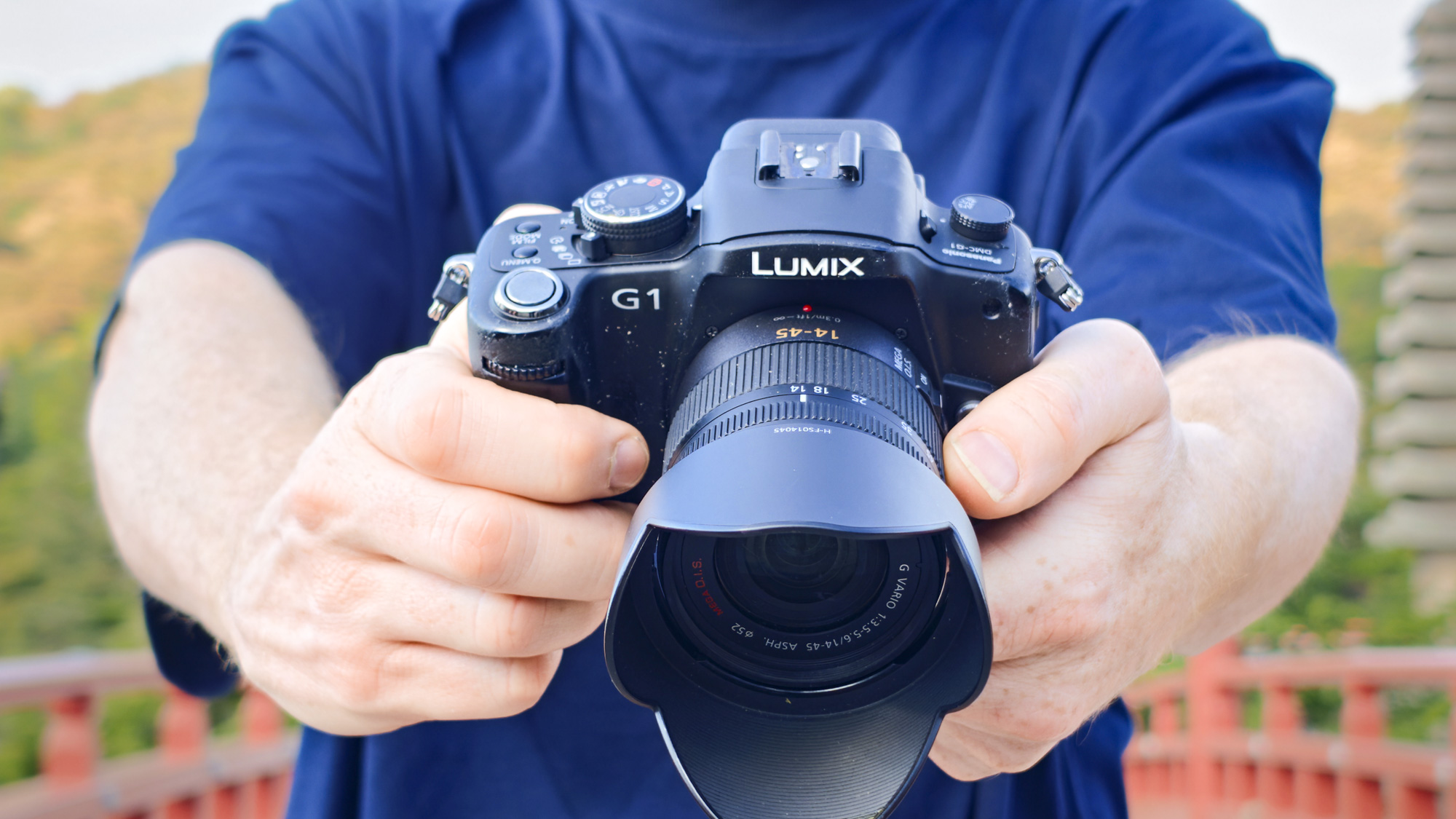
The Achilles’ heel, however, is low-light performance. With an ISO range that tops out at a modest 3200, the G1 struggles in dark environments. Digital noise is significant by today’s standards, and the dynamic range is far more limited than what modern MFT sensors produce.
The Micro Four Thirds Ecosystem: A Testament to Versatility
One of the greatest strengths of the Lumix G1—and the reason the system survived so long—is the open nature of the Micro Four Thirds mount. During my testing, I paired the G1 with an Olympus (now OM System) 45mm f/1.8 lens. Despite the brand mismatch, the lens performed admirably, providing a beautiful focal length for portraits that the standard kit lens could never match.
This cross-brand compatibility was the "secret sauce" of the MFT system. It allowed users to build a kit over time without being locked into a single manufacturer’s ecosystem. While modern lens communication protocols are far more advanced, the G1 proves that the spirit of the MFT standard was always focused on versatility.

Implications for the Future of Photography
The Lumix G1 served as the bridge between the analog past and the computational future. It taught the industry that the "mirror" was not a prerequisite for quality. By moving to an electronic viewfinder and a smaller sensor format, Panasonic forced the entire industry—including giants like Canon and Nikon—to eventually abandon the mechanical mirror entirely.
The G1 also underscores the difference between "technical perfection" and "creative soul." Modern cameras, like the Lumix G9 II, are marvels of computational photography, offering high-res modes, AI-enhanced stabilization, and video specs that can rival Hollywood production gear. Yet, there is a tangible joy in using the G1. It is a simpler, less cluttered tool. It forces the photographer to think more about the shot and rely less on the camera’s computer to fix mistakes.
Official Perspectives and Industry Impact
Panasonic’s longevity in the camera market is a testament to its willingness to experiment. When the G1 launched, critics were skeptical about the longevity of the MFT format. Today, that format has not only survived but has become the gold standard for travel, documentary, and wildlife photography due to its unparalleled portability-to-quality ratio.
Industry analysts note that the G1 essentially created the "vlog" and "creator" market before the terms even existed. By making a camera that was small enough to carry anywhere but powerful enough to provide creative control, Panasonic unintentionally predicted the explosion of modern content creation.
Conclusion: Is the G1 Worth Using in 2026?
For the professional, the Lumix G1 is a relic. It lacks the speed, low-light capability, and connectivity required for high-pressure commercial work. However, for the enthusiast, the student, or the hobbyist looking to strip back their workflow to the essentials, the G1 is an absolute treasure.
It is a reminder that photography is, and always has been, about the person behind the lens. The G1 captures images with a distinct, "vintage" digital quality that modern cameras often try to emulate through filters. It is a rugged, well-designed piece of history that costs less than a decent dinner.

As we celebrate 25 years of Lumix, the G1 stands not as a forgotten prototype, but as the ancestor of every mirrorless camera in your bag today. It was the "first" in the truest sense—it showed us a new way to see the world, and for that, it deserves a spot in the history books of modern technology. Whether you are a long-time Lumix loyalist or a newcomer to the craft, picking up a G1 is an experience that provides a profound appreciation for how far we’ve come—and a reminder that sometimes, less really is more.












No comments yet. Be the first to join the conversation!