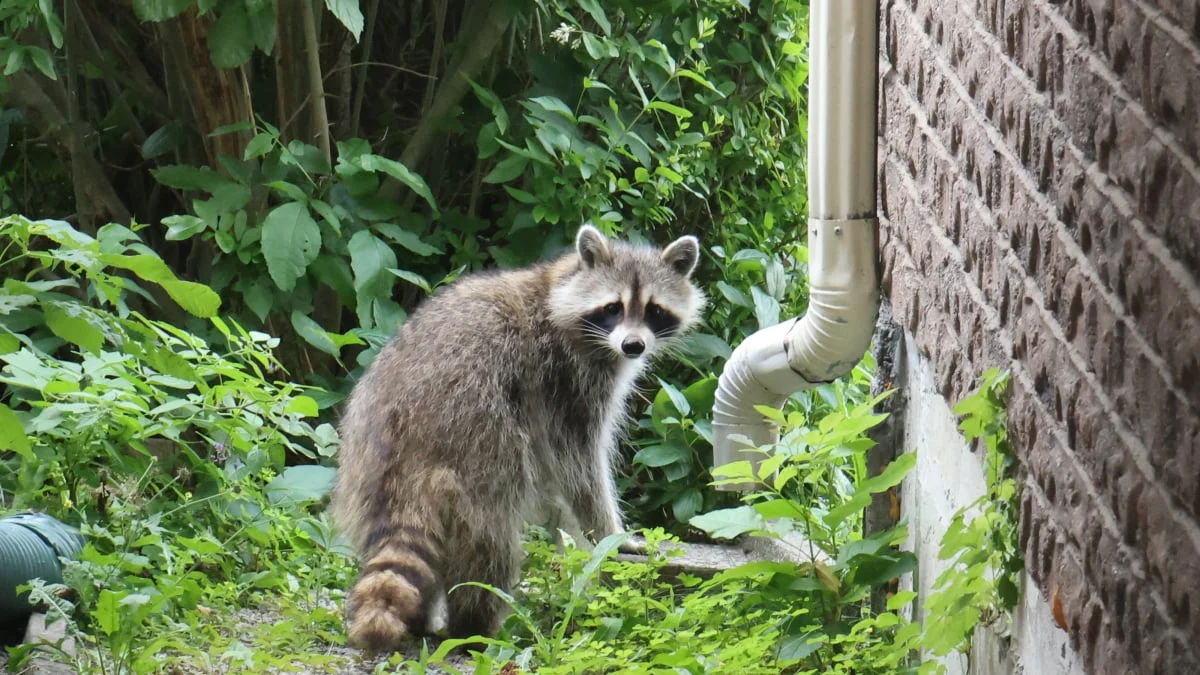
Seattle, a city known for its vibrant tech culture and lush, rain-soaked landscapes, has found itself captivated by an unlikely urban icon. He is round, he is resilient, and he has a gait that suggests he is perpetually in a hurry to get nowhere. His name is Jimothy.
Since his debut on social media in mid-July, this physically distinct raccoon has transcended the status of local wildlife to become a bona fide internet celebrity. Yet, as the fervor surrounding "Hot Jimothy Summer" reaches a fever pitch, a growing chorus of wildlife experts and local observers are raising a provocative question: Are we all watching the same raccoon, or has the Pacific Northwest fallen in love with a phenomenon that is far more complex—and perhaps more populated—than we ever imagined?
The Anatomy of an Icon: How Jimothy Captured the World
The Jimothy phenomenon ignited on July 13, when Seattle resident Kiana Hall was taking a routine walk through the Ballard neighborhood. Beneath the undercarriage of a parked vehicle, she spotted a creature she initially mistook for a stray cat. When the animal emerged, it revealed a face familiar to any North American backyard—the masked features of a raccoon—but with a torso and neck so drastically compressed that the animal appeared almost spherical.
Hall’s decision to film the encounter proved to be a catalyst for viral history. The video, which captured the creature’s unique, waddling gait, exploded across platforms like TikTok and Instagram, garnering millions of views within days. Hall, charmed by the raccoon’s peculiar silhouette, dubbed him "Jimothy." The name stuck with the public’s imagination with remarkable tenacity.
The cultural ripple effects were immediate. "Hot Jimothy Summer" became a rallying cry. Creative fans began commissioning fan art, tattoos, and even intricate murals across Seattle. The University of Washington purportedly issued an honorary doctorate to the creature, and the Seattle Mariners leaned into the bit, featuring a costumed version of the raccoon in their seventh-inning "Salmon Run" race. Even tech giant Google succumbed to the charm, implementing an Easter egg that triggers an animated Jimothy to scurry across the browser screen when users search for his name.
A Potential Medical Anomaly
While the internet delights in the memes, wildlife professionals are looking at the animal through a clinical lens. The raccoon’s highly compressed physical build is widely believed to be the result of a congenital spinal deformity, likely a form of short spine syndrome.
This condition, which causes a significant shortening of the vertebral column, often leaves animals with a distinct, "hunched" appearance. Despite the potential for mobility issues, observers have consistently noted that the raccoon appears to be thriving. Videos show him climbing, foraging, and navigating the complex urban geography of Ballard with surprising agility.
Wendi Mallo, an animal keeper at the Northwest Trek Wildlife Park, notes that while such a condition would be a significant handicap for many wild animals, this particular raccoon—or whoever he may be—shows few signs of struggle. "His body condition appears to be in good standing," Mallo noted, suggesting that he has successfully adapted to his environment. However, because the animal has never been examined by a veterinarian, the diagnosis remains speculative.
The Chronology of Sightings: A Decade-Long Puzzle?
The central conflict in the Jimothy saga began when Ballard residents started cross-referencing their personal security-camera footage and photo archives. What was initially viewed as a singular, recent discovery has morphed into a historical investigation.
The discrepancies in the timeline are startling. While some residents claim to have documented Jimothy’s birth just a year ago, others have come forward with archival photos and videos dating back to 2017. This seven-year gap poses a significant biological problem.
According to Mallo and other wildlife biologists, the average lifespan of a wild raccoon is remarkably brief. Factors such as vehicular traffic, domestic dogs, environmental pathogens, and limited food sources mean that many raccoons do not survive past their first or second year. A raccoon that was active in 2017 would be, by any reasonable biological standard, a geriatric anomaly if he were still wandering the streets of Ballard today.
"Three to five years is already a long, successful life for a raccoon in the wild," Mallo explained. "To suggest one has been active since 2017 would mean he is nearly nine or ten years old. While there is a certain magic to nature, that is statistically highly improbable."
The Multiple-Jimothy Hypothesis
As the evidence of sightings spans nearly a decade, the narrative has shifted from "the story of one raccoon" to a more complex possibility: the "Multiple-Jimothy Hypothesis."
Could it be that the Ballard neighborhood is home to a line of raccoons afflicted with the same genetic deformity? Some local observers, like Rebecca Sorenson, have become the lead investigators of this theory. "There are posts now that say he was born a year ago, and then other people with posts that saw him in 2017," Sorenson told FOX 13. "I’m curious now if there is more than one."
This theory is not without scientific precedent. Genetic conditions that lead to physical deformities can be hereditary. If a specific genetic marker is prevalent in the local raccoon population, it is entirely possible that multiple individuals share the same "short-spined" appearance. If this were the case, the citizens of Seattle have not been following one raccoon, but rather a lineage of Ballard residents who all share the same iconic silhouette.
Official Responses and Ethical Considerations
As the search for the "True Jimothy" intensifies, local wildlife officials are urging the public to exercise restraint. The fame of the animal has led to an influx of people entering the neighborhood with cameras, hoping to catch a glimpse of the celebrity.
Wildlife experts warn that this level of human interference is dangerous for the raccoons. Increased foot traffic can lead to stress, disrupt foraging patterns, and place the animals in the path of vehicular traffic. Furthermore, there is the ever-present danger of residents attempting to feed or interact with the animals.
"We want to remind everyone that these are wild animals," a representative for local wildlife services stated. "They are not pets, and they should not be treated as such. Whether there is one Jimothy or five, they are all subject to the same risks. Observing from a distance is the only responsible way to engage with them."
The official stance is clear: admiration should not translate into intrusion. The risk of habituating wild animals to human presence is high, potentially leading to situations where the animals lose their natural caution, which rarely ends well for the wildlife.
The Implications: A Symbol of Urban Resilience
Regardless of whether Jimothy is a single, legendary creature or a group of similarly shaped urban survivors, the phenomenon highlights the deep, often untapped connection between city dwellers and the wildlife that lives in the shadows of their homes.
In an era where much of our digital engagement is ephemeral, the obsession with Jimothy represents something more grounded. He is a symbol of resilience—an animal that, despite a physical deformity, manages to thrive in the heart of a bustling metropolis. He represents the "magic in the wild" that persists even in the most urbanized environments.
If it turns out that there are multiple Jimothys, the story becomes perhaps even more poignant. It would suggest that the Ballard neighborhood has fostered an environment where these unique animals can survive and pass on their legacy, despite the perils of the modern world. It would transform "Jimothy" from a name into a title—a badge of honor for the roundest, most persistent bandits in the neighborhood.
Conclusion: The Mystery Remains
As the saga continues, the mystery of the Ballard raccoons remains unsolved. Until a definitive, scientific survey can be conducted—or until the animals themselves decide to step out of the shadows for a proper, non-invasive identification—the truth will remain a subject of debate.
Perhaps the lack of a definitive answer is part of the appeal. In a world that demands certainty and instant data, Jimothy offers a moment of wonder. Whether he is one or many, he has brought a community together, prompted a city to look closer at its own backyard, and reminded us all that there is still much we don’t know about the creatures living right next door.
For now, if you are walking through the streets of Ballard at dusk, keep your eyes peeled. You might see a round, masked face peering back at you from beneath a car. You might see the original Jimothy, or you might be looking at his successor, or perhaps a descendant. Regardless of the identity, the advice remains the same: take a photo, keep your distance, and let the legend of the Seattle raccoons continue to thrive in the dark.