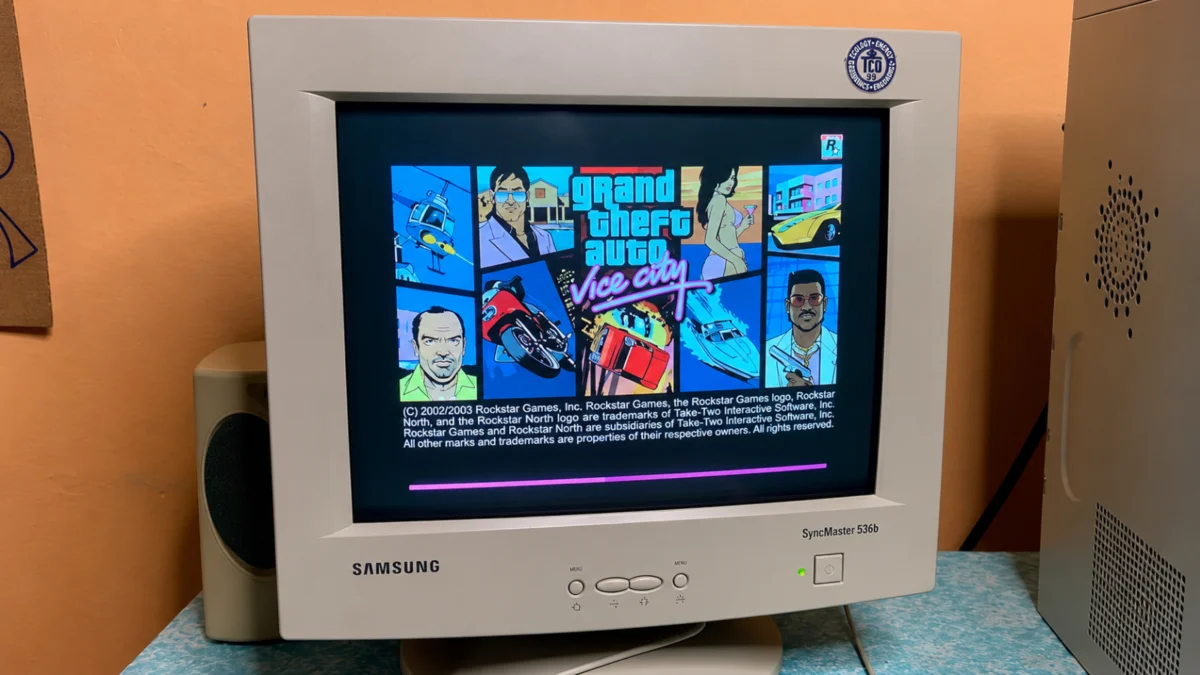
In a development that has sent ripples of nostalgia—and legal anxiety—through the gaming community, Grand Theft Auto: Vice City has resurfaced as a playable experience directly within a web browser. The 2002 masterpiece, which defined the open-world genre for a generation, is now accessible via a platform called Quenq, bypassing the need for traditional software installations. This development arrives as fans grow increasingly restless for the highly anticipated release of GTA 6, currently slated for November 19, making the return to the 1980s-inspired neon streets of Vice City a timely, albeit precarious, distraction.
The Return of the King: Main Facts and Technical Feats
The new browser-based port is a marvel of modern web engineering. Utilizing WebAssembly—a low-level assembly-like language that enables high-performance applications in web pages—the Quenq platform allows users to jump into the shoes of Tommy Vercetti with a simple click. Unlike traditional downloads that require gigabytes of space and lengthy installation processes, this version utilizes dynamic streaming to render the map as the player traverses it.
The feature set is surprisingly robust for an unofficial port. Beyond the core gameplay, the platform supports:
- Controller Integration: Full support for Xbox and PlayStation controllers, alongside standard keyboard and mouse configurations.
- Mobile Compatibility: Touchscreen support allows for on-the-go gameplay on tablets and smartphones.
- Save Management: An integrated save manager allows users to upload existing
.bsave files from legacy PC or PS2 versions, while also providing the capability to export progress for local backup.
However, the port is not without its "vintage" quirks. The developers at Quenq have issued specific guidance regarding performance settings. Because the original game engine was tethered to a 30 FPS cap, attempting to push high frame rates can break the game’s physics engine. In some instances, this can render essential story missions impossible to complete. Consequently, players are advised to maintain the original frame rate cap and ensure that hardware acceleration is enabled within their browser settings for optimal stability.
A Chronology of Browser-Based Porting
The saga of bringing Rockstar’s crown jewels to the browser is a cat-and-mouse game that has spanned several years. The current iteration by Quenq follows a notable attempt in December 2025 by the site DOS.Zone.
In that instance, the developers attempted to skirt intellectual property concerns by creating a "hybrid" model. Players were initially granted access to a small, limited demo, but to unlock the full, feature-complete version of Vice City, the site required users to upload files from a legally owned copy of the game stored on their own hardware. The developers argued that this mechanism acted as a digital "key," essentially validating that the user had already purchased the software from Rockstar Games.
Despite these precautions, the effort was short-lived. Take-Two Interactive, the parent company of Rockstar Games, moved quickly to shut the project down. By early 2026, the site had received a formal DMCA takedown notice, citing that the project was not "authorized, licensed, endorsed, or approved" by the copyright holders. The swiftness of this legal action highlighted the publisher’s aggressive stance toward any unauthorized modification or distribution of its intellectual property, regardless of the user’s intent or the technical hurdles implemented to protect the IP.
Supporting Data: Why "Vice City" Matters
To understand why fans are willing to risk these legal encounters to play Vice City in a browser, one must look at the game’s cultural footprint. Released in 2002, Vice City was a cultural phenomenon that cemented Rockstar Games as a titan of the industry. With a star-studded voice cast including Ray Liotta, Burt Reynolds, and Dennis Hopper, it brought a cinematic quality to gaming that few other titles could replicate at the time.
Current metrics from gaming analytics platforms show that interest in the "3D Era" of GTA (III, Vice City, and San Andreas) has surged in the lead-up to the GTA 6 launch. The curiosity is two-fold: newer players are exploring the history of the franchise to understand the roots of the series, while veterans are seeking to compare the original aesthetic of the fictional Miami-inspired city with the modern graphical fidelity promised in the upcoming sequel.
The technical efficiency of the Quenq port also serves as a testament to how far web browsers have evolved. Ten years ago, the idea of running a 3D open-world game of this complexity in a browser would have been dismissed as an impossibility. Today, the ubiquity of WebGL and WebAssembly means that "abandonware" or classic titles can be preserved and played with minimal friction, creating a digital museum of sorts for gaming history.
The Legal Shadow: Official Responses and IP Protections
The central conflict in this story is the tension between digital preservation and corporate property rights. Take-Two Interactive has consistently maintained a policy of "zero tolerance" regarding unauthorized ports or remakes.
In the DMCA notice served to DOS.Zone, legal representatives for Take-Two made it clear that even if a user owns a legal copy of the game, distributing the "engine" or the platform to play that game online constitutes an infringement. Their position is that the experience of playing Vice City is a proprietary environment, and any unauthorized hosting—even if it doesn’t distribute the game files themselves—violates their exclusive rights.
This creates a chilling effect on the development community. For many, the goal is not piracy, but convenience. By making these games "browser-native," developers are ensuring that these classics remain accessible even as older hardware fails and optical drives become relics of the past. However, the legal reality is that the publisher’s definition of "authorized use" rarely aligns with the community’s desire for accessibility.
Quenq, for its part, remains silent regarding any correspondence with Take-Two. The site currently does not feature any disclaimers or "official" endorsements, leaving it in a precarious position. If history is any indicator, it is only a matter of time before legal counsel from the publisher takes notice of the site’s growing traffic, potentially leading to another takedown.
Implications for the Future of Gaming Preservation
The existence of the Quenq port raises fundamental questions about the future of game preservation. As the industry moves further toward "Games as a Service" (GaaS) and cloud-based gaming, the ability for the public to maintain access to older titles becomes increasingly difficult.
- The Fragility of the Cloud: If the only way to play a game is via a third-party website, that game’s survival is entirely dependent on the host’s ability to avoid legal scrutiny and maintain server costs.
- The Demand for Official Ports: The popularity of these browser versions highlights a clear market demand for legitimate, high-quality ports of classic games to modern web standards. If publishers do not provide these themselves, community-driven projects will continue to fill the void, despite the inherent legal risks.
- Intellectual Property Boundaries: The ongoing conflict suggests that there needs to be a clearer framework for how fans can preserve games they have already purchased. Is it truly a violation of intellectual property to play a game one owns on a different medium? Or should companies provide the tools for fans to do so legitimately?
In addition to Vice City, Quenq has also released a browser-based version of Grand Theft Auto III. This signals that the developers are intent on building a repository of the classic GTA catalog. For now, players can log on and experience the 1980s again, but they should do so with the understanding that this digital experience is, by its very nature, temporary.
As we approach the launch of GTA 6, the irony is palpable. While the world prepares to look forward to the next evolution of the series, a significant portion of the fanbase remains tethered to the past, looking for ways to keep the neon lights of the original Vice City burning just a little longer. Whether these browser ports are eventually sanctioned as a form of digital curation or silenced by the heavy hand of legal litigation remains the final, unanswered level in this real-world game.