

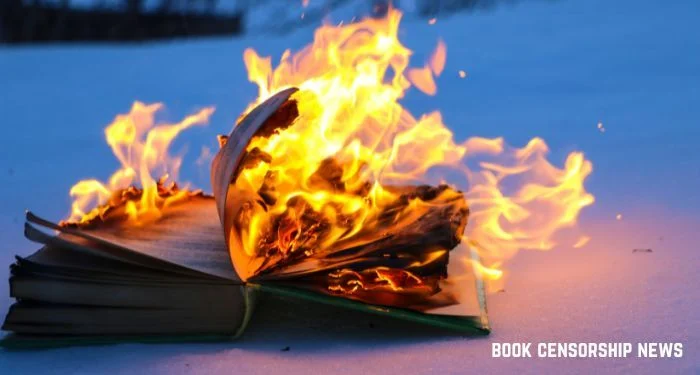
In an era defined by rapid digital transformation and increasingly polarized political discourse, the public library—long viewed as a sanctuary of quiet study and neutral ground—is finding itself at the center of a volatile cultural storm. For decades, the professional ethos of librarianship has centered on the concept of "neutrality." However, as legislative bodies at both the state and federal levels escalate efforts to restrict access to literature, that silence is increasingly being viewed not as professional detachment, but as a liability.
It is becoming clear that neutrality in the face of systemic censorship is, in practice, a form of inaction that favors the status quo. To preserve the role of the library as a cornerstone of democracy, library boards, Friends groups, and community stakeholders are being forced to pivot from passive custodians to active, vocal advocates.
The Myth of Neutrality and the Case for Activism
The argument for library advocacy is rooted in the reality that libraries are not, and have never been, truly neutral spaces. Every acquisition, every program, and every budget allocation is a value-based decision. When legislative bills emerge—regardless of which political party sponsors them—that threaten to curtail intellectual freedom or impose arbitrary restrictions on collections, libraries have a duty to respond.
"Libraries can and should be advocating on their own behalf," experts note. Advocacy is not a partisan act; it is an institutional survival strategy. When a library board remains silent while its core mission is dismantled, it effectively cedes its authority to those who seek to narrow the scope of public discourse. This shift is essential, as the threats facing libraries today are not isolated incidents but part of a broader, well-funded trend toward institutional delegitimization.
Chronology of a Crisis: From Local Bans to Federal Pressure
The current climate of censorship did not materialize overnight. It is the result of a coordinated, five-year campaign to target library collections and school curricula.
- 2025 (The Escalation): Throughout the year, advocacy groups began weaponizing terms like "pornography" and "grooming" to describe age-appropriate materials, specifically targeting LGBTQ+ literature and narratives concerning racial justice.
- Early 2026: Legislative efforts moved beyond school boards into the halls of state governments. Proposed bills in jurisdictions across North America began to codify these challenges into law, threatening to remove state funding for libraries that refused to comply with restrictive, vaguely defined standards for "explicit" content.
- April 2026: Public outcry reached a fever pitch. In Alberta, Canada, the proposed Bill 28 prompted a wave of public resistance, as library boards—often the most conservative entities in the system—began issuing formal, defiant letters to the editor, effectively challenging the government’s narrative.
- May 2026: The passage of federal legislation, including the controversial HR 2616, signaled a national shift. Simultaneously, local battles—such as the attempt in District 65 (Chicago suburbs) to reassign librarians—demonstrated that school and public libraries are deeply interconnected, even when they operate as independent administrative entities.
The Evidence: Deconstructing the "Pornography" Narrative
A critical component of the current legislative push is the claim that libraries are distributing pornographic materials to children. Library boards have begun using their platforms to systematically dismantle this rhetoric using hard data.
In response to Alberta’s proposed Bill 28, the Medicine Hat Public Library (MHPL) board provided a masterclass in factual rebuttal. Their public statements clarified that "pornography" is a specific legal definition—material intended to arouse and lacking artistic or educational value—which is entirely absent from public library collections.
The data presented by MHPL and the Mayerthorpe Public Library is stark:
- Digital Access: Over 90% of youth exposure to sexually explicit material occurs via personal mobile devices and the internet—venues the proposed legislation makes no effort to regulate.
- Collection Impact: Less than 1% of materials in a typical library could even arguably be considered explicit, and in every instance, these works are part of larger, recognized artistic or scientific collections intended for adult patrons.
- Financial Burden: The proposed legislative mandates come with no additional funding, effectively forcing municipalities to bear the costs of censorship—a move that threatens to bankrupt smaller, rural libraries already operating on razor-thin budgets.
Official Responses and the Power of the "Library Letter"
The most effective tool currently in the arsenal of library advocates is the open letter. By moving beyond internal policy memos and speaking directly to the public through local newspapers and social media, library boards are successfully shifting the narrative.
The Role of Friends Groups
Friends of the Library groups are no longer just fundraisers; they are the "boots on the ground" for civic engagement. In Rocky Mount, North Carolina, the president of the local Friends chapter recently utilized the local press to illustrate how budget cuts are not merely an administrative nuisance, but a direct attack on community infrastructure. As they noted, "Public libraries are not luxuries; they are essential infrastructure for an informed, connected, and resilient community."
Professional Leadership
Library directors, such as those in Indiana who stood up against Senate Bill 4, are demonstrating that leadership requires political courage. When a director explains to the taxpayer that a piece of legislation is designed to "destabilize and harm" their local institution, they are performing a vital democratic function: providing the public with the information necessary to hold their representatives accountable.
Implications: The Interconnectedness of Democracy
The case of District 65 in Illinois serves as a cautionary tale regarding the fragility of these systems. When school districts attempt to cut librarians, they often cite the "proximity" of public libraries as a justification, assuming that public libraries will absorb the slack without consultation.
This maneuver was stopped only when the public library community and school library advocates realized they were being pitted against one another. The implication is clear: an attack on a school library is an attack on the public library, and vice-versa. They are sister institutions of democracy. When one is weakened, the burden on the other becomes unsustainable.
The Slippery Slope of Censorship
The rhetoric used to justify book bans often mirrors the tactics used in historical eras of mass censorship. Educators with decades of experience are warning that the goal is not to protect children, but to control the flow of information. By labeling standard literary works as "harmful," bad-faith actors create an environment where critical thinking is viewed as a threat to political stability.
As noted in recent responses from educators, the real crisis in youth literacy is not the presence of diverse books, but the lack of proficiency in complex texts. By removing librarians and restricting collections, these legislative efforts are exacerbating the very educational decline they claim to be solving.
Conclusion: How to Take Action
The battle for the library is a battle for the future of civic participation. For those who wish to support their local institutions, the path forward is multifaceted:
- Monitor Local Elections: Library board seats are often uncontested and overlooked. Engaging with candidate forums and questioning potential trustees on their stance regarding the "freedom to read" is the most effective way to ensure long-term stability.
- Amplify Through Local Media: If your community lacks a traditional newspaper, use social media to share templates, letters, and research. Creating a digital paper trail of support is essential.
- Cross-Institutional Solidarity: Public libraries must support school libraries, and Friends groups must coordinate with library boards. When one institution is under fire, the entire network must respond.
- Educate the Public: Use the data provided by your local library to combat misinformation. When you hear the word "pornography" used as a catch-all for diverse literature, point to the collection development policies that define what is actually on the shelves.
The library is a living, breathing component of our democratic society. It requires constant maintenance, not just of its buildings and collections, but of its rights. As the legislative landscape continues to shift, the message from library advocates is resolute: silence is no longer an option. The library belongs to the people, and it is time for the people to speak up for it.











No comments yet. Be the first to join the conversation!