Ammar Sabilarrohman
Valve Corporation has officially pulled back the curtain on its most ambitious hardware project to date: the Steam Frame. Following months of speculation and a strategic rollout of its broader hardware ecosystem, the company has confirmed pricing, technical specifications, and a unique, randomized distribution model for its standalone virtual reality headset. Priced at a premium starting point of $1,059, the Steam Frame represents Valve’s attempt to bridge the gap between high-fidelity PC VR and the convenience of a standalone, mobile-ready platform.
Main Facts: A New Paradigm for Steam VR
The Steam Frame is not merely a headset; it is an all-in-one computing environment designed to house the entirety of the Steam library. Powered by the cutting-edge Snapdragon 8 Gen 3 processor and running on the refined, Linux-based SteamOS 3, the device is engineered to handle both optimized VR titles and standard flatscreen games directly on the headset.
For enthusiasts, the hardware specs are formidable. The base model, retailing at $1,059, features 256GB of internal storage, while a more robust 1TB version is available for $1,299. Both variants are equipped with 16GB of RAM and microSD expansion slots for users who demand extensive local libraries. Visual fidelity is handled by dual 2160 x 2160 LCD panels, offering high-density immersion. The refresh rate, a critical metric for VR comfort, is highly flexible, ranging from 72Hz to 144Hz, with the latter currently listed as an "experimental" mode for high-end enthusiasts.
Beyond the visuals, the device includes inside-out tracking, Wi-Fi 7 for low-latency wireless streaming, and Bluetooth 5.4. The package is rounded out by built-in spatial audio speakers and a set of proprietary Steam Frame controllers that offer full 6-DOF (six degrees of freedom) tracking alongside the ergonomic, button-rich layout synonymous with Valve’s input design philosophy. Notably, Valve is including a copy of Half-Life: Alyx with every purchase—a clear statement of intent regarding the quality of the software experience they expect users to have.
A Chronological Breakdown of the Launch
The road to the Steam Frame’s release has been marked by a calculated, phased approach.
- November 2025: Valve first teased a trio of hardware projects: the Steam Machine, the new Steam Controller, and the then-unnamed VR headset. This announcement set the stage for a massive expansion of the "Steam Ecosystem" outside the confines of the desktop PC.
- Early 2026: Valve launched the Steam Machine, a living room-focused gaming PC, which provided the blueprint for the company’s current retail strategy.
- September 14, 2026: The reservation window for the Steam Frame officially opened. Unlike traditional storefronts that operate on a "first-come, first-served" basis—often plagued by bot activity—Valve implemented a randomized reservation system.
- September 17, 2026: The reservation window closed at 10 AM PT.
- September 18, 2026: Valve is scheduled to begin distributing the first round of purchase emails. Successful applicants will be given a limited window to finalize their transaction, with units expected to ship shortly thereafter.
This chronological rollout suggests that Valve is acutely aware of the logistical challenges of high-end hardware launches, prioritizing a "fair" distribution over a high-speed sprint.
Technical Specifications and Ecosystem Integration
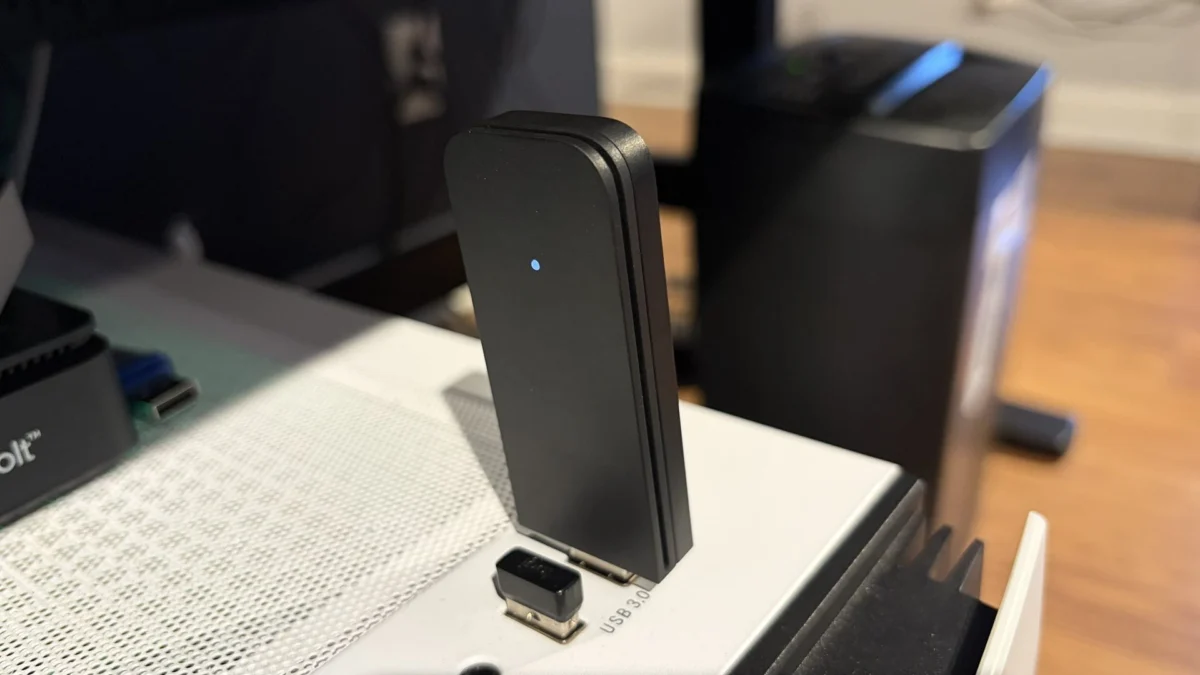
The Steam Frame is a marvel of engineering, but its true power lies in its versatility. While it functions as a standalone unit, it is also designed to serve as a high-end wireless PC VR headset. Through an included adapter, users can bypass the onboard processor and stream games directly from their desktop PC, leveraging the full power of their GPU while enjoying the mobility of the headset.
Hardware Data Table
| Feature | Specification |
|---|---|
| Processor | Snapdragon 8 Gen 3 |
| Operating System | SteamOS 3 |
| Memory | 16GB RAM |
| Storage | 256GB ($1,059) / 1TB ($1,299) |
| Resolution | 2160 x 2160 per eye |
| Refresh Rate | 72Hz – 144Hz (Experimental) |
| Connectivity | Wi-Fi 7, Bluetooth 5.4 |
| Tracking | Inside-out (6-DOF) |
Valve has also introduced an ecosystem of accessories to complement the core experience. A 45W Steam Hardware Power Supply is available for $29. For those seeking comfort, an "Ergonomic Accessories Kit" is priced at $59, and an "Accessory Replacement Kit" is offered at $49. It is important to note that the Steam Frame does not ship with a dedicated power supply in the box. Valve has confirmed, however, that existing Steam Deck chargers or any USB-C charger rated for 45W or higher will provide optimal performance, emphasizing the company’s commitment to cross-device compatibility.
Official Strategy and The "Fair" Queue System
Valve’s decision to utilize a randomized reservation system for the Steam Frame is a direct carry-over from the Steam Machine launch. By assigning users a place in a virtual queue rather than allowing the fastest bots to exhaust inventory, Valve is attempting to democratize access to high-demand hardware.
"Our goal is to ensure that genuine users have the best possible chance to secure a unit," a representative noted during the announcement. This philosophy mirrors the broader company culture, which has consistently prioritized the Steam community’s long-term satisfaction over short-term sales spikes. By controlling the inventory flow, Valve also mitigates the risks of a chaotic launch, ensuring that support teams and shipping logistics are not overwhelmed.
Implications for the VR Market and Valve’s Future
The launch of the Steam Frame marks the completion of Valve’s "2025 Hardware Trifecta." With the Steam Machine, the new Steam Controller, and now the Steam Frame, Valve has successfully solidified its position as a hardware manufacturer that controls the entire stack—from the storefront (Steam) to the operating system (SteamOS) and the input devices (Controller and VR).
A Threat to Established Players?
The Steam Frame enters a crowded market dominated by Meta’s Quest series and various high-end PC VR manufacturers. However, the Steam Frame’s unique selling point is its deep integration with the Steam ecosystem. For the millions of gamers who already own a vast library of Steam VR titles, the Frame offers a seamless, "it just works" experience that other headsets often struggle to provide due to driver overhead and compatibility layers.
The Linux Advantage
By pushing SteamOS 3 as the standard for its hardware, Valve is effectively hedging against potential changes in the Windows ecosystem. The performance optimization achieved through the Steam Deck has proven that Valve can extract maximum power from its hardware through custom Linux kernels. If the Steam Frame proves to be as successful as the Steam Deck, it could signal a major shift in how developers approach VR development, with more focus on cross-platform, Linux-compatible APIs.
The Cost of Entry
At $1,059, the Steam Frame is not a budget device. It is positioned firmly in the "enthusiast" tier. This pricing suggests that Valve is not looking to compete in the race-to-the-bottom world of subsidized hardware. Instead, they are targeting the core demographic that views virtual reality not as a toy, but as a primary gaming platform.
Final Thoughts
As the first purchase emails go out on September 18, the gaming community will be watching closely. Will the Steam Frame live up to the high bar set by the Steam Deck? Does it have the library to sustain its price point? Only time will tell. However, one thing is certain: Valve is no longer just a software company. With the Frame, they have signaled that they are prepared to define the next decade of gaming, one headset at a time. The transition from the screen to the lens is officially underway, and for the millions invested in the Steam ecosystem, the future has never looked—or felt—more immersive.


 Lina Irawan
 Muslim