Nila Kartika Wati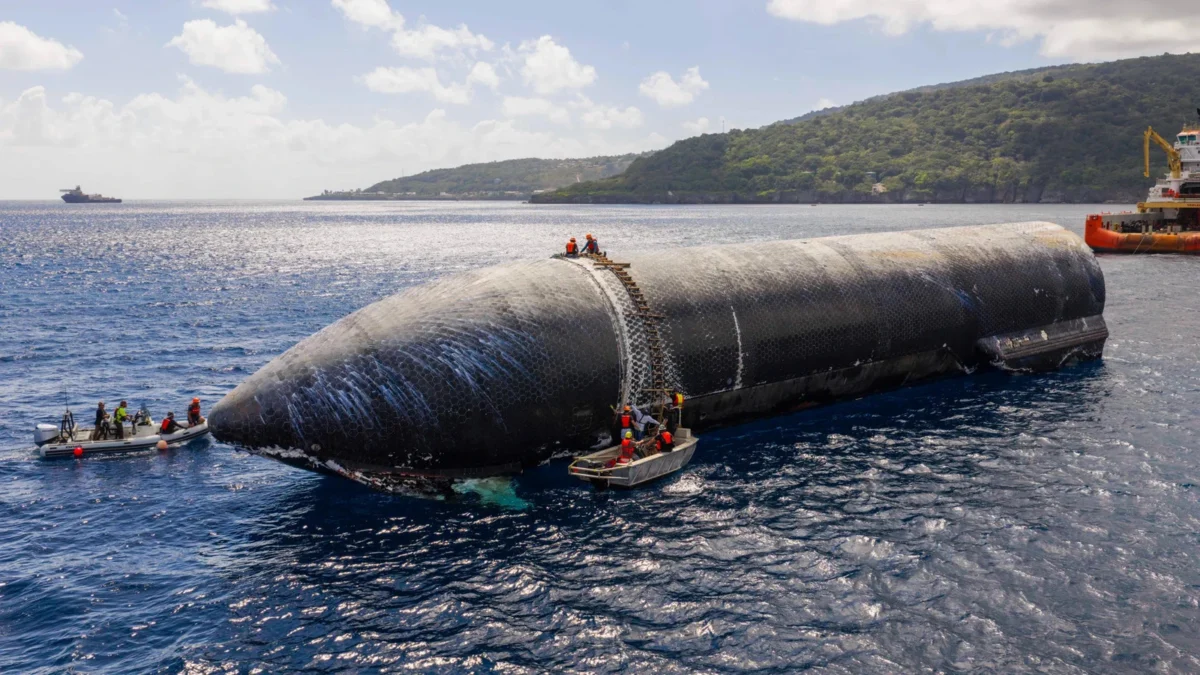
In the high-stakes arena of orbital launch providers, SpaceX has long prioritized speed and iterative design. However, the recovery of "Starship 40"—the upper stage of the vehicle that launched on July 24—has proven that the company’s path to a fully reusable launch system is as much a maritime engineering challenge as it is an aerospace one. After a suborbital test flight that spanned the globe in just over an hour, the vehicle began a grueling, multi-month oceanic transit back to its birthplace in South Texas.
This mission represents a critical pivot in SpaceX’s development cycle. By securing an intact, post-reentry upper stage from the Indian Ocean, SpaceX has transitioned from theoretical modeling and telemetry-based assumptions to tangible, physical analysis of flight-tested hardware.
Main Facts: A Test of Endurance
The Starship 40 mission was not intended to be a commercial satellite deployment, but rather a stress test for the next generation of SpaceX’s payload delivery systems. Launched from Starbase in South Texas, the vehicle achieved its trajectory, successfully deploying 20 Starlink V3 satellites.
While these satellites were intentionally de-orbited shortly after deployment—confirming the mission was purely experimental—the star of the show was the spacecraft itself. Surviving the violent atmospheric reentry process, Starship 40 made a soft splashdown in the Indian Ocean. Unlike previous iterations that were either destroyed during reentry or lost to the depths after impact, Starship 40 remained structurally sound enough to be recovered. This structural integrity offers SpaceX engineers an invaluable forensic opportunity to examine thermal protection systems and airframe stressors that could not be replicated in a laboratory environment.
Chronology: From Launch to Ocean Transit
The journey of Starship 40 can be divided into three distinct phases: the blistering ascent, the delicate ocean-based recovery, and the protracted return transit.
Phase 1: The 65-Minute Sprint
On July 24, Starship 40 roared off the pad at Starbase. Within 65 minutes, the vehicle had traversed thousands of miles, effectively crossing the globe to reach its target splashdown zone in the Indian Ocean. This suborbital flight served as a proof-of-concept for the vehicle’s ability to maintain thermal and structural stability during hypersonic speeds.
Phase 2: The 24-Day Sea Ordeal
Following the splashdown, the spacecraft spent 24 days adrift in the Indian Ocean. The recovery process began in earnest when the 300-foot tugboat Normand Ranger stabilized the craft. The operation required precision navigation to move the 171-foot vessel into calmer waters near Christmas Island, an Australian territory. This waiting period was essential for the arrival of the Forte, a 710-foot transport ship capable of executing a heavy-lift recovery.
Phase 3: The Return to Brownsville
As of late summer, the Forte has begun the long-haul transit back to the Gulf of Mexico. While SpaceX has remained tight-lipped regarding the specific route, maritime experts suggest the ship is likely navigating a westward path around the Cape of Good Hope. Current vessel tracking data indicates a projected arrival at the Port of Brownsville, Texas, in early October. This journey—taking significantly longer than the initial flight—highlights the logistical hurdles of ocean-based space hardware retrieval.
Supporting Data: Engineering the Recovery
The recovery of a rocket stage from the open ocean is a feat of heavy-lift logistics. The Forte, a semi-submersible transport ship, is typically used for moving oil rigs or large-scale civil infrastructure. The process for recovering Starship 40 involved:
- Ballast Management: The Forte flooded its internal ballast tanks, causing the vessel to sink deep enough for the cargo deck to be submerged beneath the waterline.
- Positioning: Once submerged, the Normand Ranger guided the Starship 40 into a custom-built cradle positioned on the Forte’s deck.
- Lifting: With the rocket secured, the Forte pumped out its ballast water, slowly rising to the surface and lifting the 171-foot spacecraft out of the water, high and dry, for the transit back to the United States.
Shipping industry experts, including maritime analyst Sal Mercogliano, have noted that while the cargo is unusual, the technique is standard practice in the shipping industry. "Ships like the Forte perform these maneuvers daily," Mercogliano remarked in his analysis. "The challenge here was not the lifting itself, but the delicate nature of the rocket’s heat shield and the coordination required to intercept the craft in the remote Indian Ocean."
Official Responses and Strategic Significance
SpaceX has framed the recovery as a massive success, specifically highlighting the "vital insight" gained from the heat-shield samples. In statements released via social media and company channels, SpaceX engineers confirmed that the physical hardware provides data that telemetry simply cannot capture.
The company’s ultimate goal remains the "tower catch" method—a process where the Starship would return to the launch site and be caught by the launch tower’s "chopstick" arms, eliminating the need for water landings and the subsequent multi-month recovery operations. However, until the flight-control systems are perfected to the point of pinpoint accuracy, the ability to recover these vehicles from the ocean serves as a crucial safety net and a data-mining goldmine.
Implications for Future Missions
The return of Starship 40 carries heavy implications for the future of the Starship program:
- Iterative Design: By physically inspecting the airframe, SpaceX can identify micro-fractures, material fatigue, and thermal ablation patterns. This allows for targeted improvements in the next batch of Starships rather than broad-spectrum redesigns.
- Logistical Scalability: The successful recovery proves that even if a mission does not end in a perfect "tower catch," the hardware is not necessarily lost. This increases the economic viability of testing, as engineers are no longer "flying blind" if a landing goes off-target.
- Environmental and Regulatory Compliance: Demonstrating that the company can safely recover large hardware from international waters is vital for obtaining long-term flight permits from the Federal Aviation Administration (FAA) and international maritime authorities.
As the Forte approaches the Port of Brownsville, the aerospace community is bracing for what comes next. Once the rocket reaches Starbase, it will undergo a comprehensive teardown. This "autopsy" of a space-hardened vehicle will likely dictate the design specs for the next generation of Starships.
For SpaceX, the 65-minute flight was the easy part. The real work of building a fully reusable, intercontinental transport system is happening now, on the slow, steady decks of a cargo ship crossing the southern oceans. Every mile of that journey brings the company one step closer to making the Starship a workhorse of the new space age, transforming it from an experimental vessel into a reliable, reusable tool for the stars.


 Neng Nana
 Jia Lissa