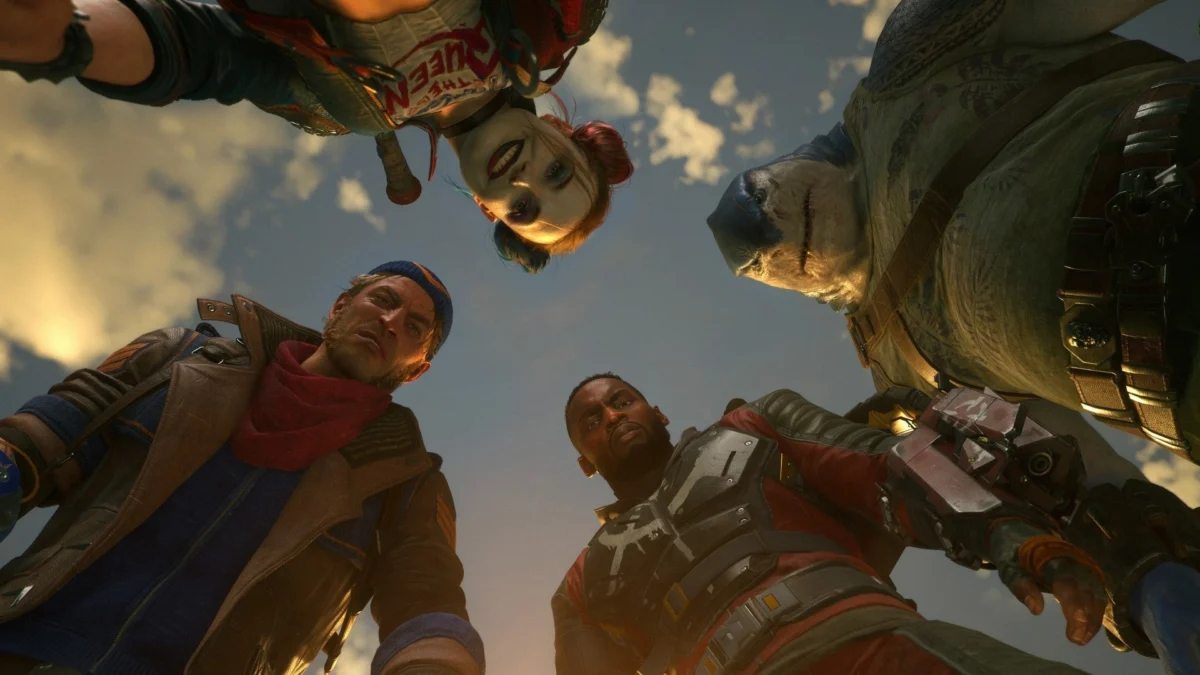
The video game industry is no stranger to high-profile failures, but few have been as public or as psychologically taxing as the development and subsequent implosion of Suicide Squad: Kill the Justice League. For Rocksteady Studios—a developer once synonymous with the gold standard of superhero gaming via the Batman: Arkham series—the project represented a pivot that would eventually fracture the creative spirit of its leadership.
Recent disclosures from key creative figures have shed new light on the behind-the-scenes turmoil, revealing a culture increasingly dominated by data-driven mandates, shifting corporate expectations, and a profound existential crisis that nearly drove two of its lead developers out of the industry entirely.
A Vision Lost: The Chronology of a Studio Pivot
When the project was first conceptualized in 2018, the atmosphere at Rocksteady was one of cautious optimism. Axel Rydby, who would go on to serve as co-director, recalls the initial phase as a period where the team felt they could marry the studio’s signature polish with the burgeoning live-service model. At the time, the mandate was to create a "generous" experience—a game where players wouldn’t feel coerced into microtransactions or predatory monetization schemes.
However, as the development cycle stretched, the reality of corporate pressure began to eclipse the creative vision.
- 2018–2019: The Conceptual Phase. The team begins mapping out a four-player cooperative shooter set in the DC Universe. The focus remains on character dynamics and the "Rocksteady feel."
- 2020–2022: The Delay Spiral. Repeated delays begin to plague the production. Internal meetings shift away from gameplay loops and narrative cohesion, pivoting instead toward "replayability" metrics and budget-recouping strategies mandated by Warner Bros. executives.
- 2023: The Marketing Crunch. As the game nears its release, the focus shifts entirely to live-service retention models.
- 2024: The Launch. Suicide Squad: Kill the Justice League is released to widespread critical disappointment and tepid sales, failing to gain the traction needed for a sustainable live-service model.
The Spreadsheet Trap: When Data Replaces Design
The most poignant aspect of the recent Bloomberg reporting is the testimony regarding the "spreadsheetification" of game design. For developers like Rydby and associate design director Johnny Armstrong, the late stages of development felt less like art and more like accounting.
Rydby noted that the creative process became beholden to "elusive marketing-analysis spreadsheets" that no one in the studio could clearly explain. This disconnect between the developers, who were trying to craft a cohesive experience, and the corporate mandates focused on retention metrics, created a toxic environment. When the primary goal of a game ceases to be "fun" and becomes "engagement optimization," the toll on the developers is significant.
"That’s when I started feeling like I wasn’t making games anymore," Rydby shared. "I was following a spreadsheet… I kind of felt like this isn’t the gaming industry I wanted to work in."
This sentiment was echoed by Armstrong, who described the final phase of the project as a period where his professional identity began to erode. Following the commercial failure of the game and the subsequent decision by Warner Bros. to wind down support, Armstrong felt "everything drained" from him. The physical and mental exhaustion of pushing a project that felt fundamentally broken at its core led to a moment of total burnout.
Supporting Data: The Cost of the "Live-Service" Push
The failure of Suicide Squad was not merely a matter of creative disagreement; it was a systemic issue of market miscalculation. Industry analysts have long pointed to the "live-service fatigue" that began to set in around 2023. By the time Rocksteady’s project hit the market, players had already been inundated with high-budget, repetitive shooters that required daily logins to remain relevant.
Warner Bros. Discovery’s own financial reporting throughout 2024 underscored the severity of the loss. The company admitted to a significant write-down related to the game, highlighting the chasm between the development costs—which were ballooned by long delays and a bloated scope—and the actual revenue generated by the title’s player base. The reliance on recurring revenue models that failed to materialize forced the studio into a difficult position, where they were tasked with fixing a foundation that the market had already rejected.
Official Responses and Corporate Silence
While Warner Bros. has maintained a relatively standard corporate stance regarding the performance of their gaming division—often citing a desire to "refocus on core franchises"—they have remained largely silent on the specific internal culture issues raised by Rydby and Armstrong.
In the wake of the game’s release, the gaming industry has seen a broader reckoning regarding the role of corporate oversight in creative studios. The trend of "publisher-driven development" has become a central point of contention, with critics arguing that when executives prioritize long-term "as-a-service" revenue over the integrity of a standalone experience, they risk alienating the very fans who made the studio’s previous successes possible.
Implications for the Future of AAA Development
The story of Rydby and Armstrong serves as a cautionary tale for the AAA industry. It highlights the vulnerability of established studios when they are forced to pivot away from their core competencies. Rocksteady, a studio known for single-player, narrative-driven experiences, was forced to adapt to a business model that required an entirely different set of metrics and design philosophies.
This failure has led to a broader discussion about the "brain drain" occurring in large-scale studios. When top-tier talent feels that the industry is no longer conducive to creativity, they leave. The departure of Rydby and Armstrong from Rocksteady was not just a loss of personnel; it was a loss of the institutional knowledge that defined the Arkham era.
A New Beginning: From the Ashes of Suicide Squad
Despite the trauma of their final months at Rocksteady, Rydby and Armstrong have managed to find a path back to the creative process. The two have reunited to form a new venture, focusing on the kind of project that reminds them why they entered the industry in the first place.
Their upcoming title, Secret of Circadia, is a departure from the high-octane, corporate-mandated shooters of their past. It is a smaller, more intimate project: a city-builder and deck-building roguelite that explores themes of nature, AI, and ecological reclamation. By shifting to an independent model, they are attempting to reclaim the agency they lost at Rocksteady.
The Kickstarter campaign for Secret of Circadia serves as a litmus test for both the developers and their audience. It is an opportunity for players to support the creators directly, bypassing the corporate apparatus that led to the Suicide Squad debacle. For Rydby and Armstrong, the game is more than just a product; it is a declaration of independence and a way to prove that the joy of game development can be salvaged from the ruins of a failed AAA project.
Conclusion
The collapse of Suicide Squad: Kill the Justice League will be studied for years as a prime example of the risks inherent in forcing a square-peg studio into a round-hole business model. However, the true tragedy was not the financial loss, but the near-loss of two creative minds to the grind of industry cynicism.
As Rydby and Armstrong pivot toward their new project, they offer a glimmer of hope for the future of independent development. Their journey reminds us that while the industry is often dominated by spreadsheets and marketing analyses, the soul of gaming still resides in the people who build these worlds. Sometimes, in order to create something meaningful again, one must first be willing to walk away from the machine.