Azzam Bilal Chamdy
For years, the Brave browser has positioned itself as the gold standard for privacy-conscious users. By combining the rendering engine of Chromium with a suite of aggressive ad-blocking and tracking-prevention tools, it quickly captured a dedicated segment of the market. However, as Brave’s user base grew, so did its ambitions. Over the last several years, the browser has evolved from a lean, privacy-focused tool into a feature-rich ecosystem, integrating everything from cryptocurrency wallets and VPN services to proprietary AI chatbots and email aliasing.
While many users appreciated these additions, a vocal minority of "power users" began to decry the "bloat." For those who preferred the stripped-back, high-performance experience of the early days, the modern Brave interface became cluttered with features they never requested. Now, in a controversial move that has ignited debate across the tech community, the Brave team has released "Brave Origin"—a minimalist version of the browser that strips away these extra utilities. The catch? It comes with a $60 price tag.
The Evolution of Brave: From Privacy Tool to Feature Ecosystem
To understand why Brave Origin exists, one must look at the trajectory of the standard Brave browser. When it first launched, its primary selling point was simplicity: an ad-free internet experience powered by a privacy-first philosophy. It was, by all accounts, a browser that "just worked."
However, as the company sought to monetize its platform and build a sustainable business model, it began introducing a suite of features designed to compete with the broader browser market. These included:
- Brave Wallet: A native, self-custody crypto wallet.
- Leo AI: A built-in large language model assistant.
- Brave VPN: A subscription-based privacy service.
- Speedreader: A tool for stripping formatting from articles for easier reading.
- Email Aliasing: Integrated privacy tools for masking user identities.
While these features are technically "value-adds," they fundamentally altered the browser’s profile. For users with low-end hardware or those who prioritize a distraction-free environment, these background processes—many of which cannot be easily disabled—represented a departure from the "privacy-first, performance-first" promise. The release of Brave Origin is the company’s official acknowledgment that not every user wants the "all-in-one" experience.
Chronology: A Response to Growing User Frustration
The transition from a standard browser to a bifurcated product offering did not happen overnight. The dissatisfaction with feature creep has been brewing for some time.
- 2023-2024: As features like the Brave Wallet and Leo AI became more prominent, Reddit forums and GitHub issue trackers began to fill with requests for "lite" versions of the software. Users specifically pointed to memory usage and UI clutter as primary concerns.
- May 2025: The discourse reached a boiling point. The Brave team began social media threads on X (formerly Twitter) teasing a "new way to experience Brave," acknowledging that the current version had become too heavy for some segments of their user base.
- June 5, 2026: Brave officially announces Brave Origin. The company frames it as a "premium, minimalist" alternative for users who want total control over their software footprint.
- Immediate Aftermath: The announcement was met with immediate, polarized feedback. While some users praised the ability to reclaim a "clean" browser, others were shocked by the $60 barrier to entry for what essentially amounts to the removal of software.
Deconstructing Brave Origin: What Do You Get (or Lose)?
Brave Origin is not a different browser engine; it is the same underlying Chromium-based software as the standard edition, but with a different default configuration. The core philosophy of the "Origin" version is subtraction.
By default, Brave Origin disables the following features out of the box:
- Email Aliases: The integrated privacy masking tools.
- Leo AI: The browser-native chatbot and assistant.
- Brave VPN: The built-in virtual private network utility.
- Brave Wallet: The crypto-asset management system.
- Speedreader: The automated text-parsing engine.
For existing users, the "Origin" experience is also available as a toggleable panel. By navigating to brave://settings/system, users who have paid the licensing fee can unlock the "Origin Panel," which provides granular control over which features are active. If you find yourself missing the wallet but wanting the speed, you can toggle it back on.
The Economic Implications: Is $60 Fair for "Less"?
The most significant controversy surrounding this launch is the pricing model. Charging $60 for a piece of software that has had features removed is a bold business move. From a software development perspective, the cost is tied to the maintenance of a separate distribution branch and the development of the "Origin Panel" system. From a consumer perspective, it feels like a "privacy tax."

There is one notable exception: Linux users. In a nod to the open-source community that has long supported Brave, the company has made Brave Origin free for those running Linux distributions. This has led to some speculation that the $60 fee is aimed primarily at corporate or casual Windows and macOS users who are perceived as having a higher willingness to pay for a "clean" enterprise-style experience.
The company justifies the cost by noting that this is a one-time purchase. Unlike a monthly subscription, a single $60 payment grants the user unlimited activations across all their devices. For a professional who spends 10+ hours a day in a browser, the company argues, the performance and aesthetic gains are worth the price of a standard video game.
Official Responses and Industry Outlook
In a series of posts on X, the Brave team emphasized that they are not abandoning the standard version of their browser. "We are committed to providing an all-in-one suite for those who want it," a company spokesperson noted. "However, we have heard our community clearly. Brave Origin is for the purists. It is for those who want the speed of our engine without the complexity of our modern services."
Industry analysts remain skeptical. Some argue that this move sets a dangerous precedent. If software companies begin charging users to "turn off" features, it incentivizes developers to bloat software by default—only to offer the clean experience as an up-sell. Others argue that this is a pragmatic solution to a complex problem, allowing the company to fund its development while catering to two vastly different user personas: the power-user who wants everything, and the minimalist who wants nothing but a fast, secure web.
Implications for the Browser Market
The introduction of Brave Origin changes the competitive landscape. Traditionally, browsers have competed on speed, privacy, and extension support. Now, Brave is competing on modularity.
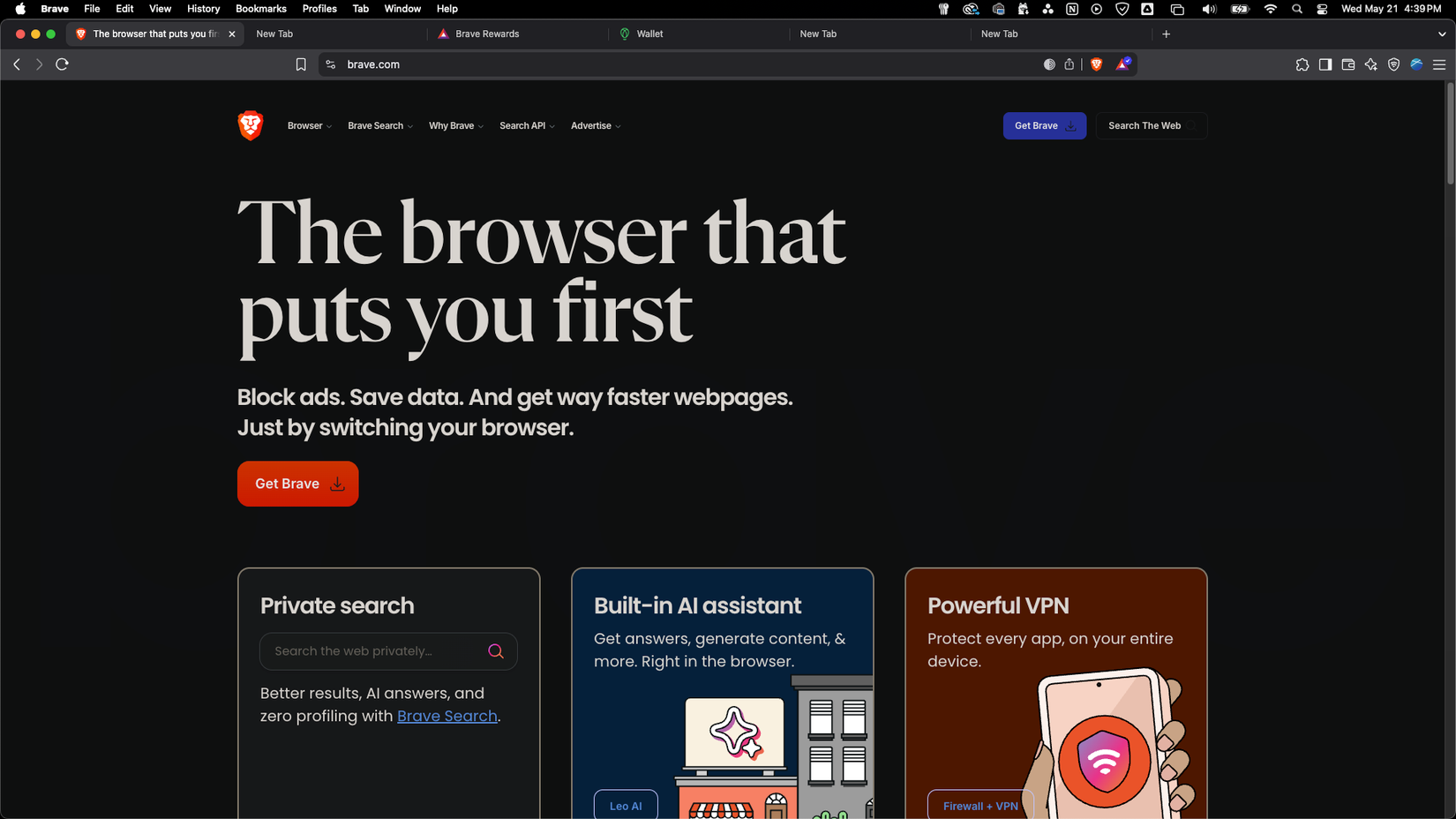
If Brave Origin finds success, we may see other browser developers—such as Vivaldi or even Mozilla—experimenting with similar "premium" versions. It forces the question: should a browser be a utility that does one thing perfectly, or a platform that does everything?
For now, the decision lies with the user. If you are a power user who has grown tired of the "feature creep" that has defined the last few years of browser development, $60 might be a small price to pay for a return to the roots of the web. However, for the average user, the existence of Brave Origin serves as a stark reminder: in the modern tech economy, simplicity is increasingly being treated as a luxury good.
As the digital landscape continues to fragment, one thing is clear: the era of the "universal" browser is fading. We are moving toward a future where the browser you use, and the features it contains, will be as customizable—and as costly—as the hardware you choose to run it on.


 Asro
Asro
 Rifan Muazin