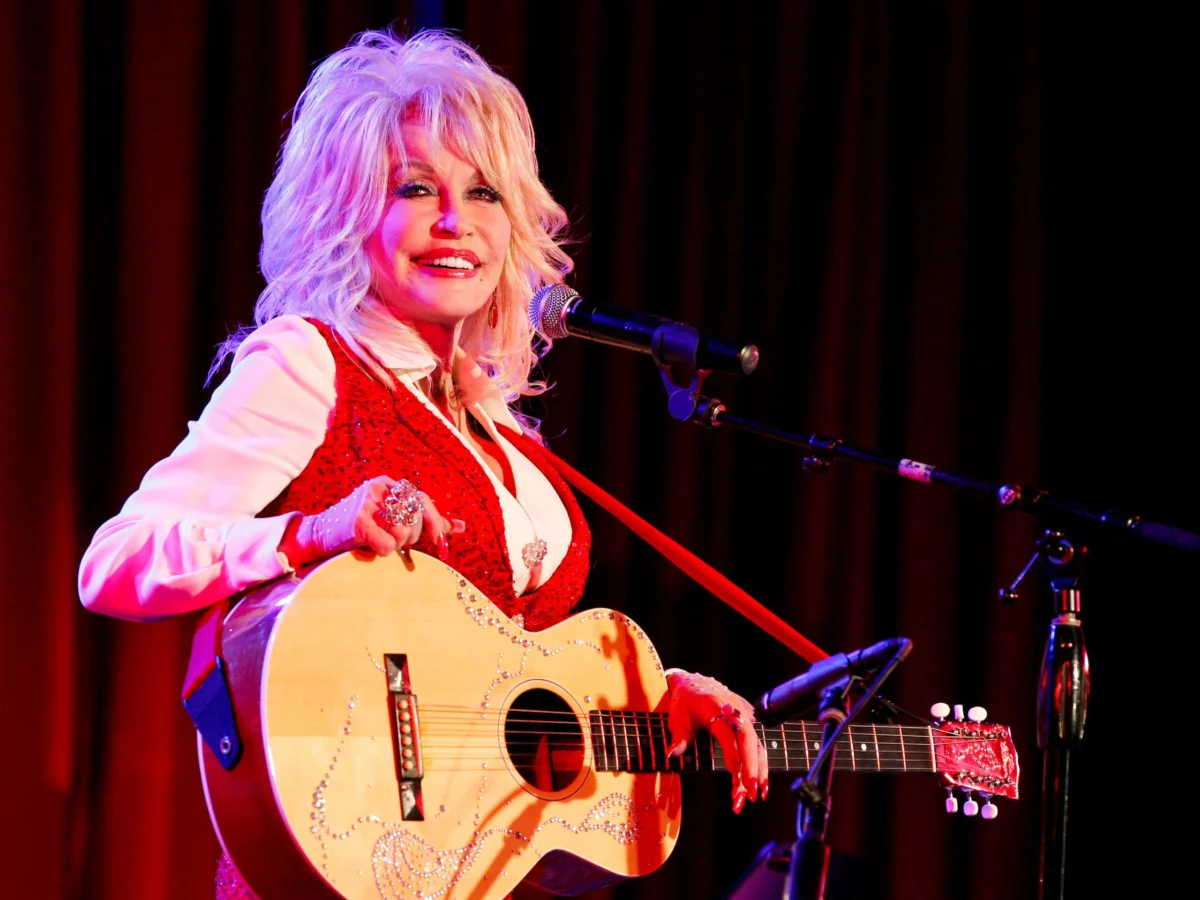
Dolly Parton, the rhinestoned titan of country music, a philanthropic powerhouse, and a rare cultural force who managed to transcend the partisan friction of modern America, passed away on Tuesday following a brief battle with cancer. She was 80 years old. Her death marks the end of an era for the music industry and leaves a void in the national consciousness that few, if any, can hope to fill.
For over six decades, Parton was more than a singer; she was a storyteller, an entrepreneur, an actress, and a humanitarian. With a career defined by her signature wit, self-deprecating humor, and a songwriting ability that arguably rivals the greatest literary figures of the 20th century, Parton remained a constant, comforting presence in the lives of millions.
A Legacy Written in Gold: The Main Facts
Parton’s career statistics are staggering, yet they fail to capture the sheer magnitude of her cultural influence. With over 100 million records sold worldwide, she stands as one of the most successful female recording artists in history. Her discography includes 25 RIAA-certified gold, platinum, and multi-platinum awards, and she holds the record for the most number-one hits by a female country artist.

Beyond the stage, she was a prolific songwriter, penning thousands of songs, including the global anthems "Jolene," "Coat of Many Colors," and "I Will Always Love You"—the latter becoming one of the best-selling singles of all time, immortalized again by Whitney Houston in the 1992 film The Bodyguard.
Her film career, while perhaps secondary to her music, was equally impactful. Her debut in the workplace satire 9 to 5 (1980) cemented her status as a mainstream superstar, leading to acclaimed performances in The Best Little Whorehouse in Texas and the heart-wrenching Steel Magnolias.
A Chronology of a Legend
Born Dolly Rebecca Parton on January 19, 1946, in Sevier County, Tennessee, she grew up in the Great Smoky Mountains as the fourth of 12 children. Her childhood was marked by poverty, a theme she would later weave into her most poignant songs.

- 1964: Following her high school graduation, Parton moved to Nashville, Tennessee, the next day to pursue a career in country music.
- 1967: She achieved her first major break when she joined The Porter Wagoner Show, gaining national exposure that propelled her to solo stardom.
- 1973: Parton released "Jolene," a song that would eventually be ranked among the 500 greatest songs of all time by Rolling Stone.
- 1980: The release of 9 to 5 introduced her to a massive pop-culture audience, earning her an Academy Award nomination for Best Original Song.
- 1986: She opened Dollywood, a theme park in Pigeon Forge, Tennessee, which would become a major economic engine for the region.
- 1995: Parton launched the Imagination Library, a book-gifting program that has since provided over 200 million books to children worldwide.
- 2022: She was inducted into the Rock & Roll Hall of Fame, a move she initially resisted out of humility, claiming she hadn’t "earned" it, before eventually accepting the honor with grace.
- 2026: Parton passed away, surrounded by family, leaving behind a legacy that spans generations.
Beyond the Spotlight: Supporting Data and Philanthropy
While the public knew the blonde wigs, the glittering outfits, and the infectious laugh, Parton’s work behind the scenes was arguably her most profound contribution to society.
The Imagination Library, her signature philanthropic endeavor, began as a tribute to her father, who could not read or write. By mailing a book a month to children from birth to age five, she effectively changed the literacy landscape for millions of families.
Furthermore, her business acumen was legendary. She maintained control of her publishing rights—a rare feat for an artist in the 1960s—and built an empire that included the Dollywood Company, which employs thousands and contributes hundreds of millions of dollars to the Tennessee economy annually.

In 2020, her donation of $1 million to Vanderbilt University Medical Center was instrumental in the development of the Moderna COVID-19 vaccine. This act, perhaps more than any other in her later years, solidified her status as a unifying, non-partisan hero who prioritized human life over political optics.
Official Responses and Global Tributes
The outpouring of grief following the news of her passing has been global in scale.
The Country Music Association (CMA) issued a statement on Tuesday afternoon: "Dolly Parton was the heart of country music. She carried the genre on her shoulders with a grace and generosity that will never be replicated. Our hearts are broken, but our lives are forever changed by her music and her light."

Fellow artists and world leaders have also taken to social media to pay their respects. "Dolly was the gold standard," wrote country star Reba McEntire. "She was a mentor, a sister, and a friend. We have lost a mountain of a woman today."
Even political figures across the aisle, who rarely agree on anything, have united in their praise. A statement from the White House read: "Dolly Parton was a bridge-builder. In an age of division, she reminded us of our shared humanity through her music and her boundless kindness. America has lost a national treasure."
The Implications: A Cultural Icon Lost
The death of Dolly Parton leaves a significant vacuum in the cultural landscape. In an increasingly polarized society, Parton remained one of the few figures who could command respect from every corner of the demographic spectrum. She was beloved by traditional country music fans, LGBTQ+ communities, evangelical Christians, and suburban families alike.

Her secret, if one could call it that, was her radical authenticity. She never apologized for her aesthetic, her humble beginnings, or her business success. She taught the world that you could be "the dumb blonde" in the room while simultaneously being the smartest person in the building.
The implications for the music industry are profound. Parton was the last bridge to the golden age of Nashville songwriting. Her death forces us to reckon with the changing face of fame; in the digital era of transient influencers, Parton’s career serves as a reminder of what long-term, hard-earned, and values-driven stardom looks like.
Remembering the Voice
As the world mourns, it is through her music that we will find the most solace. Songs like "I Will Always Love You" will take on new, heavier meanings in the coming months.

Dolly Parton once famously said, "I’m not going to leave here, and I’m not going to be forgotten." She was right. Whether through the millions of children reading books provided by her foundation, the thousands of employees at her parks, or the generations of fans who find comfort in her melodies, her presence is indelible.
She was the "Backwoods Barbie," the songwriter who could break your heart with a single verse, and the woman who looked at the world—with all its pain and potential—and chose, consistently and courageously, to be kind.
Rest in peace, Dolly. The world is a little less bright, but far richer for having had you in it.