Raul Delapena Setiawan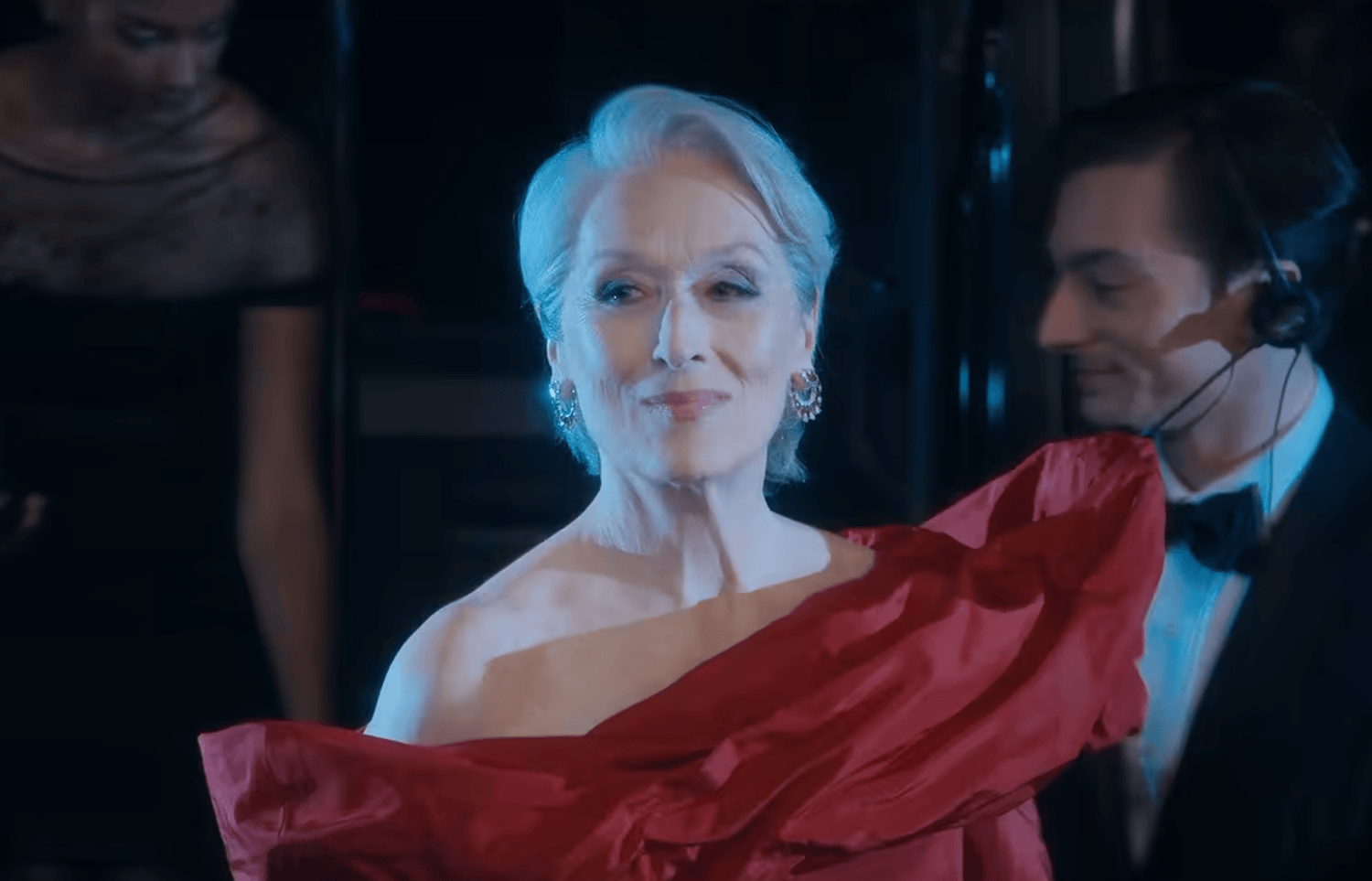
After years of fervent speculation and whispers within the corridors of Hollywood, the most closely guarded secret regarding Greta Gerwig’s upcoming adaptation of C.S. Lewis’s The Chronicles of Narnia has finally been unveiled. In a move that promises to redefine the cinematic legacy of the beloved fantasy franchise, legendary actress Meryl Streep has been confirmed to provide the voice for Aslan, the central messianic figure of the Narnia universe.
The announcement, delivered via an exclusive cover story in Empire, marks a bold departure from traditional portrayals of the Great Lion. According to the report, Gerwig’s iteration of Aslan will feature striking physical alterations, most notably heterochromic eyes—a deliberate stylistic choice designed to evoke the otherworldly allure of the late David Bowie. This casting and character design signal a clear intent: Gerwig is not merely adapting Lewis; she is reimagining the mythology for a new generation of cinemagoers.
The Core Revelation: Casting an Icon
The decision to cast Meryl Streep as the voice of Aslan is perhaps the most audacious creative decision in the production to date. For decades, the image of Aslan has been tethered to the gravitas of male performers, such as Liam Neeson. By selecting Streep, Gerwig is shifting the archetype from a traditional "father figure" to something more transcendent and ethereal.
"Casting Aslan was, without hyperbole, the most challenging aspect of this entire process," Gerwig told Empire. "I needed someone who was profound but not pretentious, who possessed an inherent gravitas without drifting into morose self-seriousness. I required a voice that could navigate the immense weight of pathos while simultaneously vibrating with pure, unadulterated joy and delight."
Gerwig emphasized that her search was incredibly narrow. "I wanted someone who was over 70, possessing that unique wisdom that only decades of lived experience can provide, yet someone who retained the capacity for fresh, childlike wonder. When you combine that with the requirement of being one of the greatest actors to ever walk the earth, the list is not long. It is, in fact, a list of one."
A Bowie-Inspired Aesthetic
Perhaps the most intriguing detail from the Empire feature is the visual description of Aslan. The character will sport a "bold red-striped visage" and heterochromic eyes, directly nodding to the legendary David Bowie. This creative decision bridges the gap between classic high fantasy and a more avant-garde, rock-and-roll sensibility.
For many fans of the original books, the imagery of Aslan is fixed in the prose of C.S. Lewis. However, Gerwig’s choice to inject a glam-rock aesthetic into the character suggests that her Narnia will prioritize emotional resonance and symbolic power over literalist fidelity. The Bowie connection serves as a meta-textual layer, suggesting that Aslan will be viewed less as a biological beast and more as a celestial presence, an otherworldly entity capable of shifting the moral compass of the world he inhabits.
Chronology of Production and Development
The road to this announcement has been paved with years of industry speculation. Since Netflix acquired the rights to the Narnia catalog in 2018, fans have waited for a definitive vision.
- 2018: Netflix announces a multi-year deal to develop film and TV projects based on C.S. Lewis’s The Chronicles of Narnia.
- 2023: Greta Gerwig is officially tapped to write and direct at least two films in the series, starting with The Magician’s Nephew.
- 2024: Casting rumors begin to circulate, with names ranging from A-list veterans to rising stars. The secrecy surrounding the "Voice of Aslan" reaches a fever pitch.
- 2025 (Present): Official confirmation is released via Empire. The film’s release date is set for February 12, 2027, with a subsequent streaming premiere on Netflix on April 2, 2027.
The decision to adapt The Magician’s Nephew—the prequel to The Lion, the Witch and the Wardrobe—first is a narrative masterstroke. It allows Gerwig to establish the creation of Narnia before tackling the better-known Pevensie siblings’ adventures, giving the audience a foundational understanding of the world’s magic and the origins of its primary antagonists.
Supporting Data: The Cast and Creative Shifts
While Streep is the headline, the ensemble cast surrounding her is equally formidable. The film boasts a pedigree that suggests a sophisticated, character-driven approach to the fantasy genre.
Confirmed Cast Members
- Emma Mackey: As Jadis, the White Witch. Mackey, known for her breakout role in Sex Education, brings a sharp, cold intensity to the role of the series’ primary villain.
- Daniel Craig: While officially "unconfirmed," industry consensus points to Craig playing Uncle Andrew, the arrogant and bumbling magician who kicks off the plot.
- Supporting Players: The roster includes high-caliber talent such as Carey Mulligan, Ciarán Hinds, Denise Gough, Susan Wokoma, and Kobna Holdbrook-Smith.
The 1950s Shift
One of the most significant changes noted in the Empire report is the relocation of the film’s timeline. While C.S. Lewis wrote The Magician’s Nephew to take place in the year 1900, Gerwig has opted to slide the setting into the 1950s. This aligns the film more closely with the publication era of the books and creates a stronger thematic link between the "real world" of the story and the mid-century aesthetic that defines much of the series’ literary charm.
Official Responses and Industry Implications
The reaction from the creative community has been one of cautious, high-level excitement. For an auteur like Greta Gerwig—fresh off the billion-dollar success of Barbie—taking on Narnia is a "prestige pivot."
"Greta has a way of finding the humanity in the most mythical of circumstances," says film critic Marcus Thorne. "By bringing in Meryl Streep, she isn’t just adding star power; she’s adding a layer of philosophical depth that usually goes missing in large-scale CGI franchises. If you want to make the audience believe in a talking lion, you don’t need a better animator—you need a better actor. And you can’t get better than Streep."
However, there is also the question of the "Netflix Model." By scheduling a theatrical release for February 2027, followed by a swift transition to Netflix in April, the studio is testing a hybrid distribution strategy that aims to capture the cultural prestige of a theatrical run while leveraging the reach of the world’s largest streaming platform.
Thematic Implications: What to Expect
Gerwig’s track record—marked by films like Lady Bird and Little Women—suggests that The Magician’s Nephew will not be a standard "good vs. evil" epic. Instead, we can expect a meditation on the nature of creation, the burden of knowledge, and the inevitable loss of innocence.
The choice of Meryl Streep as the voice of Aslan specifically points toward a performance that will likely emphasize the character’s loneliness and the weight of his divinity. By framing the lion as a figure of "fresh wonder" yet "wise experience," Gerwig is positioning Aslan as a character who is learning as much as he is teaching.
Furthermore, the decision to ground the story in the 1950s adds a layer of post-war anxiety that was arguably present in Lewis’s work. The Narnia books were often reflections of the trauma and hope found in the wake of the World Wars; setting the film in the 1950s allows Gerwig to lean into that subtext, contrasting the gritty reality of a post-war London with the vibrant, terrifyingly beautiful magic of the newly birthed Narnia.
Conclusion: A New Benchmark
As we look toward the 2027 release, the expectations for The Magician’s Nephew are sky-high. The marriage of Greta Gerwig’s sensitive, character-first directorial style with the legendary, chameleonic talent of Meryl Streep creates a cinematic event that feels both necessary and daring.
Whether this adaptation will satisfy the purists who cherish Lewis’s original text remains to be seen. However, by embracing the surreal—from Bowie-inspired visual cues to gender-fluid vocal casting—Gerwig is signaling that this is not a dusty, literal retelling. It is a vibrant, modern myth. In the silence of the theater, when that lion finally speaks, it will not be the voice of the past we hear, but a new, resonant truth crafted for the future of film.

 Lina Hope
 Reynand Wu